Department of Geography and Tourism, Faculty of Arts and Humanities, University of Coimbra, Colégio S. Jerónimo, Largo D. Dinis, 3001-401, Coimbra, Portugal.
CEGOT-UC, Centre of Studies in Geography and Territorial Planning, University of Coimbra, Coimbra, Portugal.
Health Res Policy Syst. 2020 Feb 13;18(1):18. doi: 10.1186/s12961-020-0526-y.
Population health measurements are recognised as appropriate tools to support public health monitoring. Yet, there is still a lack of tools that offer a basis for policy appraisal and for foreseeing impacts on health equity. In the context of persistent regional inequalities, it is critical to ascertain which regions are performing best, which factors might shape future health outcomes and where there is room for improvement.
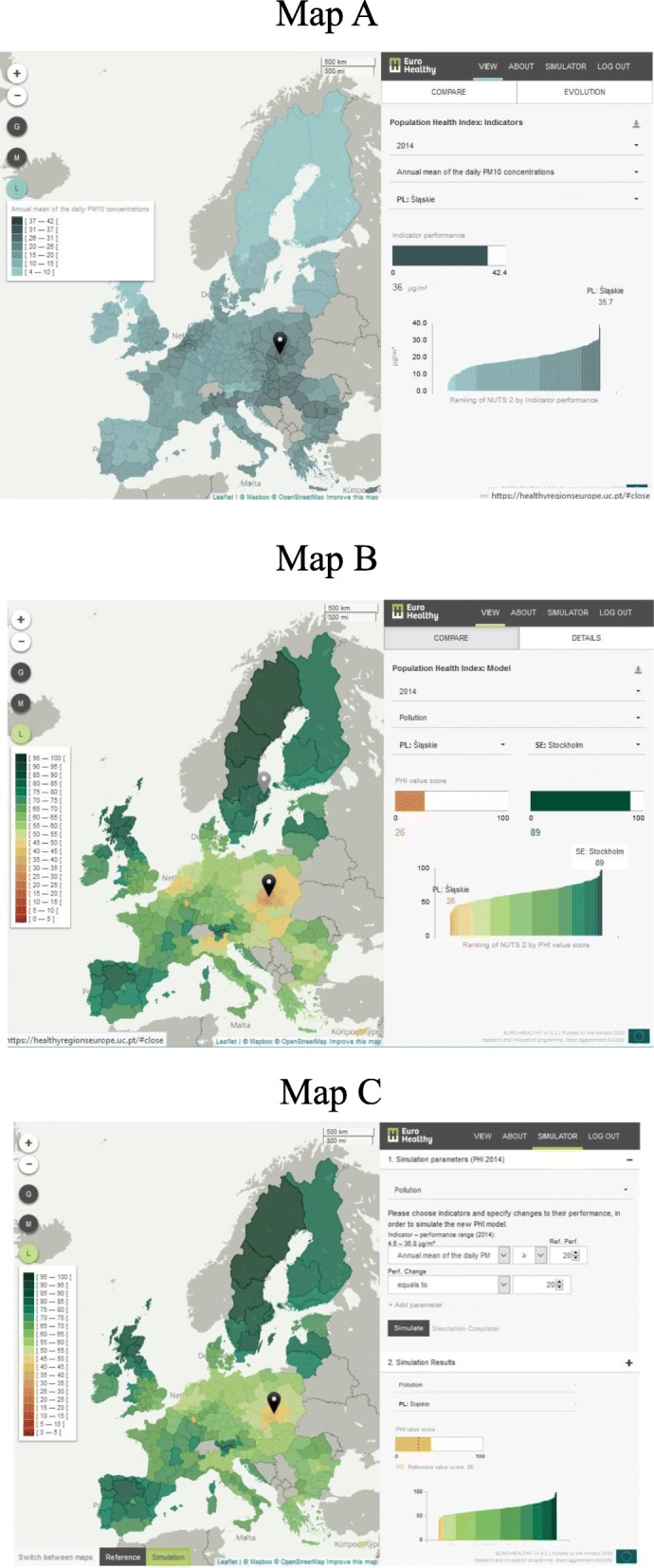
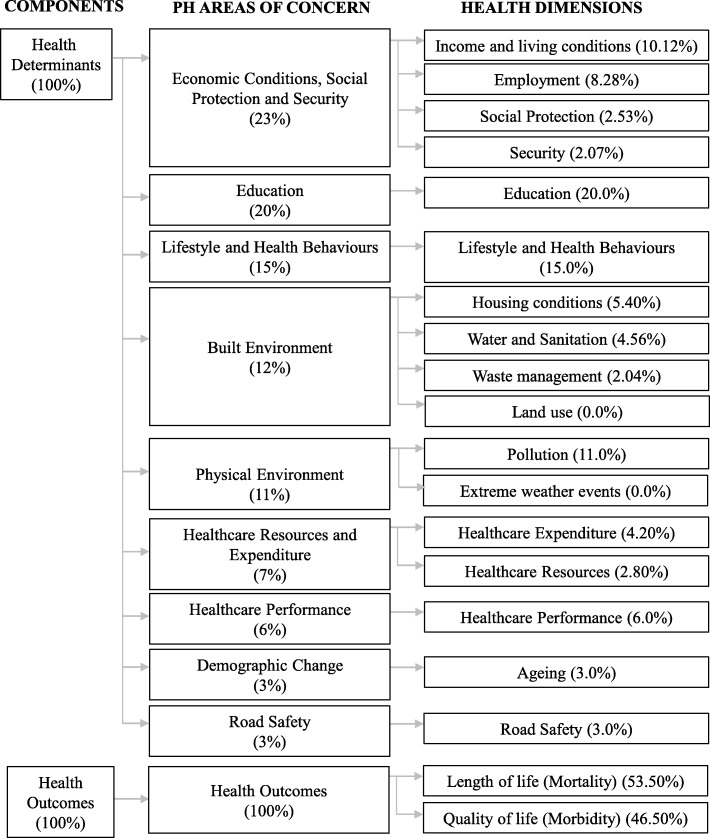
Under the EURO-HEALTHY project, tools combining the technical elements of multi-criteria value models and the social elements of participatory processes were developed to measure health in multiple dimensions and to inform policies. The flagship tool is the Population Health Index (PHI), a multidimensional measure that evaluates health from the lens of equity in health determinants and health outcomes, further divided into sub-indices. Foresight tools for policy analysis were also developed, namely: (1) scenarios of future patterns of population health in Europe in 2030, combining group elicitation with the Extreme-World method and (2) a multi-criteria evaluation framework informing policy appraisal (case study of Lisbon). Finally, a WebGIS was built to map and communicate the results to wider audiences.
The Population Health Index was applied to all European Union (EU) regions, indicating which regions are lagging behind and where investments are most needed to close the health gap. Three scenarios for 2030 were produced - (1) the 'Failing Europe' scenario (worst case/increasing inequalities), (2) the 'Sustainable Prosperity' scenario (best case/decreasing inequalities) and (3) the 'Being Stuck' scenario (the EU and Member States maintain the status quo). Finally, the policy appraisal exercise conducted in Lisbon illustrates which policies have higher potential to improve health and how their feasibility can change according to different scenarios.
The article makes a theoretical and practical contribution to the field of population health. Theoretically, it contributes to the conceptualisation of health in a broader sense by advancing a model able to integrate multiple aspects of health, including health outcomes and multisectoral determinants. Empirically, the model and tools are closely tied to what is measurable when using the EU context but offering opportunities to be upscaled to other settings.
人口健康测量被认为是支持公共卫生监测的适当工具。然而,仍然缺乏能够为政策评估和预见对健康公平影响提供基础的工具。在持续存在区域不平等的情况下,确定哪些地区表现最好、哪些因素可能塑造未来的健康结果以及哪些地区有改进的空间至关重要。
在 EURO-HEALTHY 项目下,开发了结合多准则价值模型技术要素和参与性进程社会要素的工具,以多维度衡量健康并为政策提供信息。旗舰工具是人口健康指数(PHI),这是一种多维衡量标准,从健康决定因素和健康结果公平的角度评估健康,进一步分为子指数。还开发了用于政策分析的前瞻性工具,即:(1)2030 年欧洲人口健康未来模式情景,结合群体启发法和极端世界方法;(2)一个多准则评估框架,为政策评估提供信息(里斯本案例研究)。最后,构建了一个 WebGIS 来映射和向更广泛的受众传达结果。
人口健康指数应用于所有欧盟(EU)地区,指出哪些地区落后,哪些地区需要投资来缩小健康差距。生成了 2030 年的三个情景:(1)“失败的欧洲”情景(最差情况/不平等加剧);(2)“可持续繁荣”情景(最佳情况/不平等减少);(3)“陷入困境”情景(欧盟和成员国维持现状)。最后,在里斯本进行的政策评估说明了哪些政策更有潜力改善健康,以及它们的可行性如何根据不同情景发生变化。
本文为人口健康领域做出了理论和实践贡献。从理论上讲,它通过提出一个能够整合健康的多个方面的模型,包括健康结果和多部门决定因素,为更广泛意义上的健康概念化做出了贡献。从经验上讲,该模型和工具与使用欧盟背景时可衡量的内容密切相关,但提供了扩展到其他环境的机会。