Wadehra Neha, Tomar Ruchi, Varma Rahul Mahavir, Gopal R K, Singh Yogesh, Dattagupta Sushanta, Chakraverty S
Nanoscale Physics and Device Laboratory, Institute of Nano Science and Technology, Phase-10, Sector-64, Mohali, Punjab, 160062, India.
Solid State and Structural Chemistry Unit, Indian Institute of Science, Bangaluru, Karnataka, 560012, India.
Nat Commun. 2020 Feb 13;11(1):874. doi: 10.1038/s41467-020-14689-z.
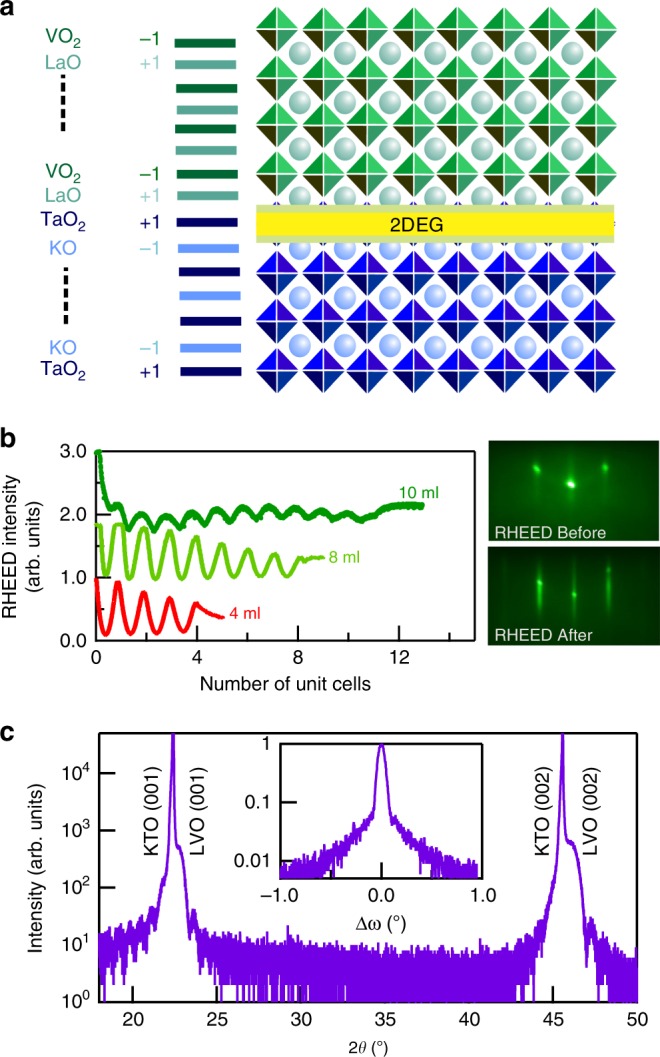
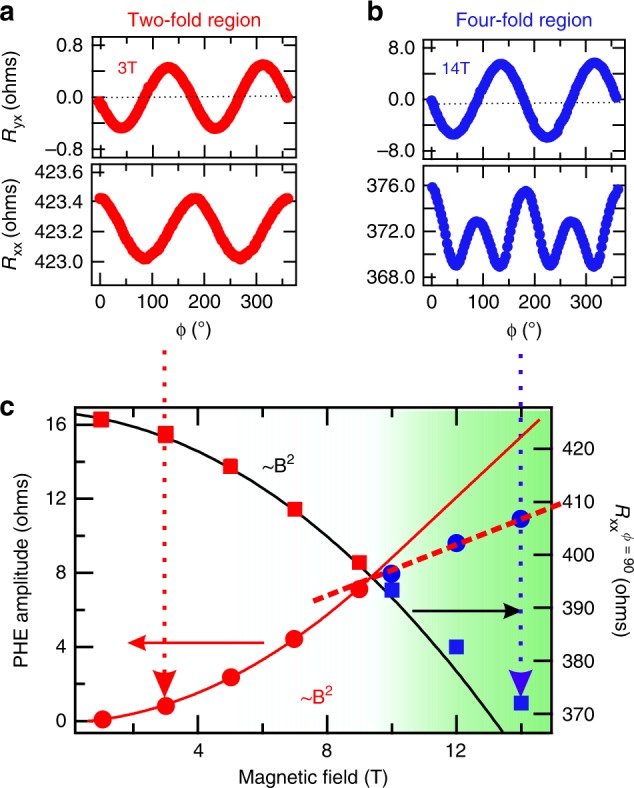
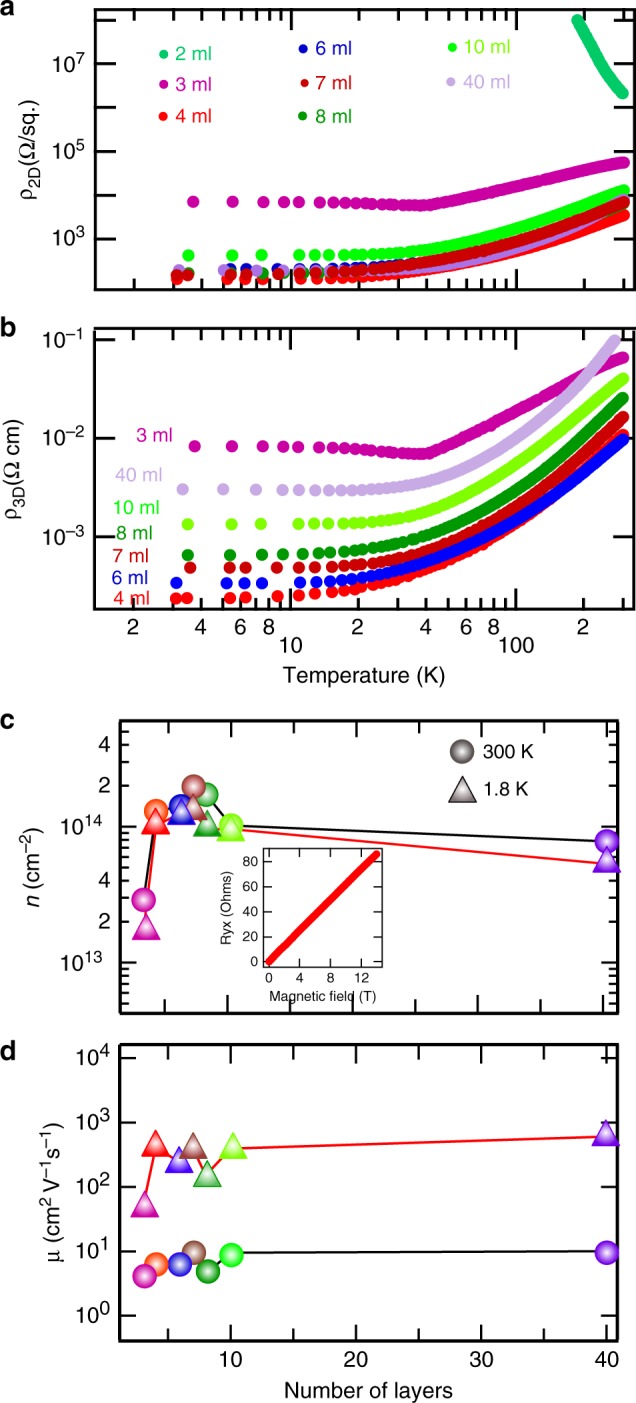
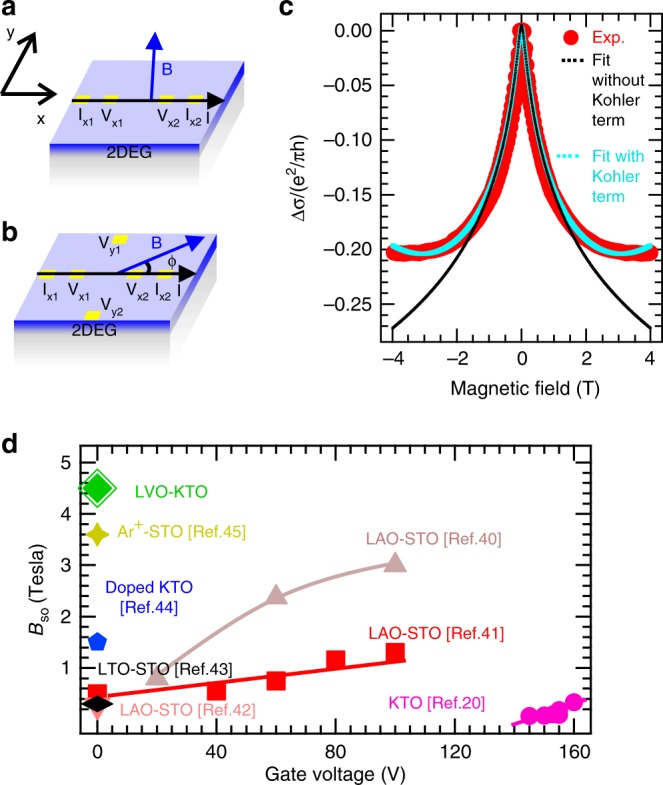
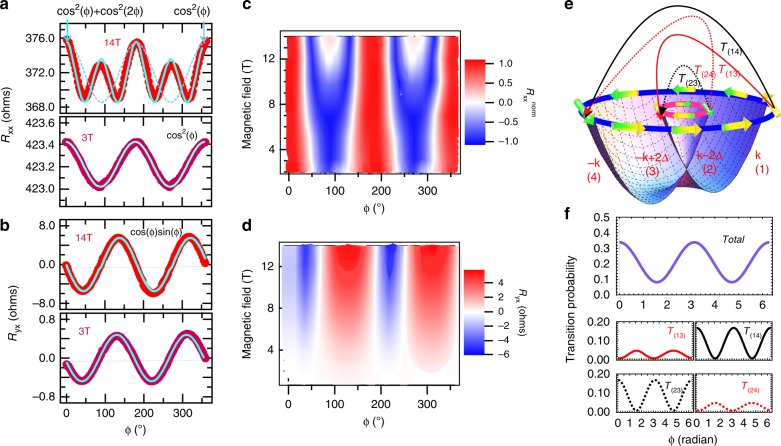
Among the perovskite oxide family, KTaO (KTO) has recently attracted considerable interest as a possible system for the realization of the Rashba effect. In this work, we report a novel conducting interface by placing KTO with another insulator, LaVO (LVO) and report planar Hall effect (PHE) and anisotropic magnetoresistance (AMR) measurements. This interface exhibits a signature of strong spin-orbit coupling. Our experimental observations of two fold AMR and PHE at low magnetic fields (B) is similar to those obtained for topological systems and can be intuitively understood using a phenomenological theory for a Rashba spin-split system. Our experimental data show a B dependence of AMR and PHE at low magnetic fields that could also be explained based on our model. At high fields (~8 T), we see a two fold to four fold transition in the AMR that could not be explained using only Rashba spin-split energy spectra.
在钙钛矿氧化物家族中,钽酸钾(KTaO,KTO)最近作为一种可能实现Rashba效应的体系引起了广泛关注。在这项工作中,我们通过将KTO与另一种绝缘体钒酸镧(LaVO,LVO)放置在一起,报道了一种新型导电界面,并报道了平面霍尔效应(PHE)和各向异性磁阻(AMR)测量结果。该界面表现出强自旋 - 轨道耦合的特征。我们在低磁场(B)下对两倍AMR和PHE的实验观测结果与拓扑体系的观测结果相似,并且可以使用Rashba自旋分裂体系的唯象理论直观地理解。我们的实验数据表明,低磁场下AMR和PHE对B存在依赖性,这也可以基于我们的模型得到解释。在高磁场(约8 T)下,我们观察到AMR中出现了从两倍到四倍的转变,仅用Rashba自旋分裂能谱无法解释这一现象。