Department of Genetic Disease Research, Osaka City University, Graduate School of Medicine, Asahi-machi 1-4-3, Abeno, Osaka, 545-8585, Japan.
Animal Resource Development Unit, Genetic Engineering Team, Division of Bio-Function Dynamics Imaging, RIKEN Center for Life Science Technologies, 2-2-3 Minatojima-Minamimachi, Chuou-ku, Kobe, 650-0047, Japan.
Sci Rep. 2020 Feb 13;10(1):2518. doi: 10.1038/s41598-020-58893-9.
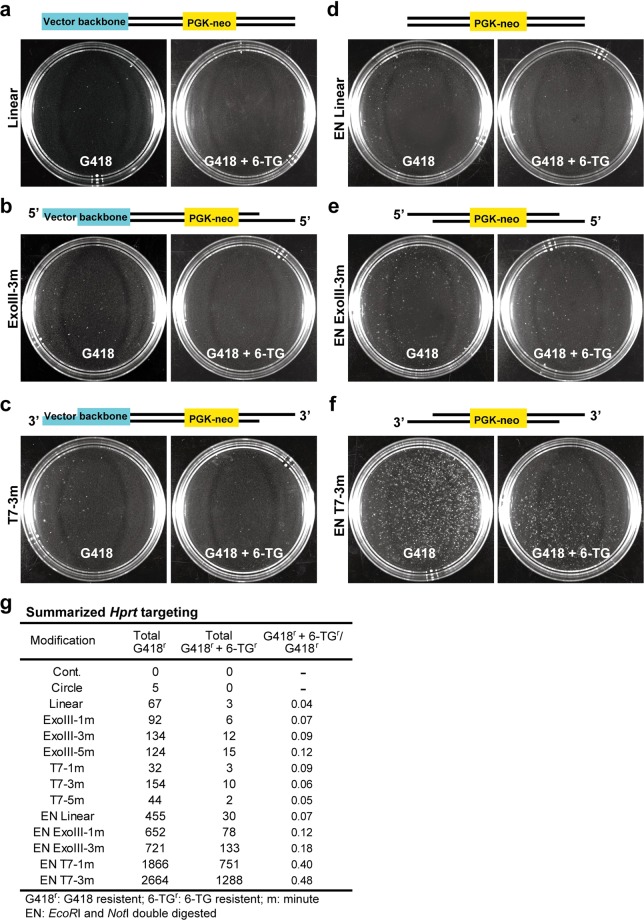
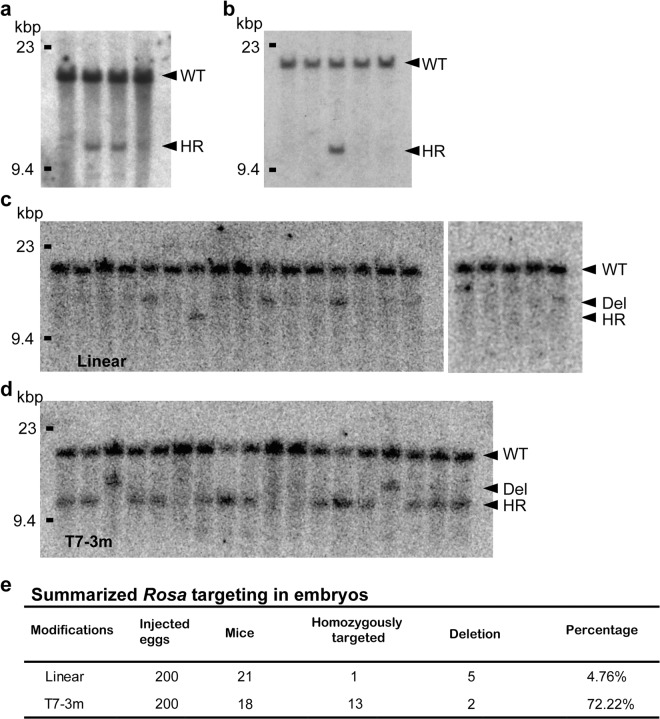
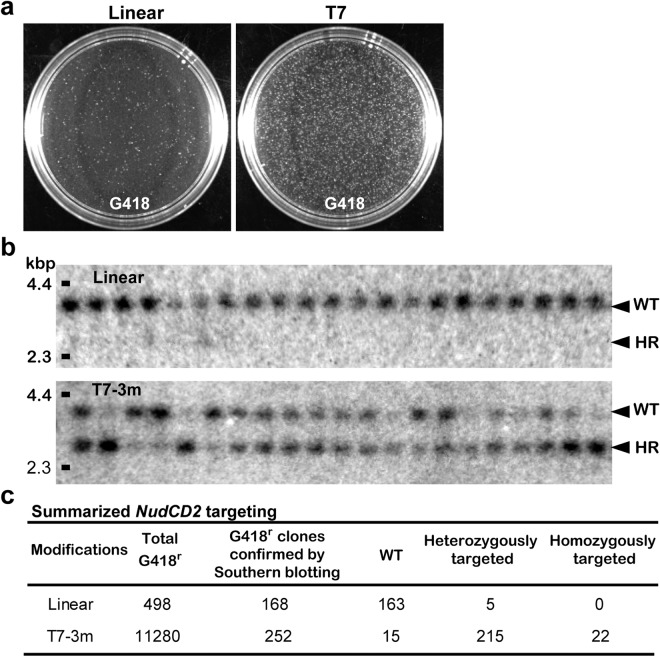
The field of genome editing was founded on the establishment of methods, such as the clustered regularly interspaced short palindromic repeat (CRISPR) and CRISPR-associated protein (CRISPR/Cas) system, used to target DNA double-strand breaks (DSBs). However, the efficiency of genome editing also largely depends on the endogenous cellular repair machinery. Here, we report that the specific modulation of targeting vectors to provide 3' overhangs at both ends increased the efficiency of homology-directed repair (HDR) in embryonic stem cells. We applied the modulated targeting vectors to produce homologous recombinant mice directly by pronuclear injection, but the frequency of HDR was low. Furthermore, we combined our method with the CRISPR/Cas9 system, resulting in a significant increase in HDR frequency. Thus, our HDR-based method, enhanced homologous recombination for genome targeting (eHOT), is a new and powerful method for genome engineering.
基因组编辑领域建立在建立方法的基础上,例如使用靶向 DNA 双链断裂 (DSB) 的簇状规律间隔短回文重复 (CRISPR) 和 CRISPR 相关蛋白 (CRISPR/Cas) 系统。然而,基因组编辑的效率在很大程度上也取决于内源性细胞修复机制。在这里,我们报告说,通过靶向载体的特定调节来提供两端的 3'突出端,可提高胚胎干细胞中同源定向修复 (HDR) 的效率。我们通过原核注射应用调节后的靶向载体直接产生同源重组小鼠,但 HDR 的频率很低。此外,我们将我们的方法与 CRISPR/Cas9 系统相结合,导致 HDR 频率显著增加。因此,我们基于 HDR 的方法,增强同源重组用于基因组靶向 (eHOT),是一种新的、强大的基因组工程方法。