Urological Research Institute, Division of Experimental Oncology, IRCCS San Raffaele Scientific Institute, Milano, Italy.
Biocrystallography Unit, Division of Immunology, Transplantation, and Infectious Diseases, IRCCS San Raffaele Scientific Institute, Milano, Italy.
Sci Rep. 2020 Feb 13;10(1):2521. doi: 10.1038/s41598-020-59313-8.
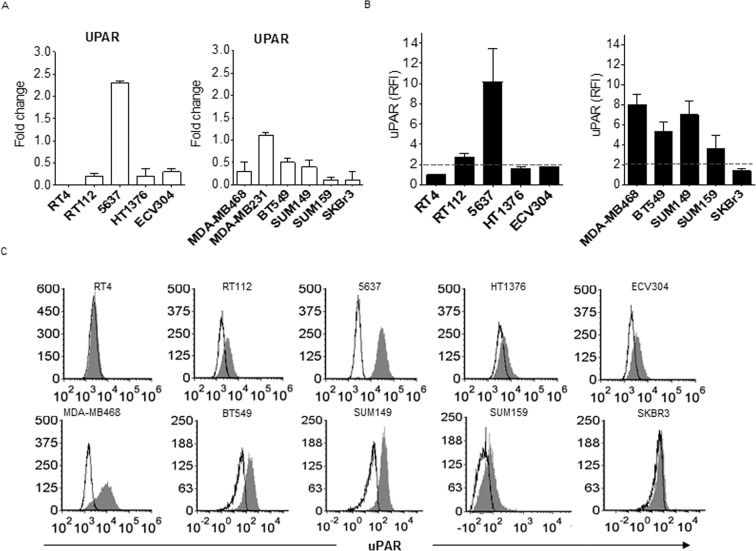
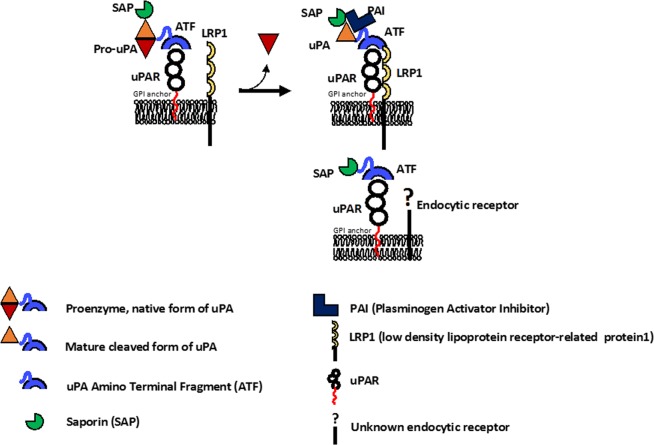
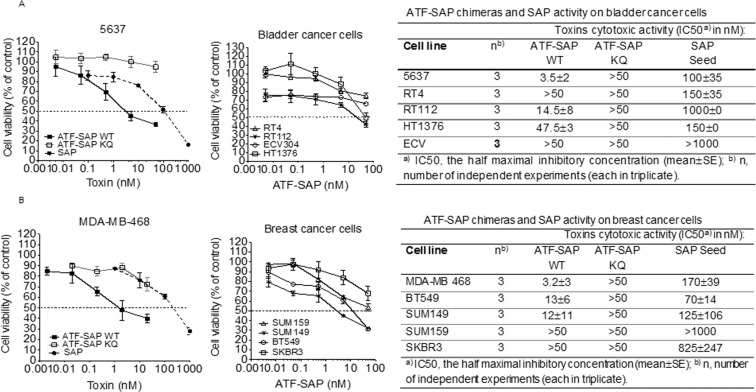
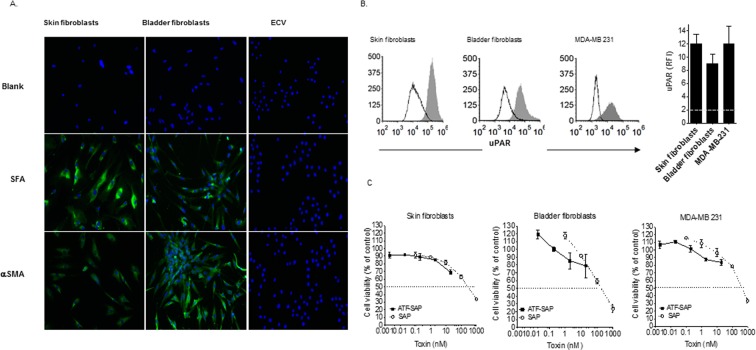
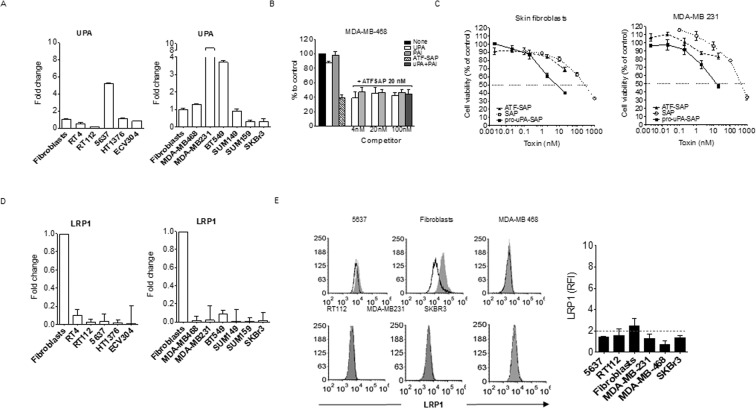
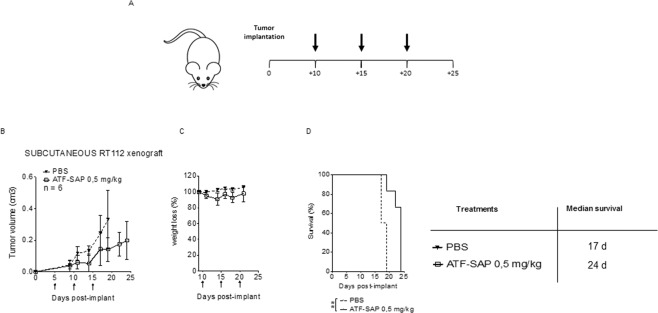
The development of personalized therapies represents an urgent need owing to the high rate of cancer recurrence and systemic toxicity of conventional drugs. So far, targeted toxins have shown promising results as potential therapeutic compounds. Specifically, toxins conjugated to antibodies or fused to growth factors/enzymes have been largely demonstrated to selectively address and kill cancer cells. We investigated the anti-tumor potential of a chimeric recombinant fusion protein formed by the Ribosome Inactivating Protein saporin (SAP) and the amino-terminal fragment (ATF) of the urokinase-type plasminogen activator (uPA), whose receptor has been shown to be over-expressed on the surface of aggressive tumors. ATF-SAP was recombinantly produced by the P. pastoris yeast and its activity was assessed on a panel of bladder and breast cancer cell lines. ATF-SAP resulted to be highly active in vitro, as nano-molar concentrations were sufficient to impair viability on tumor cell lines. In contrast to untargeted toxins, the chimeric fusion protein displayed a significantly improved toxic effect in uPAR-expressing cells, demonstrating that the selective activity was due to the presence of the targeting moiety. Fibroblasts were not sensitive to ATF-SAP despite uPAR expression, indicating that cell-specific receptor-mediated internalization pathway(s) might be considered. The in vivo anti-tumor effect of the chimera was shown in a bladder cancer xenograft model. Current findings indicate ATF-SAP as a suitable anti-tumoral therapeutic option to cope with cancer aggressiveness, as a single treatment or in combination with traditional therapeutic approaches, to appropriately address the intra- and inter- tumor heterogeneity.
由于常规药物的癌症复发率和全身毒性较高,因此个性化治疗的发展是当务之急。到目前为止,靶向毒素已显示出作为潜在治疗化合物的有希望的结果。具体而言,已证明与抗体缀合或融合到生长因子/酶的毒素能够选择性地针对并杀死癌细胞。我们研究了由核糖体失活蛋白蓖麻毒素(SAP)和尿激酶型纤溶酶原激活物(uPA)的氨基末端片段(ATF)组成的嵌合重组融合蛋白的抗肿瘤潜力,已经表明其受体在侵袭性肿瘤的表面过表达。ATF-SAP 通过毕赤酵母重组产生,并在一系列膀胱癌和乳腺癌细胞系上评估其活性。ATF-SAP 在体外非常活跃,因为纳摩尔浓度足以损害肿瘤细胞系的活力。与非靶向毒素相比,嵌合融合蛋白在 uPAR 表达的细胞中显示出显著改善的毒性作用,表明选择性活性是由于存在靶向部分。尽管存在 uPAR,成纤维细胞对 ATF-SAP 不敏感,这表明可能考虑细胞特异性受体介导的内化途径。在膀胱癌异种移植模型中显示了该嵌合体的体内抗肿瘤作用。目前的研究结果表明,ATF-SAP 是一种合适的抗肿瘤治疗选择,可用于应对癌症侵袭性,作为单一治疗或与传统治疗方法联合使用,以适当解决肿瘤内和肿瘤间的异质性。