Lim Hyeong-Seok
Department of Clinical Pharmacology and Therapeutics, Asan Medical Center, University of Ulsan, Seoul 05505, Republic of Korea.
Transl Clin Pharmacol. 2019 Mar;27(1):19-23. doi: 10.12793/tcp.2019.27.1.19. Epub 2019 Mar 27.
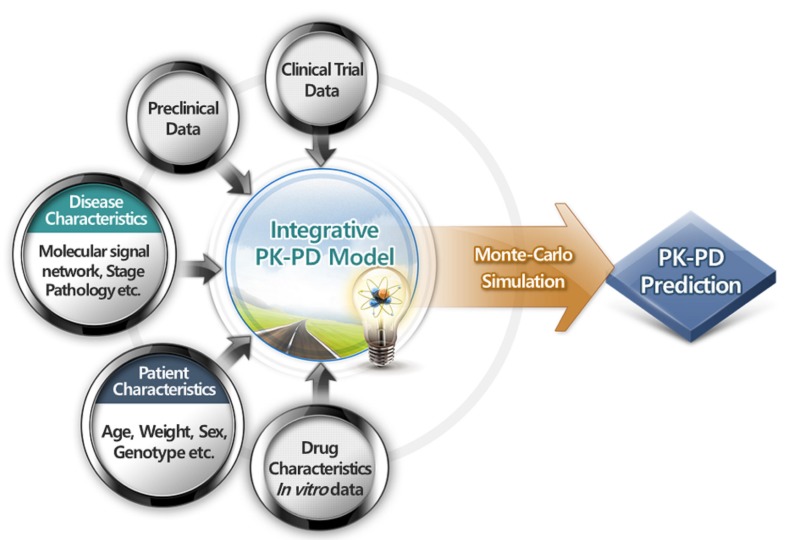
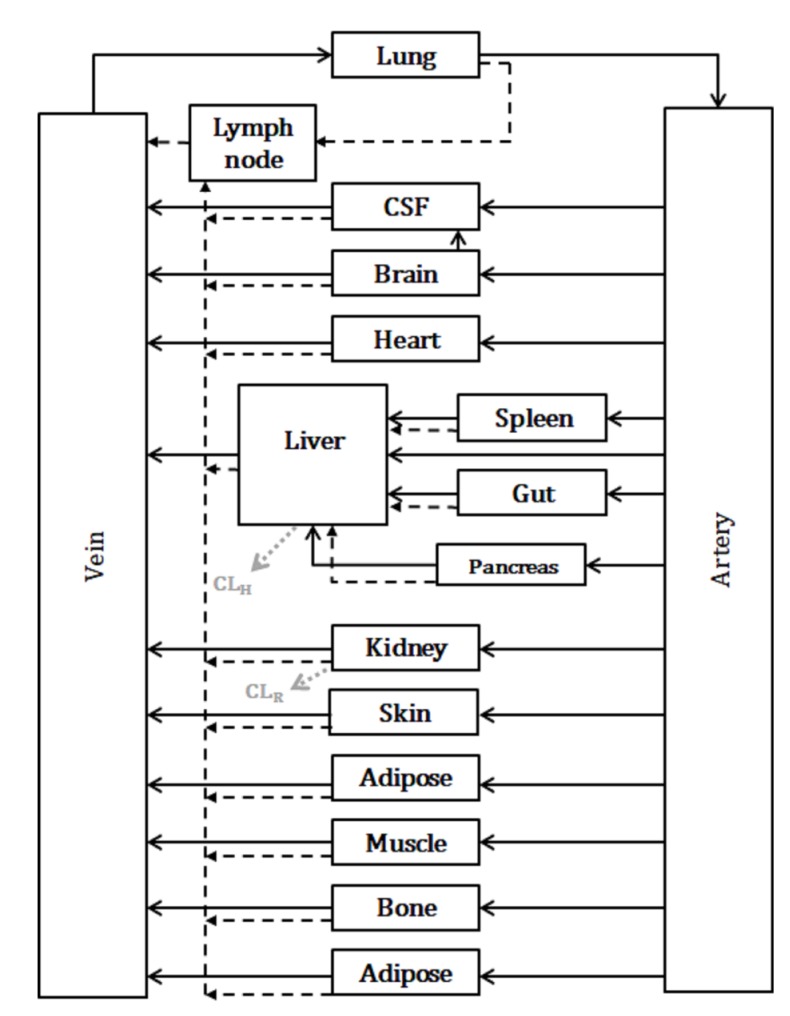
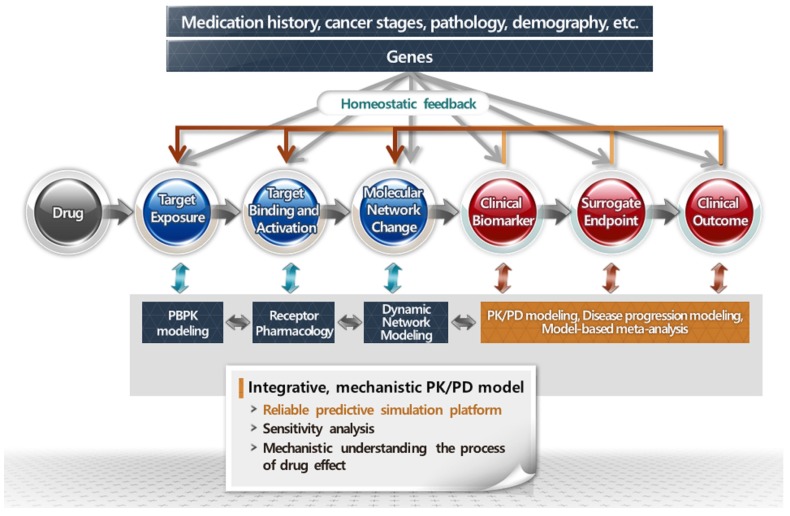
Pharmacokinetic-pharmacodynamic model is a kind of language that quantitatively describes the drug-related outcomes in the form of mathematical formula. Various outcomes can be subjected to modeling analysis if they can be expressed in numbers. Empirical models have been widely and successfully applied in drug development and research. However, a more competitive drug development environment requires more accurate and predictive models in the early stages of drug development. Accordingly, the subjects of PK-PD modeling have been extended from clinical data to preclinical and data in the discovery stage. More mechanistic and predictive models, such as physiologically based pharmacokinetic and quantitative system-based pharmacology models, are being increasingly used owing to the growing need to characterize drugs more accurately at the earliest. This tutorial briefly introduces the essential concepts of PK-PD modeling and simulation and describes the recent changing roles of PK-PD model for application in novel drug development process.
药代动力学-药效学模型是一种以数学公式形式定量描述药物相关结果的语言。如果各种结果能够用数字表示,那么它们都可以进行建模分析。经验模型已在药物研发中得到广泛且成功的应用。然而,竞争愈发激烈的药物研发环境要求在药物研发早期阶段采用更精确且具有预测性的模型。因此,药代动力学-药效学建模的对象已从临床数据扩展至临床前数据以及发现阶段的数据。由于尽早更准确地表征药物的需求不断增加,更多基于机制和具有预测性的模型,如基于生理的药代动力学模型和基于定量系统的药理学模型,正越来越多地被使用。本教程简要介绍了药代动力学-药效学建模与模拟的基本概念,并描述了药代动力学-药效学模型在新药研发过程中应用的近期角色变化。