Department of Psychology, San Francisco State University, San Francisco, CA, 94132, USA.
Cogn Res Princ Implic. 2020 Feb 13;5(1):7. doi: 10.1186/s41235-020-0207-y.
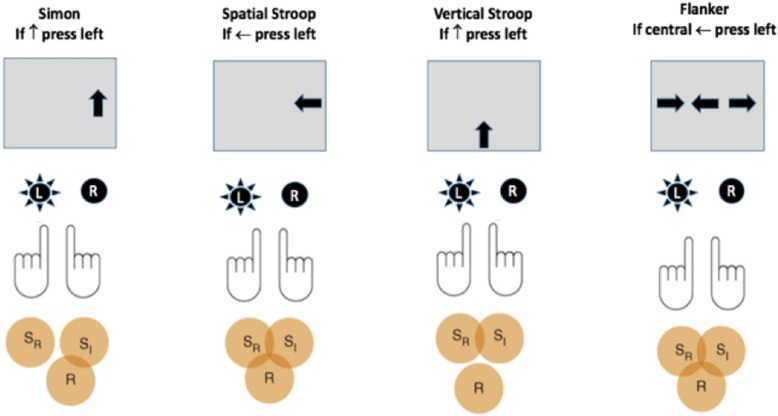
Two-hundred one college undergraduates completed four nonverbal interference tasks (Simon, spatial Stroop, vertical Stroop, and flanker) and trait scales of self-control and impulsivity. Regression analyses tested 11 predictors of the composite interference scores derived from three of the four tasks and each task separately. The purpose of the study was to examine the relationships between laboratory measures of self-control, self-report measures, and the degree to which control might be related to extensive experience in activities that logically require self-control.
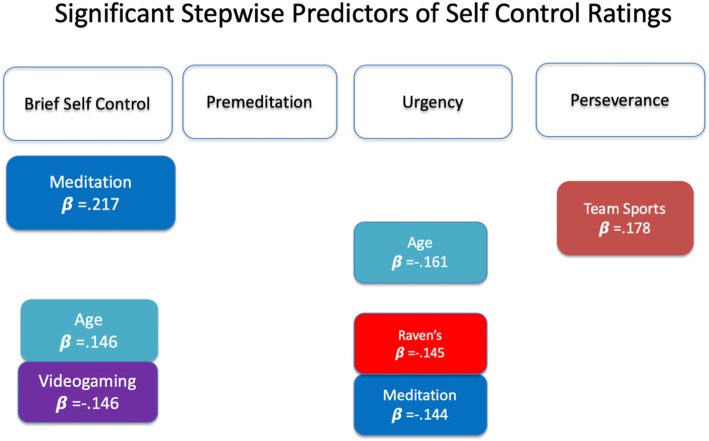
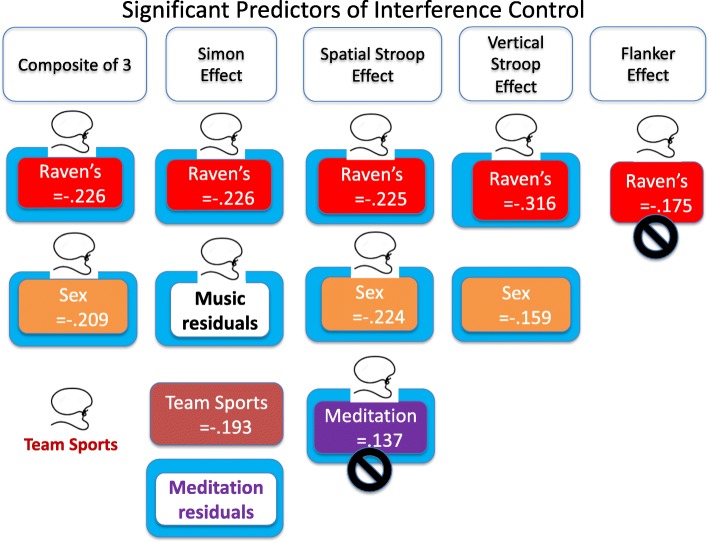
Fluid intelligence and sex were significant predictors of the composite measure, but bilingualism, music training, video gaming, mindfulness/meditation, self-control, impulsivity, SES, and physical exercise were not.
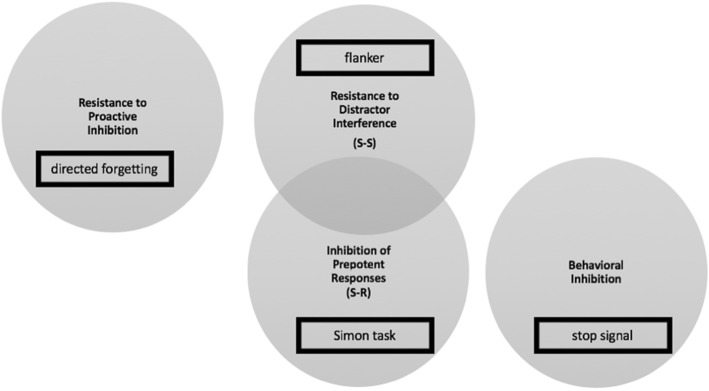
Common laboratory measures of inhibitory control do not correlate with self-reported measures of self-control or impulsivity and consequently appear to be measuring different constructs. Bilingualism, mindfulness/meditation, playing action video games, and music training or performance provide weak and inconsistent improvements to laboratory measures of interference control. Flanker, Simon, and spatial Stroop effects should not be used or interpreted as measures of domain-general inhibitory control.
201 名大学生完成了四项非言语干扰任务(Simon、空间 Stroop、垂直 Stroop 和侧翼)和自我控制和冲动特质量表。回归分析测试了 11 个预测因子,这些预测因子来自四项任务中的三项和每项任务的综合干扰得分。本研究的目的是检验实验室自我控制测量、自我报告测量之间的关系,以及控制能力与逻辑上需要自我控制的活动的广泛经验之间的关系。
流体智力和性别是综合测量的显著预测因子,但双语能力、音乐训练、视频游戏、正念/冥想、自我控制、冲动、社会经济地位和体育锻炼不是。
常见的实验室抑制控制测量与自我报告的自我控制或冲动测量不相关,因此似乎在测量不同的结构。双语能力、正念/冥想、玩动作视频游戏以及音乐训练或表演对实验室干扰控制测量的改善作用微弱且不一致。Flanker、Simon 和空间 Stroop 效应不应作为一般抑制控制的测量手段。