Bioscience Division, Los Alamos National Laboratory, Los Alamos, NM, United States of America.
Earth and Environmental Sciences Division, Los Alamos National Laboratory, Los Alamos, NM, United States of America.
PLoS One. 2020 Feb 14;15(2):e0224641. doi: 10.1371/journal.pone.0224641. eCollection 2020.
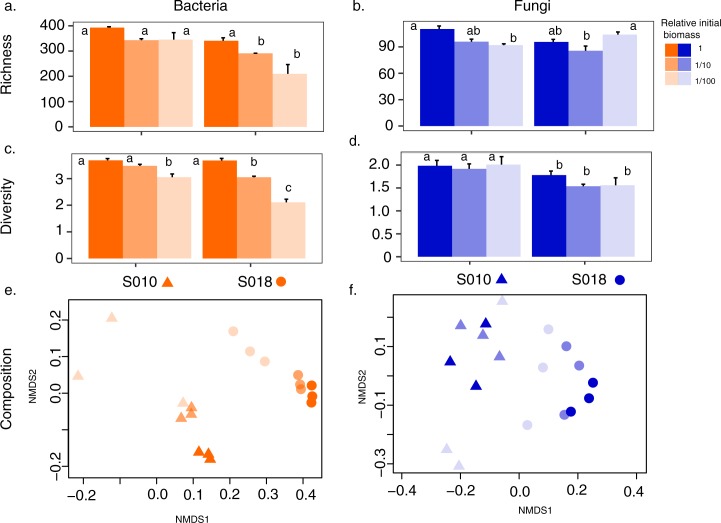
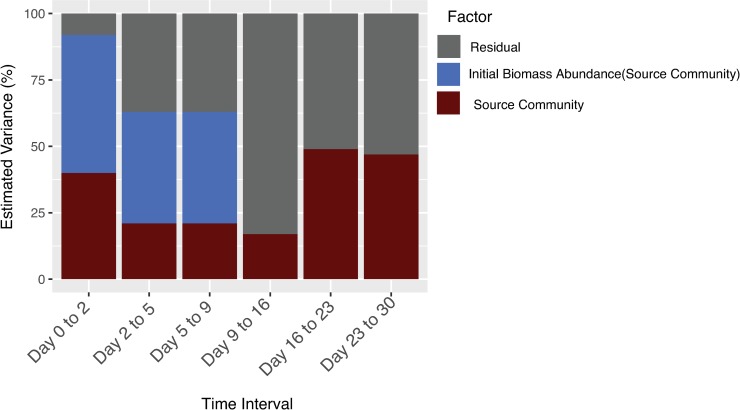
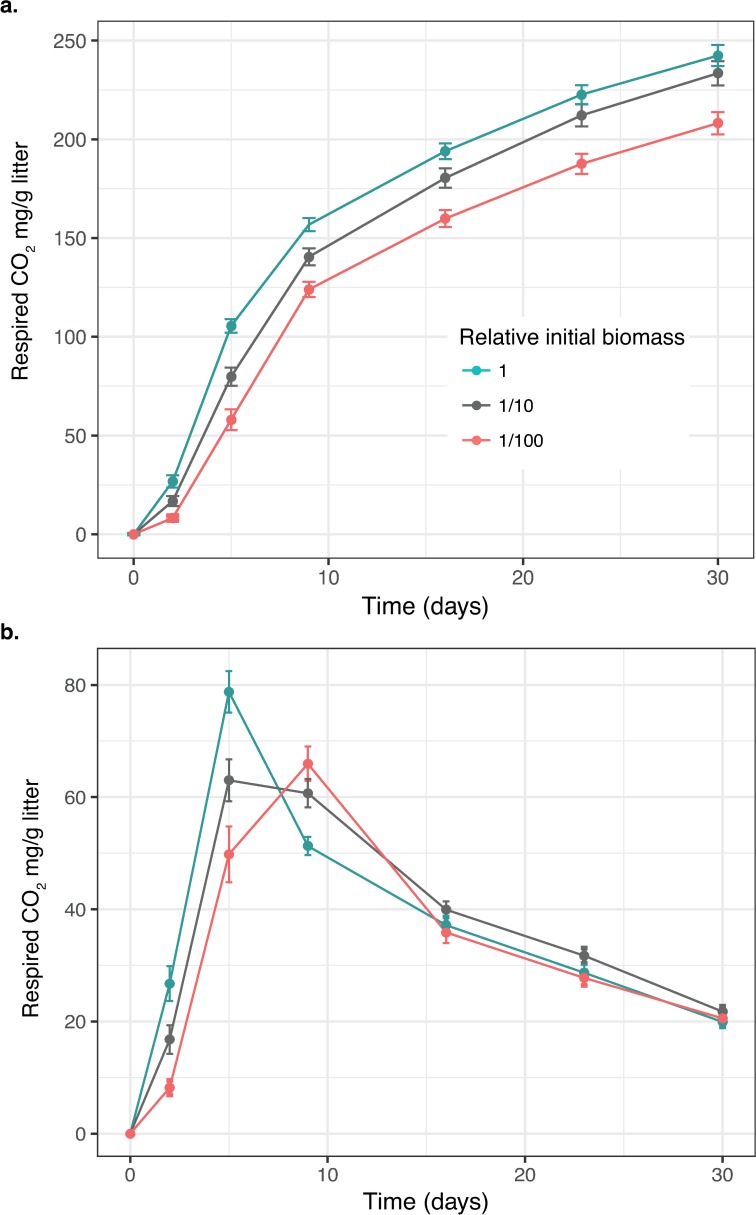
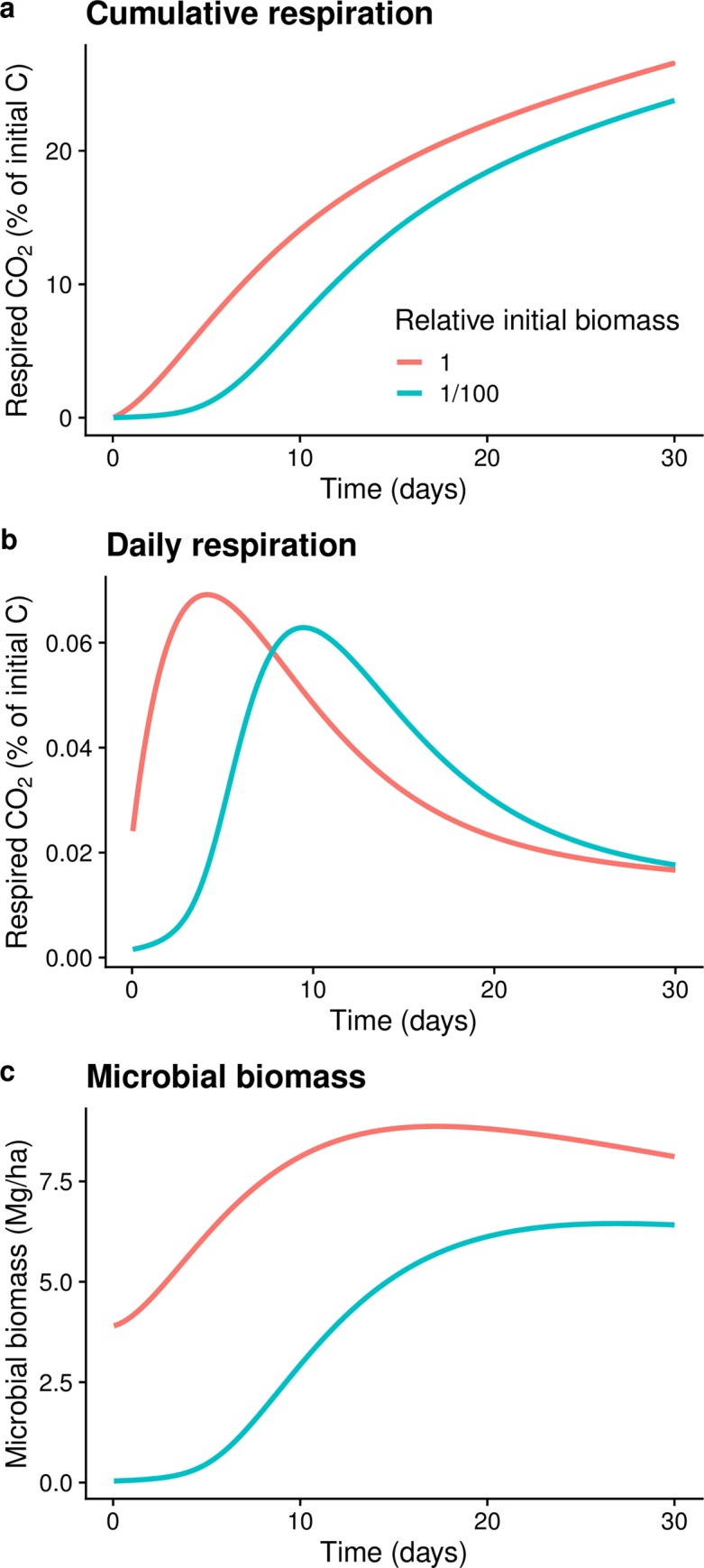
Microbial biomass is one of the most common microbial parameters used in land carbon (C) cycle models, however, it is notoriously difficult to measure accurately. To understand the consequences of mismeasurement, as well as the broader importance of microbial biomass abundance as a direct driver of ecological phenomena, greater quantitative understanding of the role of microbial biomass abundance in environmental processes is needed. Using microcosms, we manipulated the initial biomass of numerous microbial communities across a 100-fold range and measured effects on CO2 production during plant litter decomposition. We found that the effects of initial biomass abundance on CO2 production was largely attenuated within a week, while the effects of community type remained significant over the course of the experiment. Overall, our results suggest that initial microbial biomass abundance in litter decomposition within an ecosystem is a weak driver of long-term C cycling dynamics.
微生物生物量是陆地碳(C)循环模型中最常用的微生物参数之一,但要准确测量却非常困难。为了了解测量误差的后果,以及微生物生物量丰度作为生态现象直接驱动因素的更广泛重要性,需要更深入地了解微生物生物量丰度在环境过程中的作用。本研究使用微宇宙,在 100 倍的范围内操纵了多个微生物群落的初始生物量,并测量了它们对植物凋落物分解过程中 CO2 产生的影响。结果发现,初始生物量丰度对 CO2 产生的影响在一周内基本减弱,而群落类型的影响在实验过程中仍然显著。总体而言,我们的研究结果表明,生态系统中凋落物分解过程中的初始微生物生物量丰度是长期 C 循环动态的一个较弱驱动因素。