Bioscience Division, Los Alamos National Laboratory, Los Alamos, New Mexico
Earth and Environmental Sciences Division, Los Alamos National Laboratory, Los Alamos, New Mexico.
mBio. 2020 Oct 27;11(5):e02089-20. doi: 10.1128/mBio.02089-20.
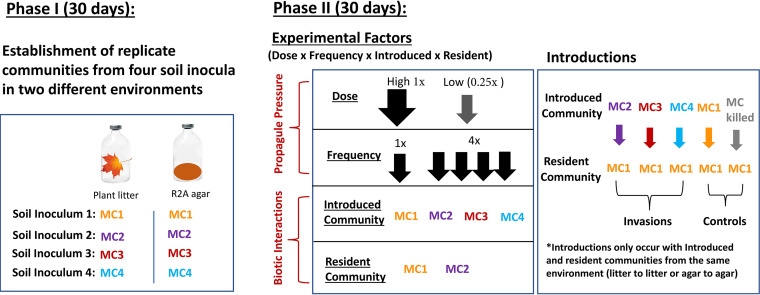
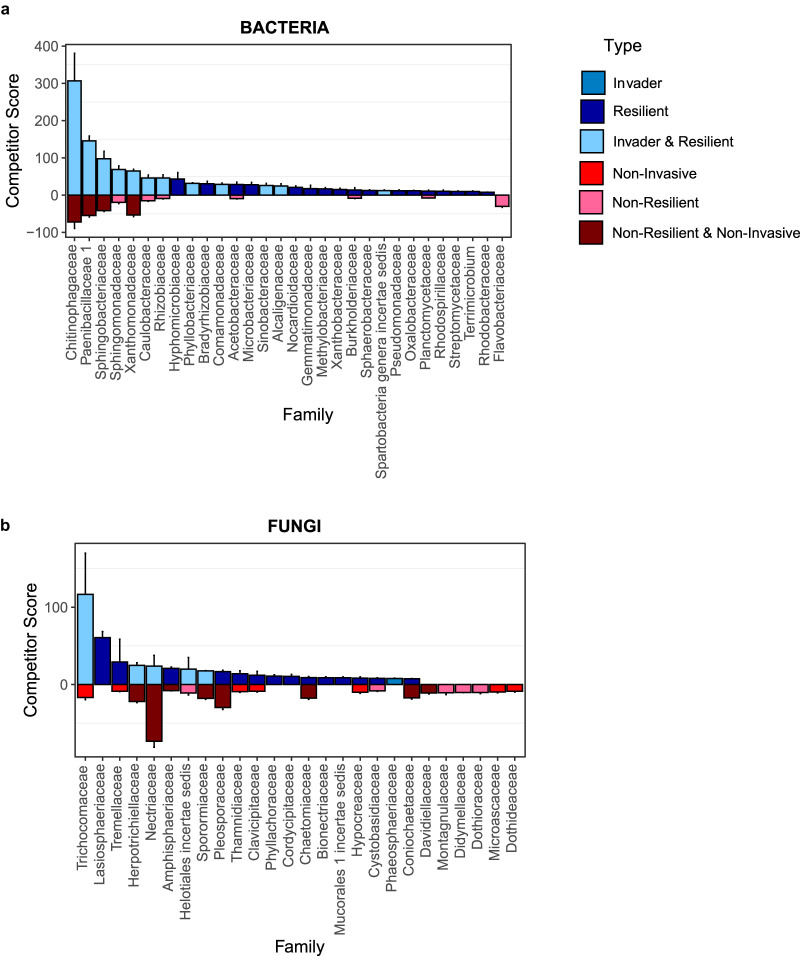
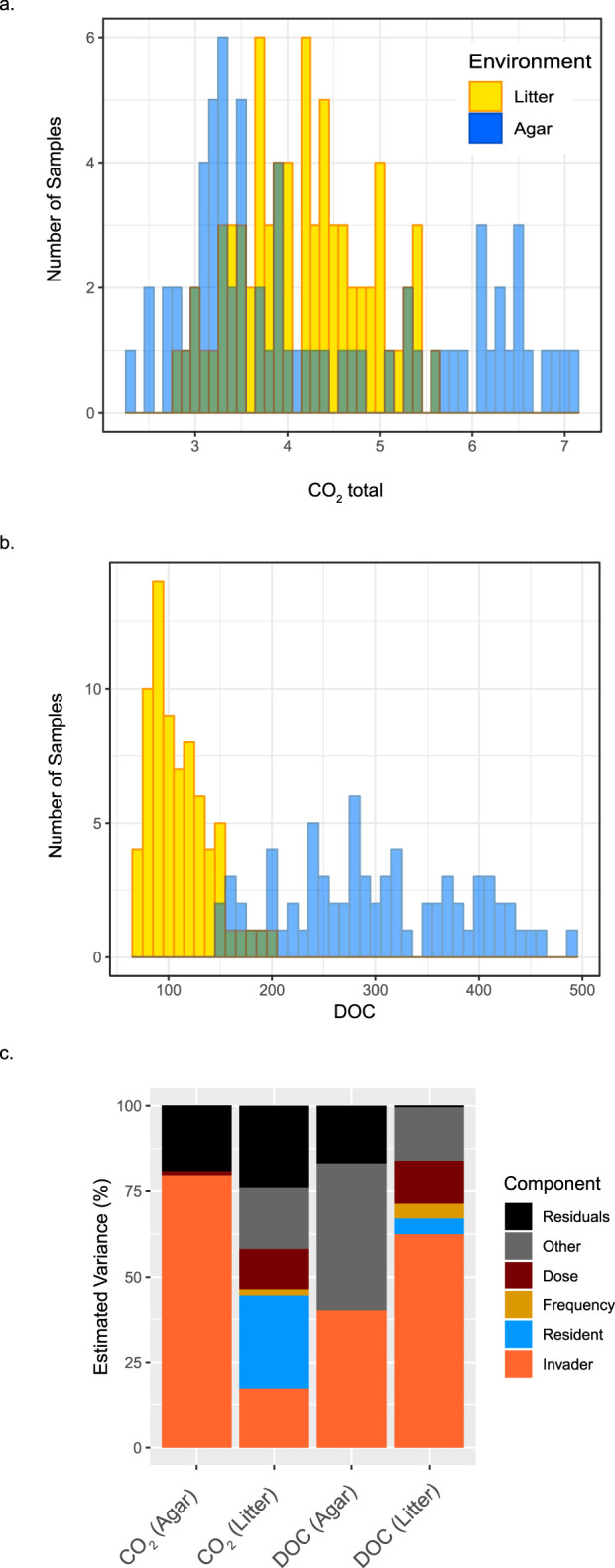
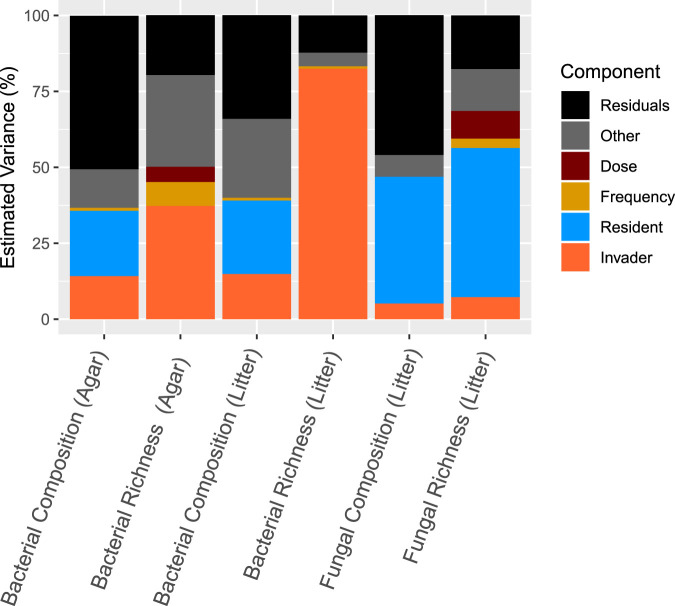
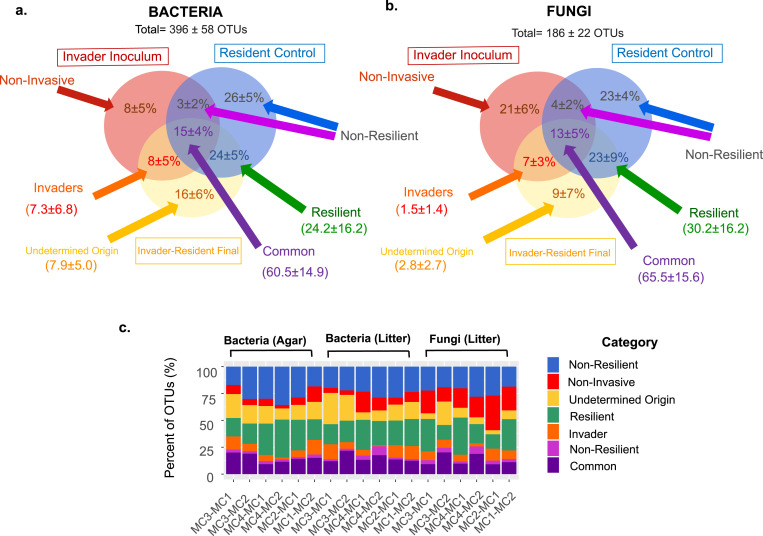
Microbial probiotics are intended to improve functions in diverse ecosystems, yet probiotics often fail to establish in a preexisting microbiome. This is a species invasion problem. The relative importance of the two major factors controlling establishment in this context-propagule pressure (inoculation dose and frequency) and biotic interactions (composition of introduced and resident communities)-is unknown. We tested the effect of these factors in driving microbial composition and functioning following 12 microbial community invasions (e.g., introductions of many microbial invaders) in microcosms. Ecosystem functioning over a 30-day postinvasion period was assessed by measuring activity (respiration) and environment modification (dissolved organic carbon abundance). To test the dependence on environmental context, experiments were performed in two resource environments. In both environments, biotic interactions were more important than propagule pressure in driving microbial composition and community function, but the magnitude of effect varied by environment. Successful invaders comprised approximately 8% of the total number of operational taxonomic units (OTUs). Bacteria were better invaders than fungi, with average relative abundances of 7.4% ± 6.8% and 1.5% ± 1.4% of OTUs, respectively. Common bacterial invaders were associated with stress response traits. The most resilient bacterial and fungal families, in other words, those least impacted by invasions, were linked to antimicrobial resistance or production traits. Illuminating the principles that determine community composition and functioning following microbial invasions is key to efficient community engineering. With increasing frequency, humans are introducing new microbes into preexisting microbiomes to alter functioning. Example applications include modification of microflora in human guts for better health and those of soil for food security and/or climate management. Probiotic applications are often approached as trial-and-error endeavors and have mixed outcomes. We propose that increased success in microbiome engineering may be achieved with a better understanding of microbial invasions. We conducted a microbial community invasion experiment to test the relative importance of propagule pressure and biotic interactions in driving microbial community composition and ecosystem functioning in microcosms. We found that biotic interactions were more important than propagule pressure in determining the impact of microbial invasions. Furthermore, the principles for community engineering vary among organismal groups (bacteria versus fungi).
微生物益生菌旨在改善多样化生态系统的功能,但益生菌往往无法在现有微生物群落中定植。这是一个物种入侵问题。在这种情况下,控制定植的两个主要因素——繁殖体压力(接种剂量和频率)和生物相互作用(引入和驻留群落的组成)——的相对重要性尚不清楚。我们在微宇宙中进行了 12 次微生物群落入侵(例如,引入许多微生物入侵者)实验,以测试这些因素在驱动微生物组成和功能方面的作用。在入侵后 30 天内,通过测量活性(呼吸)和环境修饰(溶解有机碳丰度)来评估生态系统功能。为了测试对环境背景的依赖性,在两种资源环境中进行了实验。在这两种环境中,生物相互作用比繁殖体压力更重要,能够驱动微生物组成和群落功能,但环境的影响程度不同。成功的入侵物种约占总操作分类单元(OTU)数量的 8%。细菌比真菌更具侵略性,其相对丰度分别为 7.4%±6.8%和 1.5%±1.4%的 OTU。常见的细菌入侵物种与应激反应特征有关。换句话说,最具弹性的细菌和真菌科与抗微生物药物耐药性或产生特性有关。阐明决定微生物入侵后群落组成和功能的原则是实现高效群落工程的关键。随着微生物入侵的频率增加,人类正在将新的微生物引入现有微生物群落中以改变其功能。例如,为了改善健康状况而改变人类肠道中的微生物群,或为了食品安全和/或气候管理而改变土壤中的微生物群。益生菌应用通常是试错的尝试,结果喜忧参半。我们提出,通过更好地了解微生物入侵,可能会在微生物组工程方面取得更大的成功。我们进行了一项微生物群落入侵实验,以测试繁殖体压力和生物相互作用在微宇宙中驱动微生物群落组成和生态系统功能方面的相对重要性。我们发现,生物相互作用比繁殖体压力更能决定微生物入侵的影响。此外,群落工程的原则因生物群体(细菌与真菌)而异。