Klinik für Anästhesiologie und Intensivmedizin, Universität Duisburg-Essen & Universitätsklinikum Essen, Essen, Germany.
Institut für Transfusionsmedizin, Universität Duisburg-Essen & Universitätsklinikum Essen, Essen, Germany.
PLoS One. 2020 Feb 14;15(2):e0228948. doi: 10.1371/journal.pone.0228948. eCollection 2020.
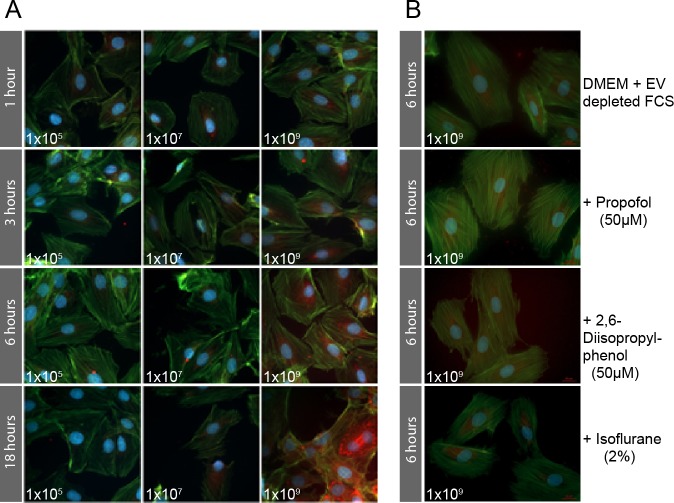
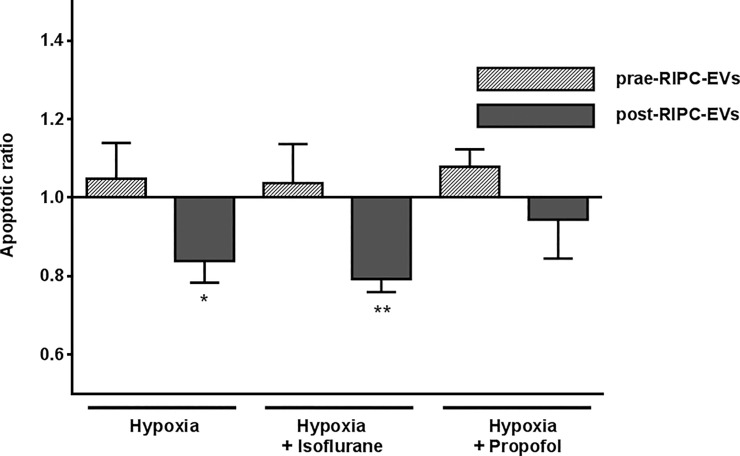
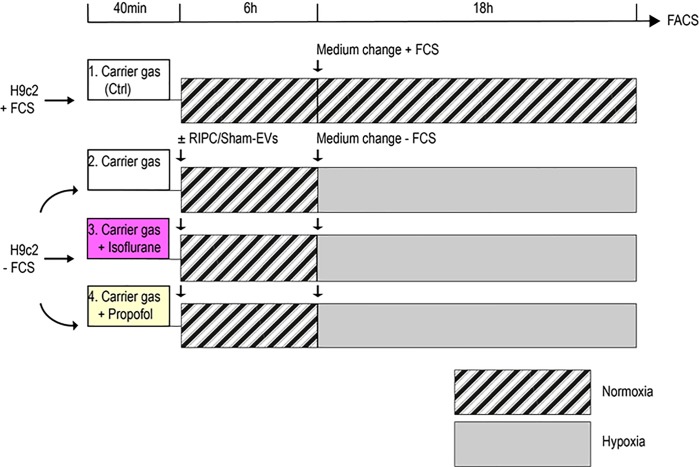
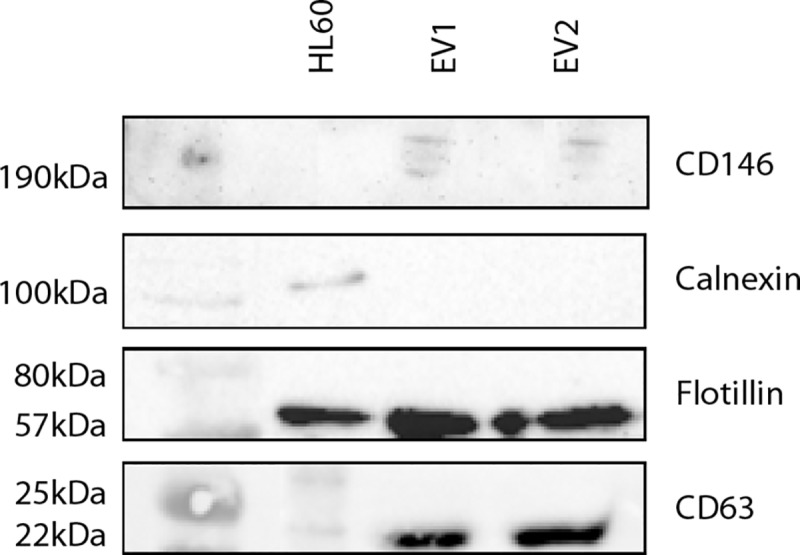
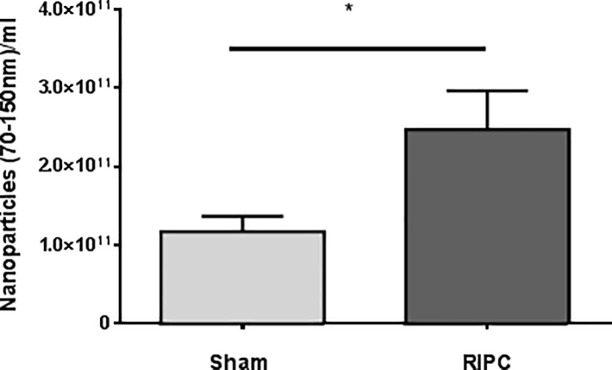
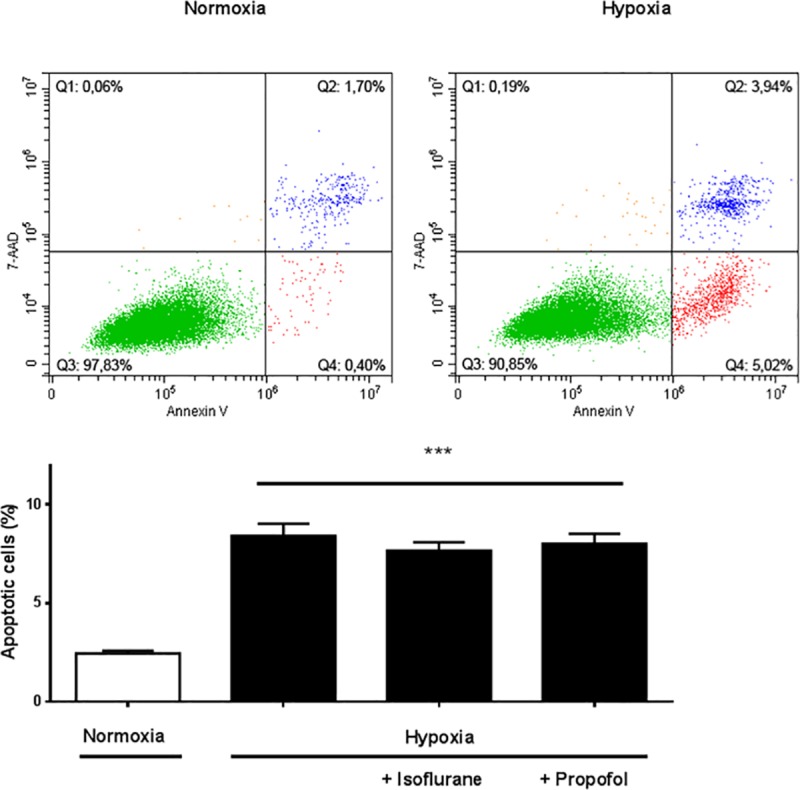
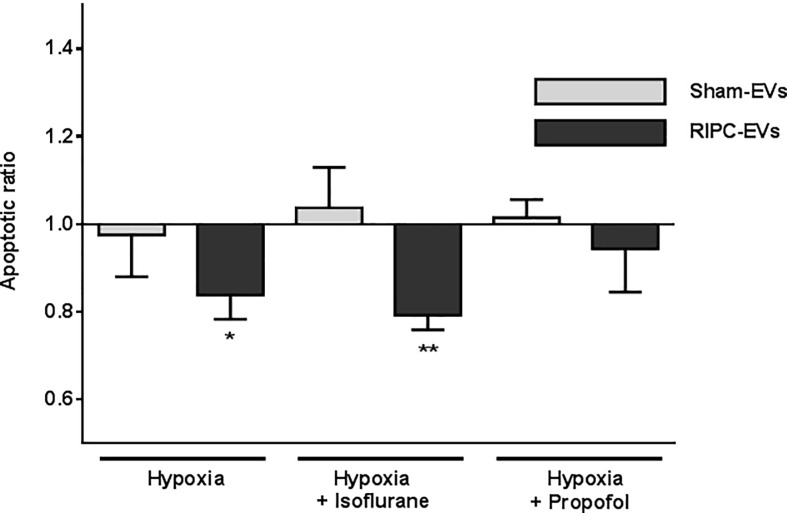
Remote ischemic preconditioning (RIPC) can evoke cardioprotection following ischemia/reperfusion and this may depend on the anesthetic used. We tested whether 1) extracellular vesicles (EVs) isolated from humans undergoing RIPC protect cardiomyoblasts against hypoxia-induced apoptosis and 2) this effect is altered by cardiomyoblast exposure to isoflurane or propofol. EVs were isolated before and 60 min after RIPC or Sham from ten patients undergoing coronary artery bypass graft surgery with isoflurane anesthesia and quantified by Nanoparticle Tracking Analysis. Following EV-treatment for 6 hours under exposure of isoflurane or propofol, rat H9c2 cardiomyoblasts were cultured for 18 hours in normoxic or hypoxic atmospheres. Apoptosis was detected by flow cytometry. Serum nanoparticle concentrations in patients had increased sixty minutes after RIPC compared to Sham (2.5x10¹¹±4.9x10¹⁰ nanoparticles/ml; Sham: 1.2x10¹¹±2.0x10¹⁰; p = 0.04). Hypoxia increased apoptosis of H9c2 cells (hypoxia: 8.4%±0.6; normoxia: 2.5%±0.1; p<0.0001). RIPC-EVs decreased H9c2 cell apoptosis compared to control (apoptotic ratio: 0.83; p = 0.0429) while Sham-EVs showed no protection (apoptotic ratio: 0.97). Prior isoflurane exposure in vitro even increased protection (RIPC-EVs/control, apoptotic ratio: 0.79; p = 0.0035; Sham-EVs/control, apoptotic ratio:1.04) while propofol (50μM) abrogated protection by RIPC-EVs (RIPC-EVs/control, Apoptotic ratio: 1.01; Sham-EVs/control, apoptotic ratio: 0.94; p = 0.602). Thus, EVs isolated from patients undergoing RIPC under isoflurane anesthesia protect H9c2 cardiomyoblasts against hypoxia-evoked apoptosis and this effect is abrogated by propofol. This supports a role of human RIPC-generated EVs in cardioprotection and underlines propofol as a possible confounder in RIPC-signaling mediated by EVs.
远程缺血预处理 (RIPC) 可在缺血/再灌注后引起心肌保护,这可能取决于所使用的麻醉剂。我们测试了以下两点:1)来自接受 RIPC 的患者的细胞外囊泡 (EVs) 是否能保护心肌细胞免受缺氧诱导的凋亡;2)这种作用是否会因心肌细胞暴露于异氟醚或异丙酚而改变。在接受异氟醚麻醉的冠状动脉旁路移植手术患者中,在 RIPC 前和 RIPC 后 60 分钟时分别从 10 名患者中分离 EVs,并通过纳米颗粒跟踪分析进行定量。在异氟醚或异丙酚暴露下用 EV 处理 6 小时后,将大鼠 H9c2 心肌细胞在常氧或低氧环境下培养 18 小时。通过流式细胞术检测凋亡。与 Sham 相比,RIPC 后 60 分钟患者血清中的纳米颗粒浓度增加(2.5x10¹¹±4.9x10¹⁰ 个纳米颗粒/ml;Sham:1.2x1011±2.0x1010;p = 0.04)。缺氧增加 H9c2 细胞的凋亡(缺氧:8.4%±0.6;常氧:2.5%±0.1;p<0.0001)。与对照组相比,RIPC-EVs 降低了 H9c2 细胞的凋亡(凋亡比例:0.83;p = 0.0429),而 Sham-EVs 则没有保护作用(凋亡比例:0.97)。体外预先接触异氟醚甚至增加了保护作用(RIPC-EVs/对照,凋亡比例:0.79;p = 0.0035;Sham-EVs/对照,凋亡比例:1.04),而丙泊酚(50μM)阻断了 RIPC-EVs 的保护作用(RIPC-EVs/对照,凋亡比例:1.01;Sham-EVs/对照,凋亡比例:0.94;p = 0.602)。因此,从接受异氟醚麻醉下 RIPC 的患者中分离的 EVs 可保护 H9c2 心肌细胞免受缺氧诱导的凋亡,而丙泊酚则阻断了这种作用。这支持了人类 RIPC 产生的 EV 在心脏保护中的作用,并强调了丙泊酚作为 EV 介导的 RIPC 信号转导的可能混杂因素。