Wang Jianjian, Cao Yuze, Lu Xiaoyu, Wang Xiaolong, Kong Xiaotong, Bo Chunrui, Li Shuang, Bai Ming, Jiao Yang, Gao Hongyu, Yao Xiuhua, Ning Shangwei, Wang Lihua, Zhang Huixue
Department of Neurology, The Second Affiliated Hospital of Harbin Medical University, Harbin 150081, China.
Department of Neurology, The Second Affiliated Hospital of Harbin Medical University, Harbin 150081, China; Department of Neurology, Peking Union Medical College Hospital, Chinese Academy of Medical Sciences, Beijing 100730, China.
Mol Ther Nucleic Acids. 2020 Mar 6;19:1123-1133. doi: 10.1016/j.omtn.2020.01.005. Epub 2020 Jan 18.
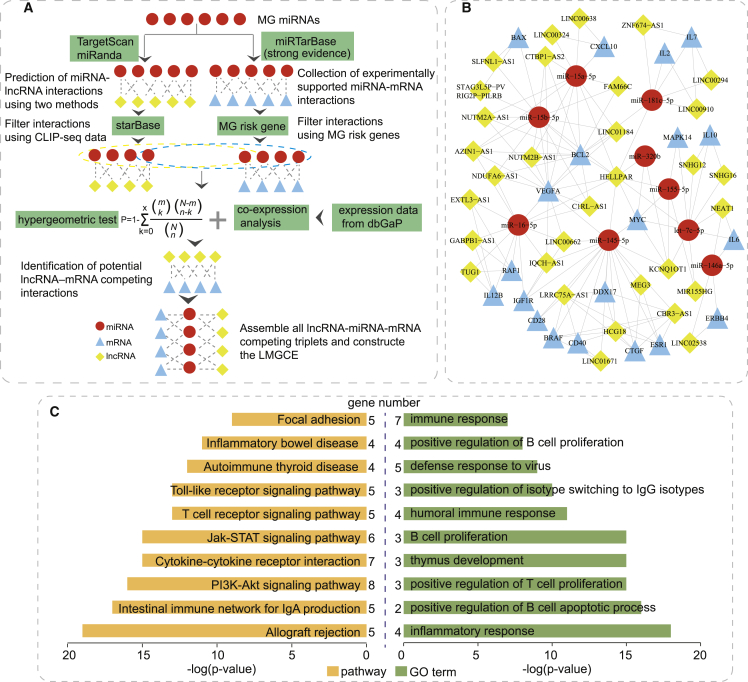
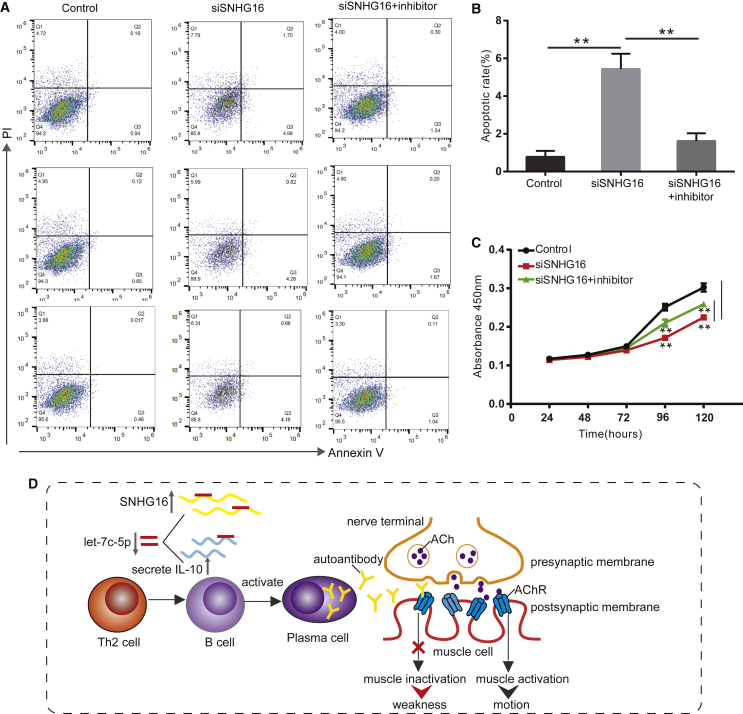
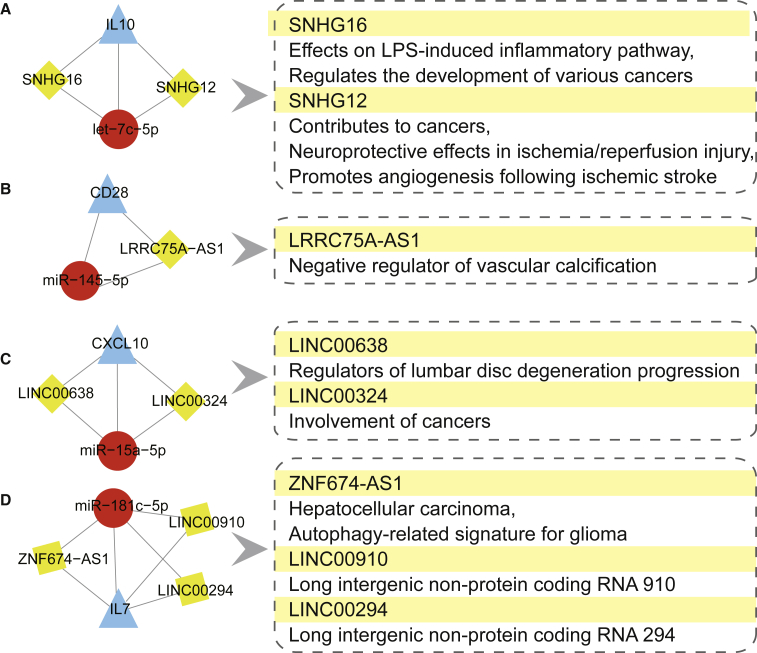
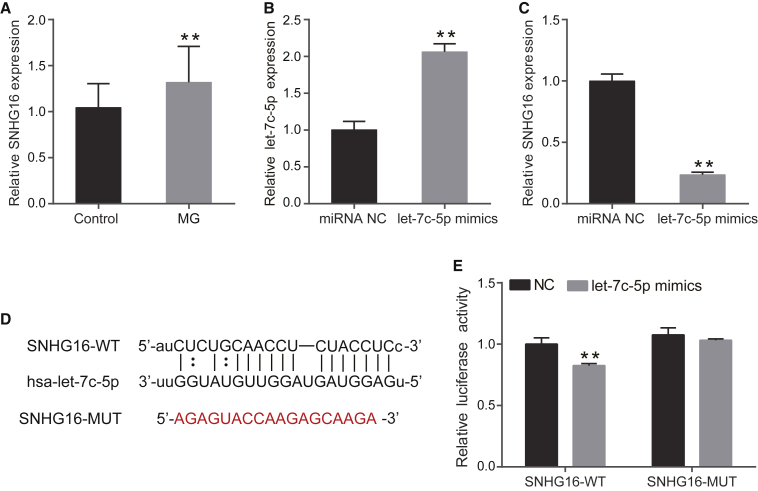
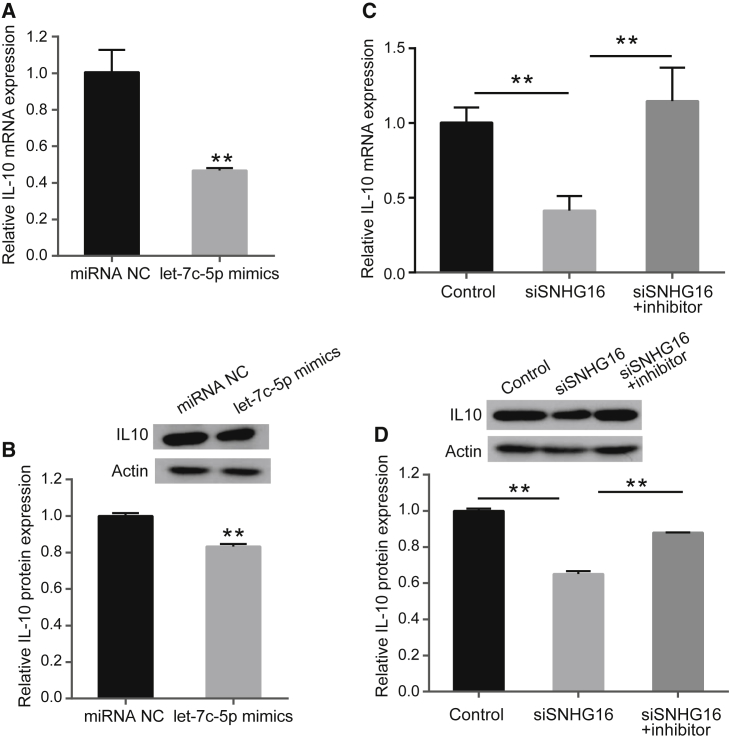
Myasthenia gravis (MG) is an autoimmune disorder resulting from antibodies against the proteins at the neuromuscular junction. Emerging evidence indicates that long non-coding RNAs (lncRNAs), acting as competing endogenous RNAs (ceRNAs), are involved in various diseases. However, the regulatory mechanisms of ceRNAs underlying MG remain largely unknown. In this study, we constructed a lncRNA-mediated ceRNA network involved in MG using a multi-step computational strategy. Functional annotation analysis suggests that these lncRNAs may play crucial roles in the immunological mechanism underlying MG. Importantly, through manual literature mining, we found that lncRNA SNHG16 (small nucleolar RNA host gene 16), acting as a ceRNA, plays important roles in the immune processes. Further experiments showed that SNHG16 expression was upregulated in peripheral blood mononuclear cells (PBMCs) from MG patients compared to healthy controls. Luciferase reporter assays confirmed that SNHG16 is a target of the microRNA (miRNA) let-7c-5p. Subsequent experiments indicated that SNHG16 regulates the expression of the key MG gene interleukin (IL)-10 by sponging let-7c-5p in a ceRNA manner. Furthermore, functional assays showed that SNHG16 inhibits Jurkat cell apoptosis and promotes cell proliferation by sponging let-7c-5p. Our study will contribute to a deeper understanding of the regulatory mechanism of MG and will potentially provide new therapeutic targets for MG patients.
重症肌无力(MG)是一种自身免疫性疾病,由针对神经肌肉接头处蛋白质的抗体引起。新出现的证据表明,作为竞争性内源性RNA(ceRNA)的长链非编码RNA(lncRNA)参与了多种疾病。然而,MG潜在的ceRNA调控机制在很大程度上仍不清楚。在本研究中,我们使用多步骤计算策略构建了一个参与MG的lncRNA介导的ceRNA网络。功能注释分析表明,这些lncRNA可能在MG潜在的免疫机制中发挥关键作用。重要的是,通过人工文献挖掘,我们发现lncRNA SNHG16(小核仁RNA宿主基因16)作为一种ceRNA,在免疫过程中发挥重要作用。进一步的实验表明,与健康对照相比,MG患者外周血单个核细胞(PBMC)中SNHG16的表达上调。荧光素酶报告基因检测证实SNHG16是微小RNA(miRNA)let-7c-5p的靶标。随后的实验表明,SNHG16通过以ceRNA方式海绵化let-7c-5p来调节MG关键基因白细胞介素(IL)-10的表达。此外,功能分析表明,SNHG16通过海绵化let-7c-5p抑制Jurkat细胞凋亡并促进细胞增殖。我们的研究将有助于更深入地了解MG的调控机制,并可能为MG患者提供新治疗靶点。