Department of Paediatrics and Adolescent Medicine, LKS Faculty of Medicine, The University of Hong Kong, Hong Kong, Special Administrative Region, China.
Department of Obstetrics and Gynaecology, Queen Mary Hospital, Hong Kong, Special Administrative Region, China.
BMC Pregnancy Childbirth. 2020 Feb 14;20(1):109. doi: 10.1186/s12884-020-2772-y.
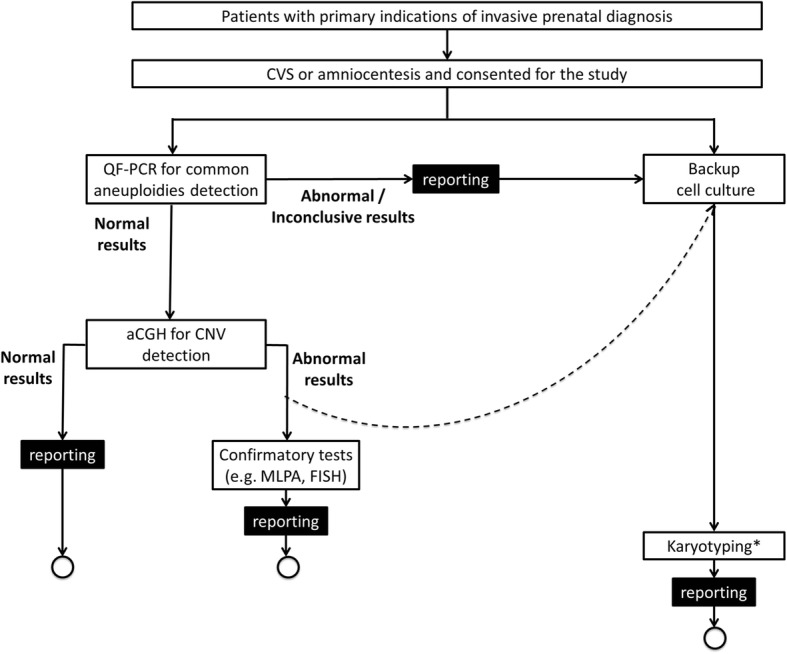
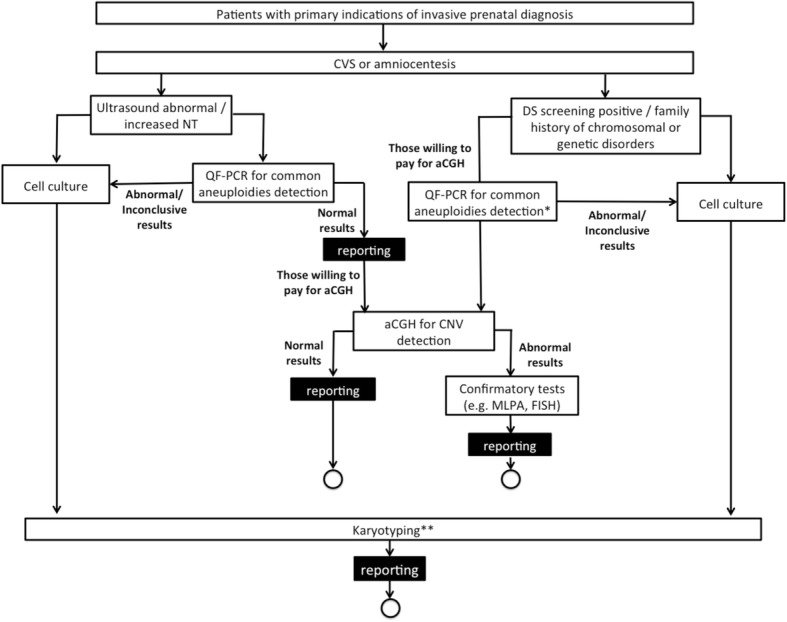
Chromosomal microarray (CMA) has been shown to be cost-effective over karyotyping in invasive prenatal diagnosis for pregnancies with fetal ultrasound anomalies. Yet, information regarding preceding and subsequent tests must be considered as a whole before the true cost-effectiveness can emerge. Currently in Hong Kong, karyotyping is offered free as the standard prenatal test while genome-wide array comparative genome hybridization (aCGH), a form of CMA, is self-financed. A new algorithm was proposed to use aCGH following quantitative fluorescent polymerase chain reaction (QF-PCR) as primary test instead of karyotyping. This study aims to evaluate the cost-effectiveness of the proposed algorithm versus the current algorithm for prenatal diagnosis in Hong Kong.
Between November 2014 and February 2016, 129 pregnant women who required invasive prenatal diagnosis at two public hospitals in Hong Kong were prospectively recruited. The proposed algorithm was performed for all participants in this demonstration study. For the cost-effectiveness analysis, cost and outcome (diagnostic rate) data were compared with that of a hypothetical scenario representing the current algorithm. Further analysis was performed to incorporate women's willingness-to-pay for the aCGH test. Impact of government subsidies on the aCGH test was explored as a sensitivity analysis.
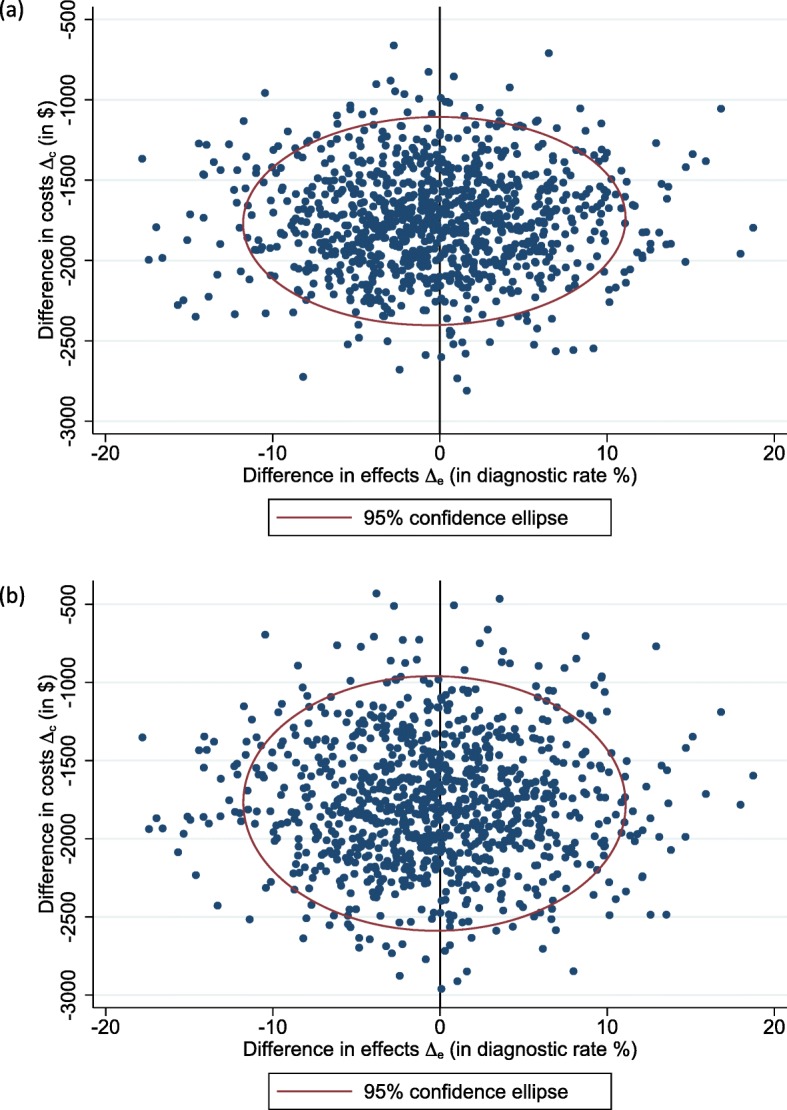
The proposed algorithm dominated the current algorithm for prenatal diagnosis. Both algorithms were equally effective but the proposed algorithm was significantly cheaper (p ≤ 0.05). Taking into account women's willingness-to-pay for an aCGH test, the proposed algorithm was more effective and less costly than the current algorithm. When the government subsidy reaches 100%, the maximum number of diagnoses could be made.
By switching to the proposed algorithm, cost saving can be achieved whilst maximizing the diagnostic rate for invasive prenatal diagnosis. It is recommended to implement aCGH as a primary test following QF-PCR to replace the majority of karyotyping for prenatal diagnosis in Hong Kong.
染色体微阵列分析(CMA)已被证明在具有胎儿超声异常的侵入性产前诊断中比核型分析更具成本效益。然而,在确定真正的成本效益之前,必须将之前和之后的测试信息作为一个整体进行考虑。目前,在香港,核型分析作为标准的产前检查是免费的,而全基因组微阵列比较基因组杂交(CMA 的一种形式)则是自费的。提出了一种新的算法,即用定量荧光聚合酶链反应(QF-PCR)后的 CMA 替代核型分析作为主要检测方法。本研究旨在评估该算法与香港目前的产前诊断算法相比的成本效益。
2014 年 11 月至 2016 年 2 月,前瞻性地招募了在香港两家公立医院需要进行侵入性产前诊断的 129 名孕妇。在这个演示研究中,对所有参与者都进行了提议的算法。为了进行成本效益分析,将成本和结果(诊断率)数据与代表当前算法的假设情景进行了比较。进一步的分析考虑了女性对 CMA 检测的支付意愿。作为敏感性分析,探讨了政府补贴对 CMA 检测的影响。
提议的算法在产前诊断中优于当前算法。两种算法的效果相同,但提议的算法明显更便宜(p≤0.05)。考虑到女性对 CMA 检测的支付意愿,提议的算法比当前算法更有效且成本更低。当政府补贴达到 100%时,可进行的诊断数量最多。
通过转向提议的算法,可以在最大限度地提高侵入性产前诊断的诊断率的同时节省成本。建议在香港将 QF-PCR 后的 CMA 作为主要检测方法替代核型分析,用于大多数产前诊断。