Division of Pulmonary Diseases and Critical Care Medicine, Department of Medicine, University of North Carolina, Chapel Hill, North Carolina.
Marsico Lung Institute, University of North Carolina, Chapel Hill, North Carolina.
Physiol Rep. 2020 Feb;8(3):e14368. doi: 10.14814/phy2.14368.
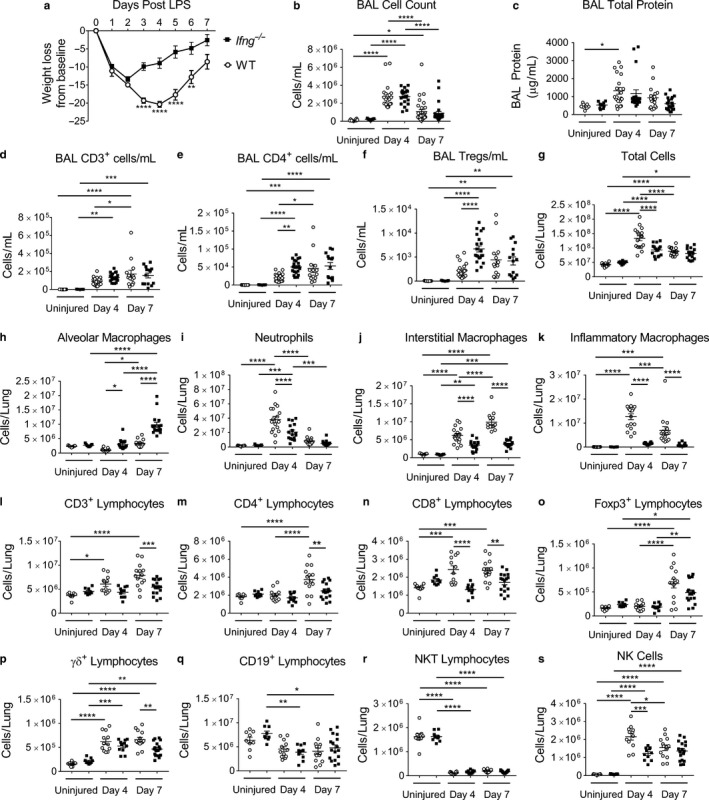
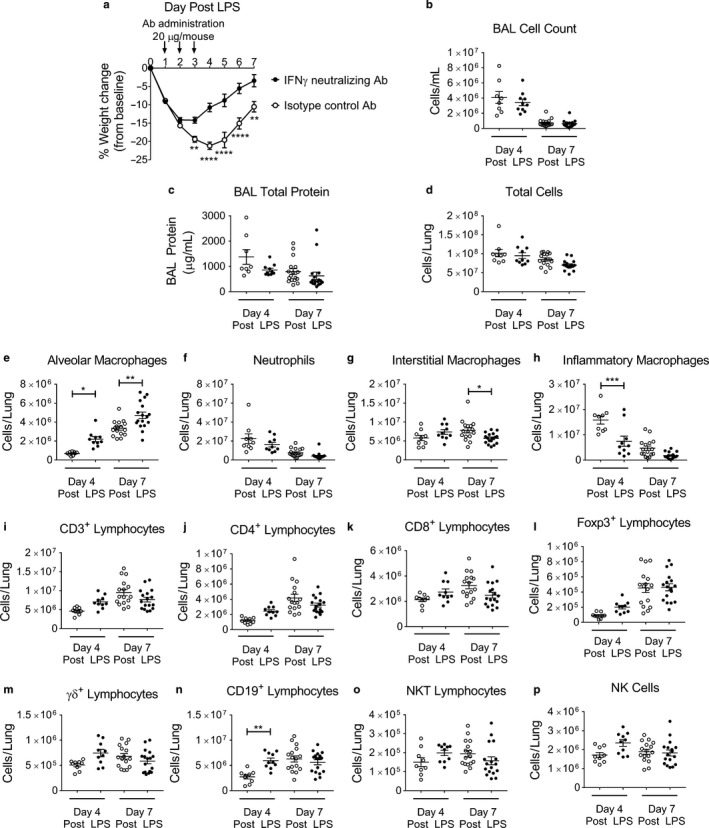
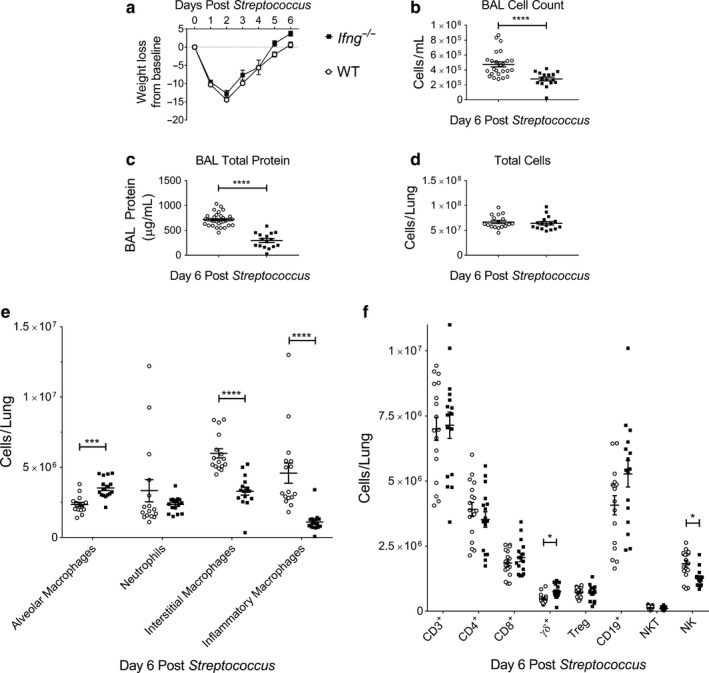
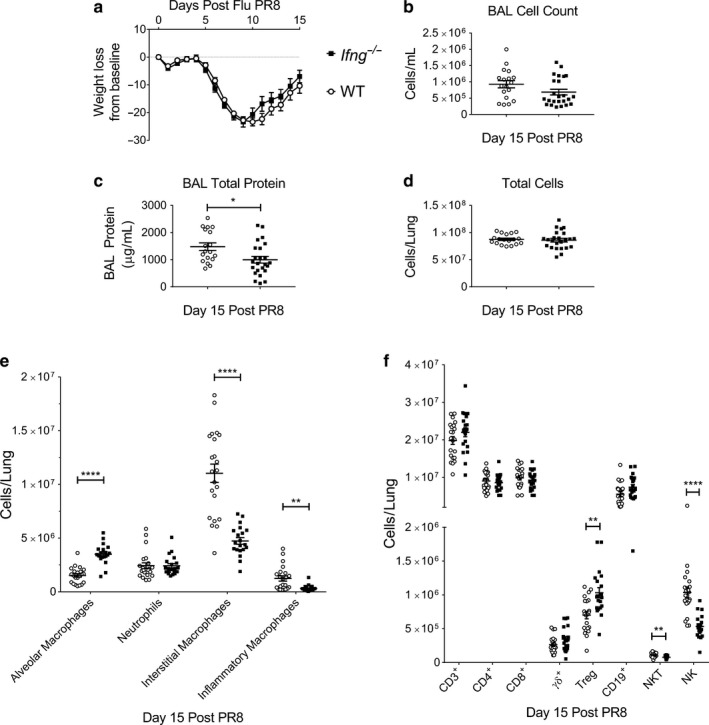
The immunologic responses that occur early in the acute respiratory distress syndrome (ARDS) elicit immune-mediated damage. The mechanisms underlying the resolution of ARDS, particularly the role of signaling molecules in regulating immune cell kinetics, remain important questions. Th1-mediated responses can contribute to the pathogenesis of acute lung injury (ALI). Interferon-gamma (IFN-γ) orchestrates early inflammatory events, enhancing immune-mediated damage. The current study investigated IFN-γ during resolution in several experimental models of ALI. The absence of IFN-γ resulted in altered kinetics of lymphocyte and macrophage responses, suggesting that IFN-γ present in this microenvironment is influential in ALI resolution. Genetic deficiency of IFN-γ or administering neutralizing IFN-γ antibodies accelerated the pace of resolution. Neutralizing IFN-γ decreased the numbers of interstitial and inflammatory macrophages and increased alveolar macrophage numbers during resolution. Our results underline the complexity of lung injury resolution and provide insight into the effects through which altered IFN-γ concentrations affect immune cell kinetics and the rate of resolution. These findings suggest that therapies that spatially or temporally control IFN-γ signaling may promote ALI resolution. Identifying and elucidating the mechanisms critical to ALI resolution will allow the development of therapeutic approaches to minimize collateral tissue damage without adversely altering the response to injury.
急性呼吸窘迫综合征(ARDS)早期发生的免疫反应会引发免疫介导的损伤。ARDS 缓解的机制,特别是信号分子在调节免疫细胞动力学中的作用,仍然是重要的问题。Th1 介导的反应可能有助于急性肺损伤(ALI)的发病机制。干扰素-γ(IFN-γ)协调早期炎症事件,增强免疫介导的损伤。本研究在几种 ALI 的实验模型中研究了 IFN-γ 在缓解期的作用。IFN-γ 的缺失导致淋巴细胞和巨噬细胞反应的动力学发生改变,这表明这种微环境中存在的 IFN-γ对 ALI 缓解有影响。IFN-γ 的基因缺失或给予中和 IFN-γ 的抗体加速了缓解的速度。中和 IFN-γ 减少了间质和炎症性巨噬细胞的数量,并在缓解期间增加了肺泡巨噬细胞的数量。我们的研究结果强调了肺损伤缓解的复杂性,并深入了解了改变 IFN-γ 浓度如何影响免疫细胞动力学和缓解速度的影响。这些发现表明,时空控制 IFN-γ 信号的治疗方法可能促进 ALI 的缓解。确定和阐明对 ALI 缓解至关重要的机制将允许开发治疗方法,以最大限度地减少对组织的损伤,而不会对损伤的反应产生不利影响。