Department of Endocrinology, Qilu Hospital of Shandong University, Jinan, Shandong, China 250012.
Institute of Endocrine and Metabolic Diseases of Shandong University, Jinan, Shandong, China 250012.
J Diabetes Res. 2020 Jan 22;2020:6047145. doi: 10.1155/2020/6047145. eCollection 2020.
More and more studies focus on the relationship between the gastrointestinal microbiome and type 2 diabetes, but few of them have actually explored the relationship between enterotypes and type 2 diabetes. We enrolled 134 patients with type 2 diabetes and 37 nondiabetic controls. The anthropometric and clinical indices of each subject were measured. Fecal samples of each subject were also collected and were processed for 16S rDNA sequencing. Multiple logistic regression analysis was used to determine the associations of enterotypes with type 2 diabetes. Multiple linear regression analysis was used to explore the relationship between lipopolysaccharide levels and insulin sensitivity after adjusting for age, BMI, TG, HDL-C, DAO, and TNF-. The correlation analysis between factors and microbiota was identified using Spearman correlation analysis. The correlation analysis between factors was identified using partial correlation analysis.
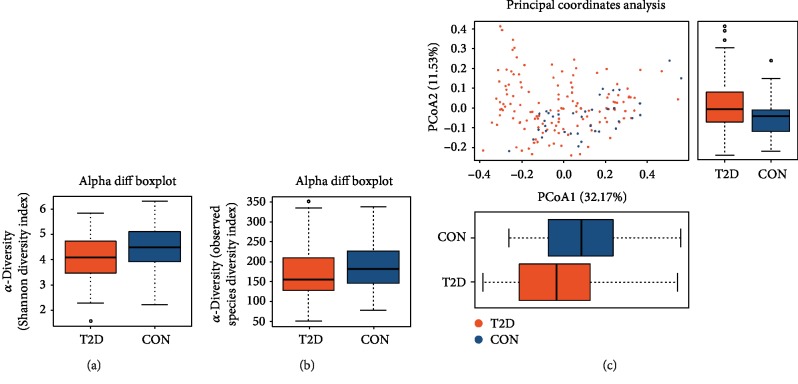
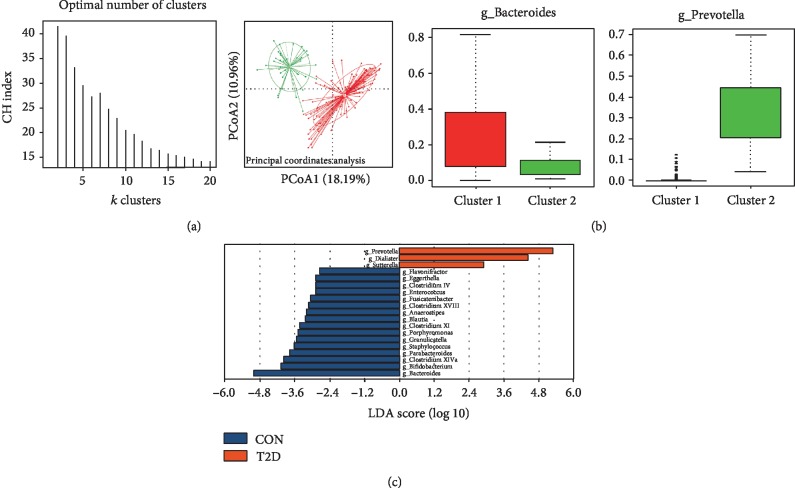
Gut microbiota in type 2 diabetes group exhibited lower bacterial diversity compared with nondiabetic controls. The fecal communities from all subjects clustered into two enterotypes distinguished by the levels of and Logistic regression analysis showed that the and and enterotype. Partial correlation analysis showed that lipopolysaccharide was closely associated with diamine oxidase, tumor necrosis factor-alpha, and Gutt insulin sensitivity index after adjusting for multiple covariates. Furthermore, the level of lipopolysaccharide was found to be an independent risk factor for insulin sensitivity.
We identified two enterotypes, and , among all subjects. Our results showed that the enterotype was an independent risk factor for type 2 diabetes, which was due to increased levels of lipopolysaccharide causing decreased insulin sensitivity. and enterotype. Partial correlation analysis showed that lipopolysaccharide was closely associated with diamine oxidase, tumor necrosis factor-alpha, and Gutt insulin sensitivity index after adjusting for multiple covariates. Furthermore, the level of lipopolysaccharide was found to be an independent risk factor for insulin sensitivity. and.
越来越多的研究关注胃肠道微生物组与 2 型糖尿病之间的关系,但实际上很少有研究探索肠型与 2 型糖尿病之间的关系。我们招募了 134 名 2 型糖尿病患者和 37 名非糖尿病对照者。测量了每位受试者的人体测量和临床指标。还收集了每位受试者的粪便样本,并进行 16S rDNA 测序。使用多因素逻辑回归分析确定肠型与 2 型糖尿病的关联。使用多元线性回归分析,在调整年龄、BMI、TG、HDL-C、DAO 和 TNF-后,探讨脂多糖水平与胰岛素敏感性之间的关系。使用 Spearman 相关分析确定因素与微生物群之间的相关性。使用偏相关分析确定因素之间的相关性。
2 型糖尿病组的肠道微生物群与非糖尿病对照组相比,细菌多样性较低。所有受试者的粪便群落聚类为两种肠型,以 和 水平区分。逻辑回归分析显示, 与 及 型。偏相关分析显示,脂多糖与二胺氧化酶、肿瘤坏死因子-α和 Gutt 胰岛素敏感性指数密切相关,调整了多个协变量后。此外,脂多糖水平被发现是胰岛素敏感性的独立危险因素。
我们在所有受试者中确定了两种肠型, 和 。我们的结果表明, 肠型是 2 型糖尿病的独立危险因素,这是由于脂多糖水平升高导致胰岛素敏感性降低。和 型。偏相关分析显示,脂多糖与二胺氧化酶、肿瘤坏死因子-α和 Gutt 胰岛素敏感性指数密切相关,调整了多个协变量后。此外,脂多糖水平被发现是胰岛素敏感性的独立危险因素。