Bai Cui-Bing, Liu Xin-Yu, Zhang Jie, Qiao Rui, Dang Kun, Wang Chang, Wei Biao, Zhang Lin, Chen Shui-Sheng
School of Chemistry and Materials Engineering, Fuyang Normal University, Fuyang, Anhui Province 236037, China.
Engineering Research Center of Biomass Conversion and Pollution Prevention of Anhui Educational Institutions, Fuyang Normal University, Fuyang, Anhui Province 236037, China.
ACS Omega. 2020 Feb 3;5(5):2488-2494. doi: 10.1021/acsomega.0c00021. eCollection 2020 Feb 11.
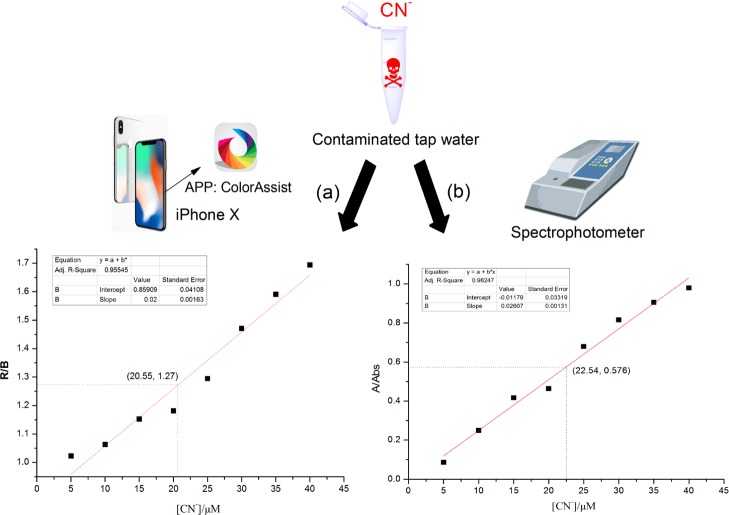
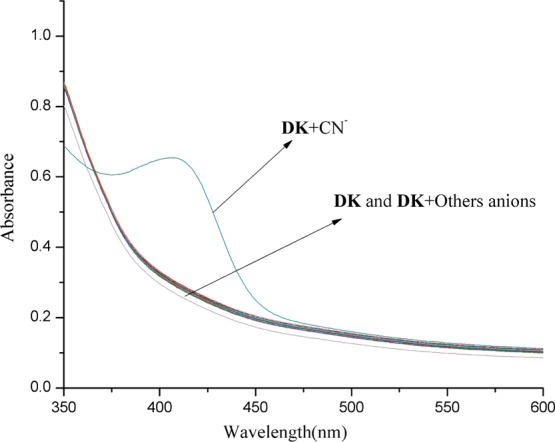
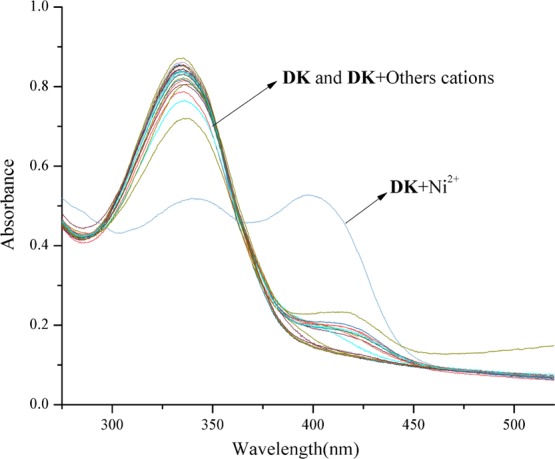
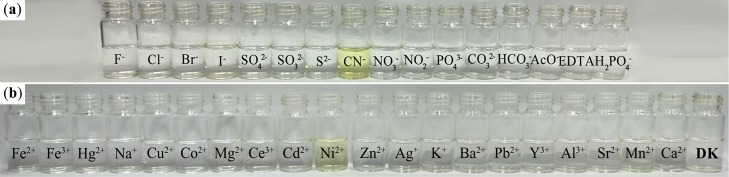
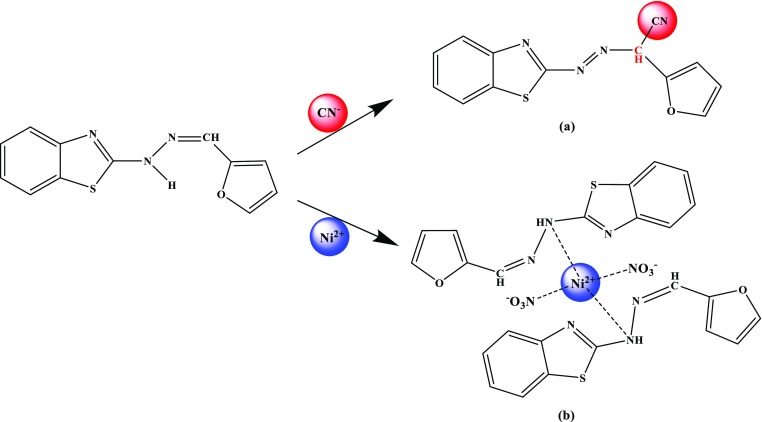
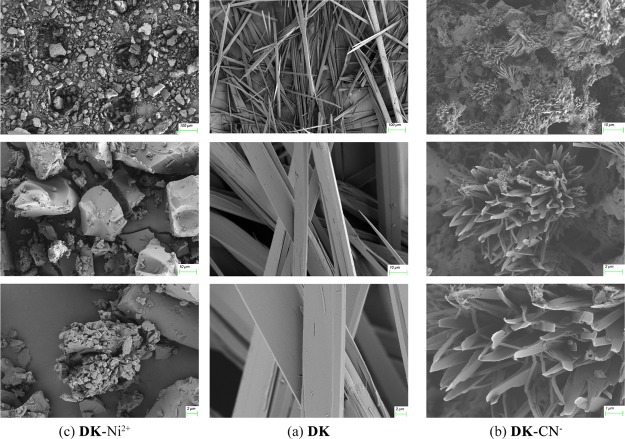
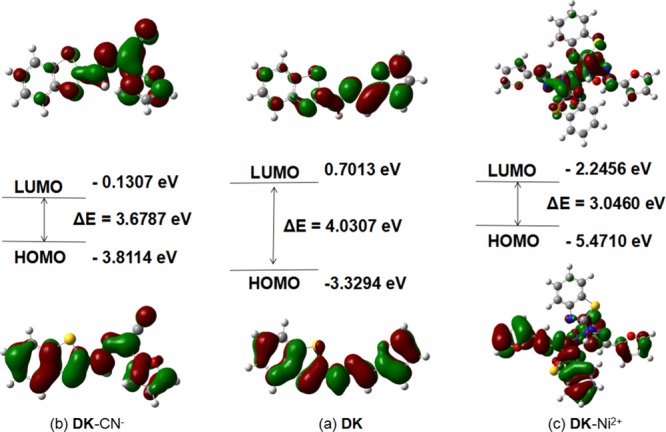
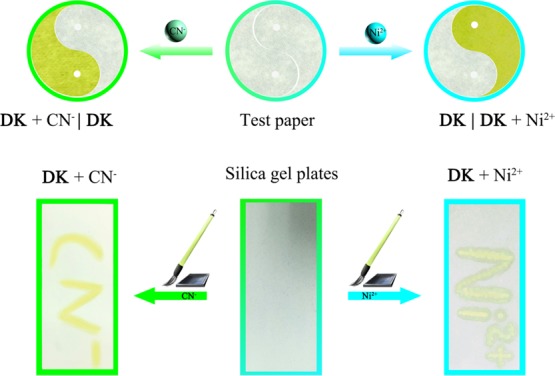
A naked-eye colorimetric chemosensor based on benzothiazole could recognize CN effectively. When interacted with CN in the aqueous solution, the obvious color change of the solution was directly observed by the naked eye. Other anions did not cause any interference. It is interesting that could also discriminate Ni from other cations, and the possible interaction mode between them was verified based on the Job's plot, H nuclear magnetic resonance titration, infrared , electrospray ionization mass spectrometry, scanning electron microscopy analysis, and density functional theory calculation methods. As a result, it is clear that the mode of action between and CN was different from that between and Ni. Meanwhile, the limit of detection of toward CN and Ni was calculated to be 1.7 × 10 or 7.4 × 10 M, respectively. In addition, CN was recognized qualitatively by a test paper and silica gel plates made from . was able to detect CN in tap water quantitatively, rapidly, and on-site by the use of a smartphone APP. All results implied that has certain prospects for practical application to identify CN in water.
一种基于苯并噻唑的裸眼比色化学传感器能够有效识别氰根离子(CN)。当在水溶液中与CN相互作用时,溶液明显的颜色变化可直接用肉眼观察到。其他阴离子不会产生任何干扰。有趣的是,它还能将镍(Ni)与其他阳离子区分开来,并且基于乔布氏曲线、氢核磁共振滴定、红外光谱、电喷雾电离质谱、扫描电子显微镜分析以及密度泛函理论计算方法验证了它们之间可能的相互作用模式。结果表明,它与CN之间的作用模式不同于与Ni之间的作用模式。同时,计算得出它对CN和Ni的检测限分别为1.7×10或7.4×10 M。此外,用由它制成的试纸和硅胶板对CN进行了定性识别。通过使用智能手机应用程序,它能够对自来水中的CN进行定量、快速且现场检测。所有结果表明,它在实际应用中识别水中CN具有一定的前景。