Wu Chaoying, Tong Lingxia, Wu Chaoqun, Chen Dong, Chen Jianguo, Li Qianyun, Jia Fang, Huang Zirui
Department of Otolaryngology Head and Neck Surgery, The First Affiliated Hospital of Jinzhou Medical University, Jinzhou, Liaoning, China.
Department of Ultrasound, Jilin Cancer Hospital, Changchun, Jilin, China.
Cancer Med. 2020 Apr;9(8):2631-2642. doi: 10.1002/cam4.2915. Epub 2020 Feb 17.
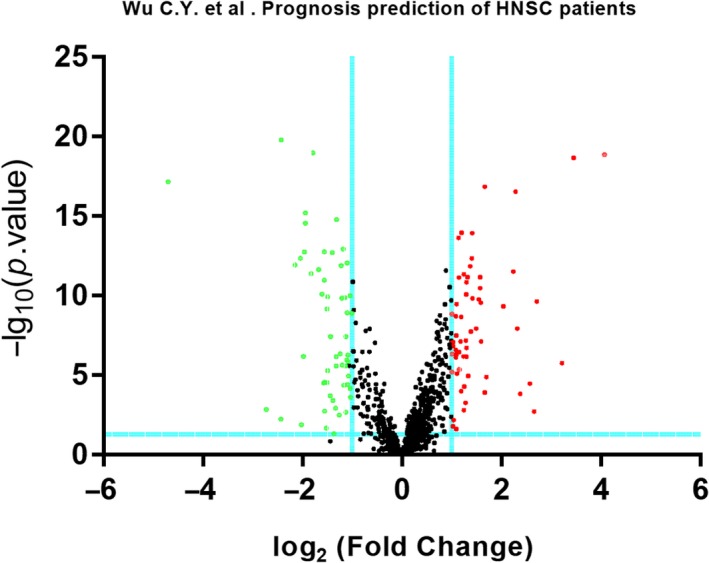
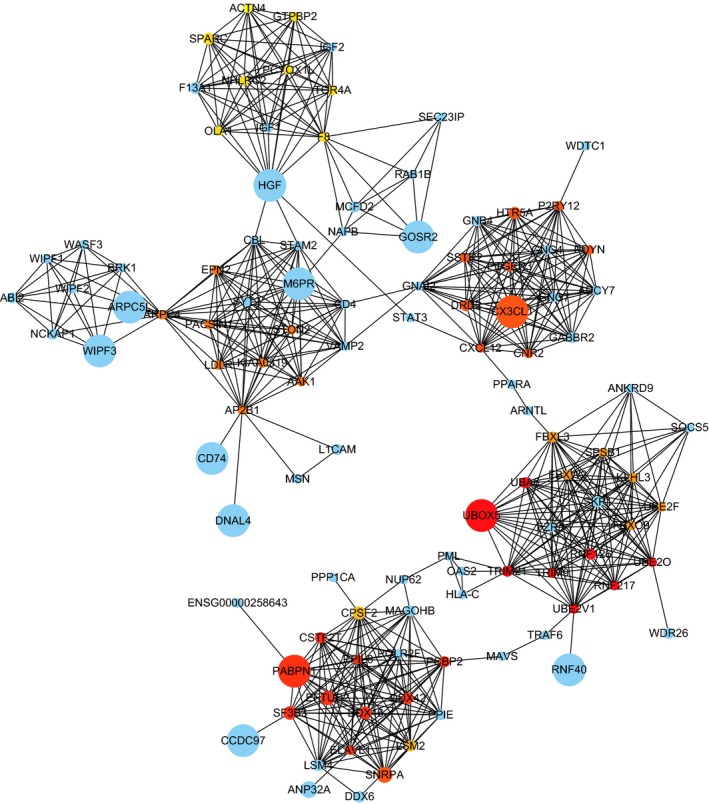
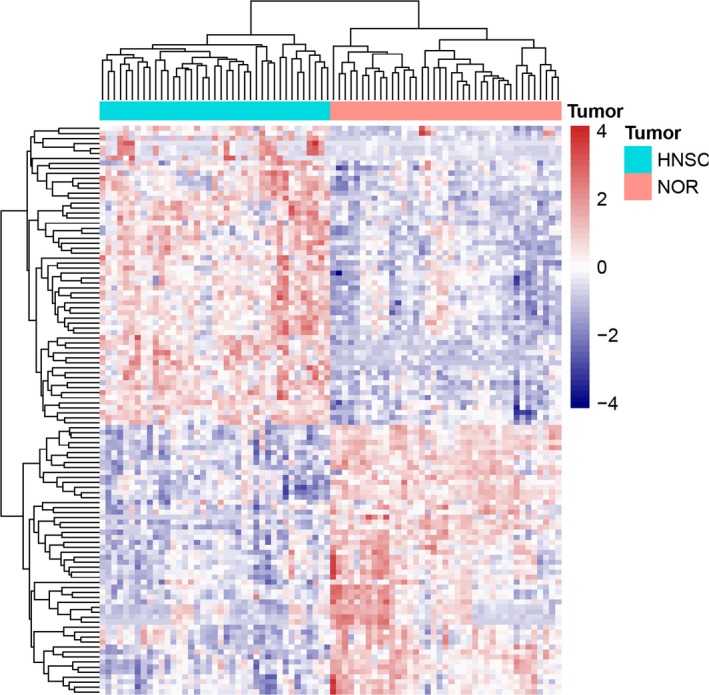
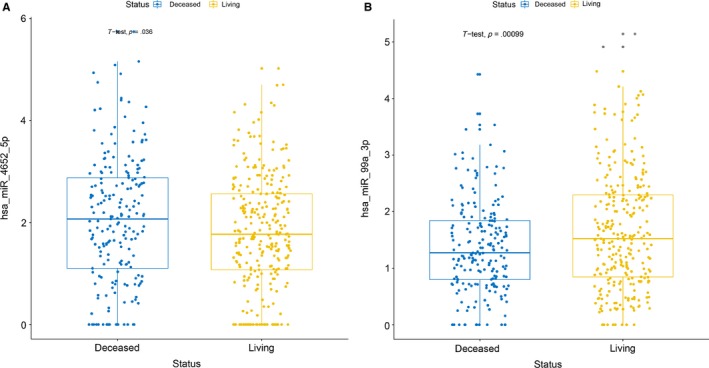
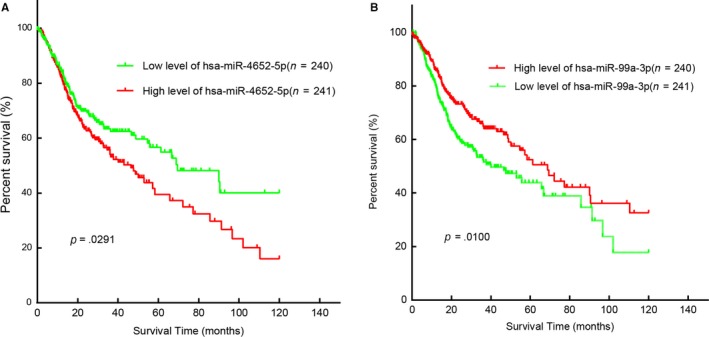
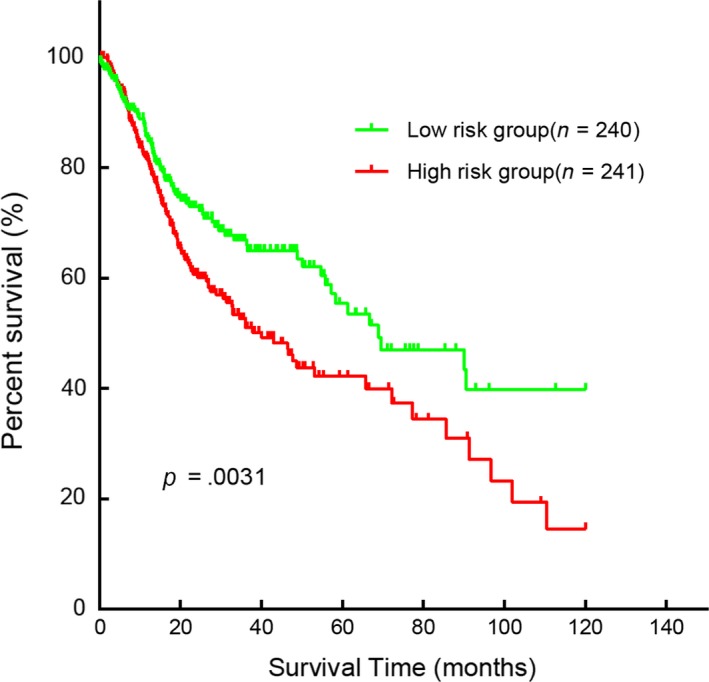
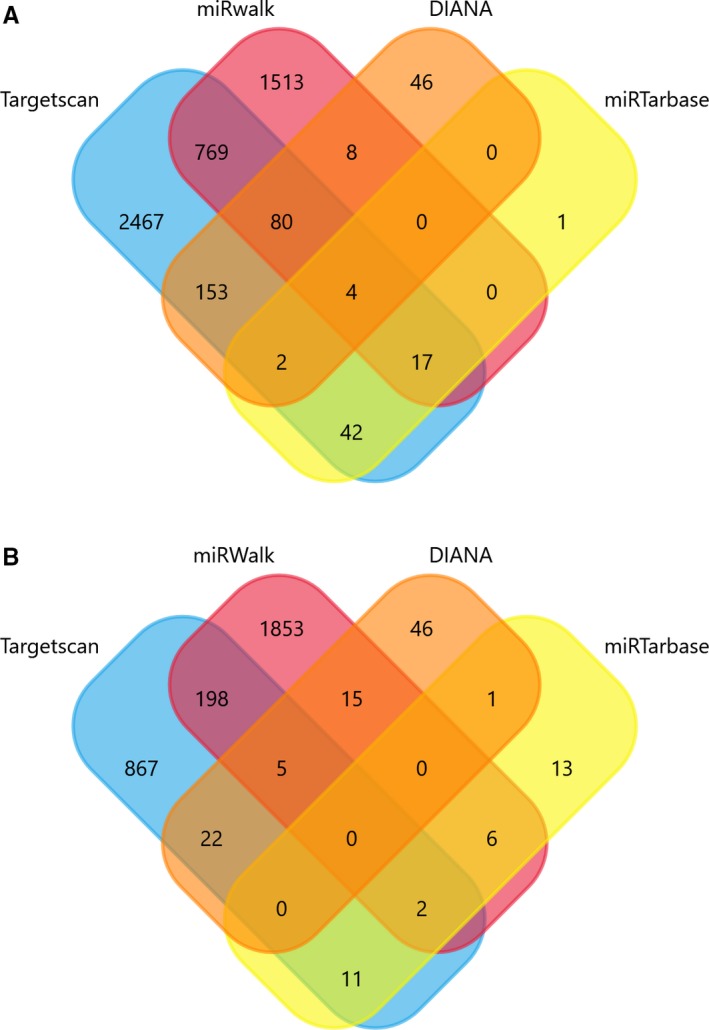
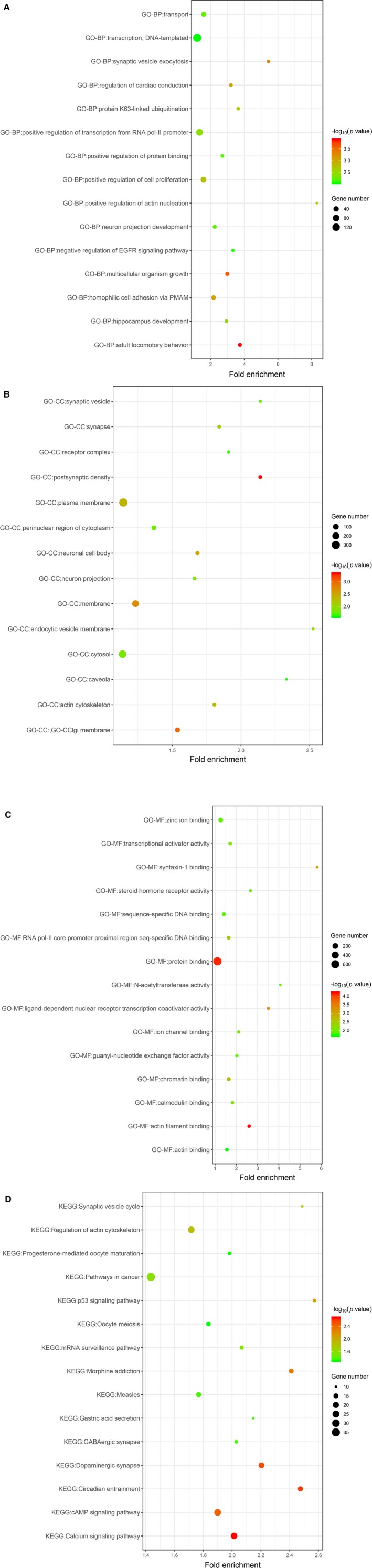
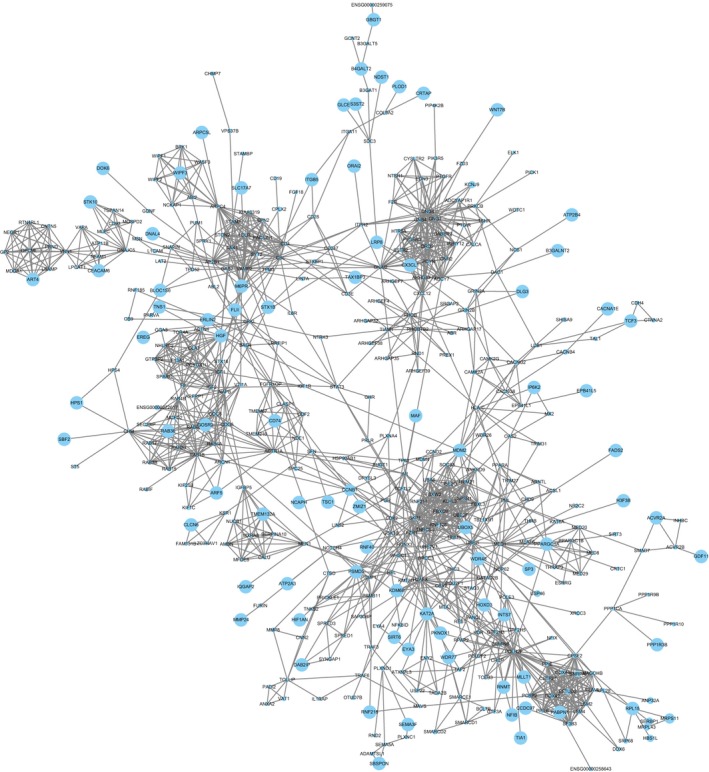
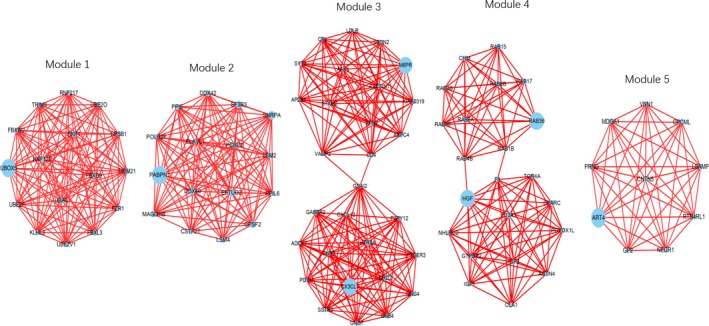
MicroRNAs(miRNAs) are maladjusted in multifarious malignant tumor and can be considered as both carcinogens and tumor-inhibiting factor. In the present study, we analyzed the miRNAs expression profiles and clinical information of 481 patients with head and neck squamous cell carcinoma (HNSCC) through the TCGA dataset to identify the prognostic miRNAs signature. A total of 114 significantly differentially expressed miRNAs (SDEMs) were identified, consisting of 60 up-adjusted and 54 down-adjusted miRNAs. The Kaplan-Meier survival method identified the prognostic function of 2 miRNAs (miR-4652-5p and miR-99a-3P). Univariate and multivariate Cox regression analyses indicated that the 2 miRNAs were significant prognostic elements of HNSCC. Furthermore, bioinformatic analysis was conducted by means of 4 online gene predicted toolkits to recognize the target genes, and enrichment analysis was performed on the target genes by DAVID. The outcomes depicted that target genes were correlated with calcium, as well as cell proliferation, circadian entrainment, EGFR, PI3K-Akt-mTOR, and P53 signaling pathways. Finally, the PPI network was conducted in view of STRING database and Cytoscape. Eight hub genes were identified by CytoHubba and MCODE app, respectively, CBL, SKP1, H2AFX, HGF, POLR2F, UBE2I, VAMP2, and GNAI2 genes. As a result, we identified 2 miRNAs signatures, 8 hub genes, and significant signaling pathways for estimating the prognosis of HNSCC. In order to further explore the molecular mechanism of HNSCC occurrence and development, more comprehensive basic and clinical studies are needed.
微小RNA(miRNA)在多种恶性肿瘤中表达失调,可被视为致癌因素和抑癌因子。在本研究中,我们通过TCGA数据集分析了481例头颈部鳞状细胞癌(HNSCC)患者的miRNA表达谱和临床信息,以确定预后miRNA特征。共鉴定出114个显著差异表达的miRNA(SDEM),其中60个上调,54个下调。Kaplan-Meier生存方法确定了2个miRNA(miR-4652-5p和miR-99a-3P)的预后功能。单因素和多因素Cox回归分析表明,这2个miRNA是HNSCC的重要预后因素。此外,通过4个在线基因预测工具包进行生物信息学分析以识别靶基因,并通过DAVID对靶基因进行富集分析。结果表明,靶基因与钙以及细胞增殖、昼夜节律调节、表皮生长因子受体(EGFR)、磷脂酰肌醇-3激酶-蛋白激酶B-哺乳动物雷帕霉素靶蛋白(PI3K-Akt-mTOR)和P53信号通路相关。最后,基于STRING数据库和Cytoscape构建蛋白质-蛋白质相互作用(PPI)网络。分别通过CytoHubba和MCODE应用程序鉴定出8个枢纽基因,即CBL、SKP1、H2AFX、HGF、POLR2F、UBE2I、VAMP2和GNAI2基因。因此,我们鉴定出2个miRNA特征、8个枢纽基因和重要信号通路,用于评估HNSCC的预后。为了进一步探索HNSCC发生发展的分子机制,需要更全面的基础和临床研究。