Pain Clinic, Department of Anaesthesiology, Intensive Care and Pain Medicine, University of Helsinki, Helsinki University Central Hospital, Helsinki, Finland.
Institute of Clinical Pharmacology, Goethe - University, Theodor - Stern - Kai 7, 60590, Frankfurt Am Main, Germany; Fraunhofer Institute for Molecular Biology and Applied Ecology IME, Project Group Translational Medicine and Pharmacology TMP, Theodor - Stern - Kai 7, 60590, Frankfurt Am Main, Germany.
Breast. 2020 Apr;50:71-80. doi: 10.1016/j.breast.2020.01.042. Epub 2020 Feb 7.
Persistent pain in breast cancer survivors is common. Psychological and sleep-related factors modulate perception, interpretation and coping with pain and may contribute to the clinical phenotype. The present analysis pursued the hypothesis that breast cancer survivors form subgroups, based on psychological and sleep-related parameters that are relevant to the impact of pain on the patients' life.
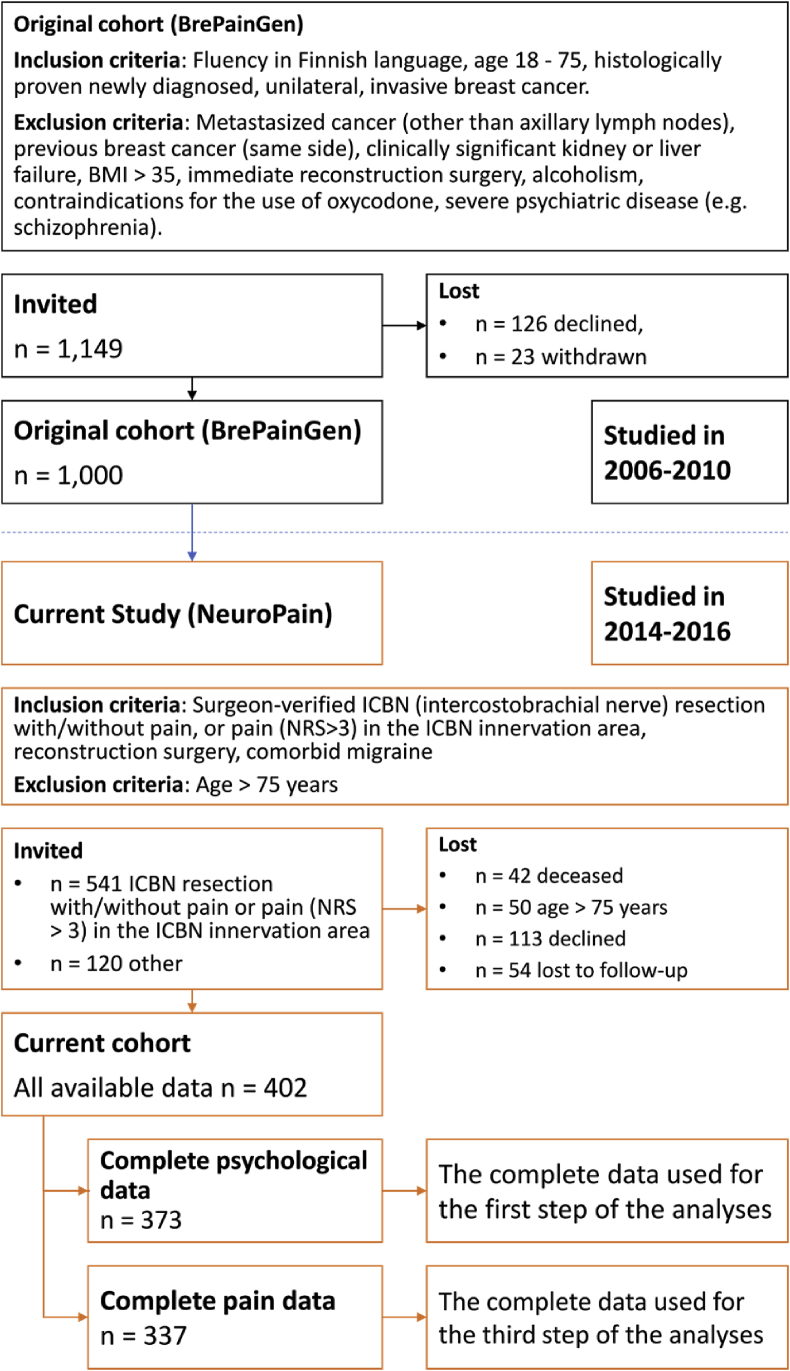
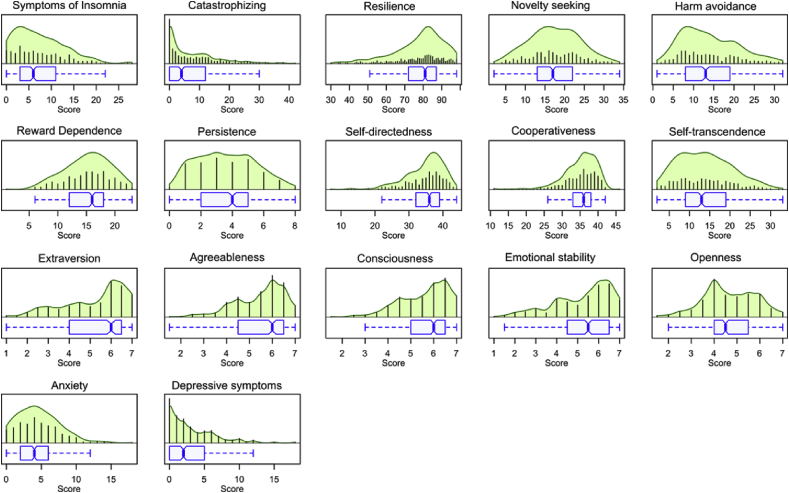
We analysed 337 women treated for breast cancer, in whom psychological and sleep-related parameters as well as parameters related to pain intensity and interference had been acquired. Data were analysed by using supervised and unsupervised machine-learning techniques (i) to detect patient subgroups based on the pattern of psychological or sleep-related parameters, (ii) to interpret the detected cluster structure and (iii) to relate this data structure to pain interference and impact on life.
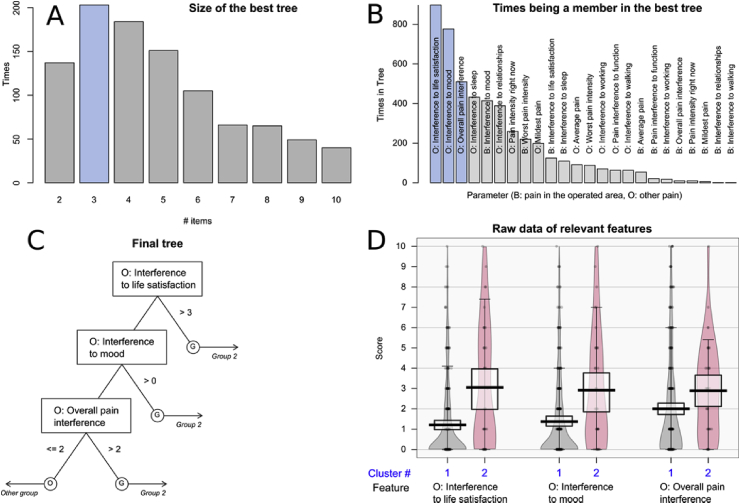
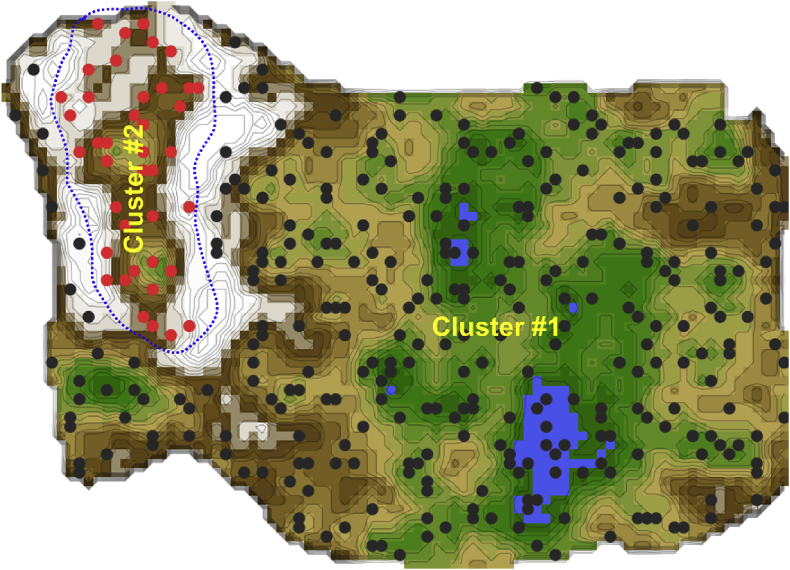
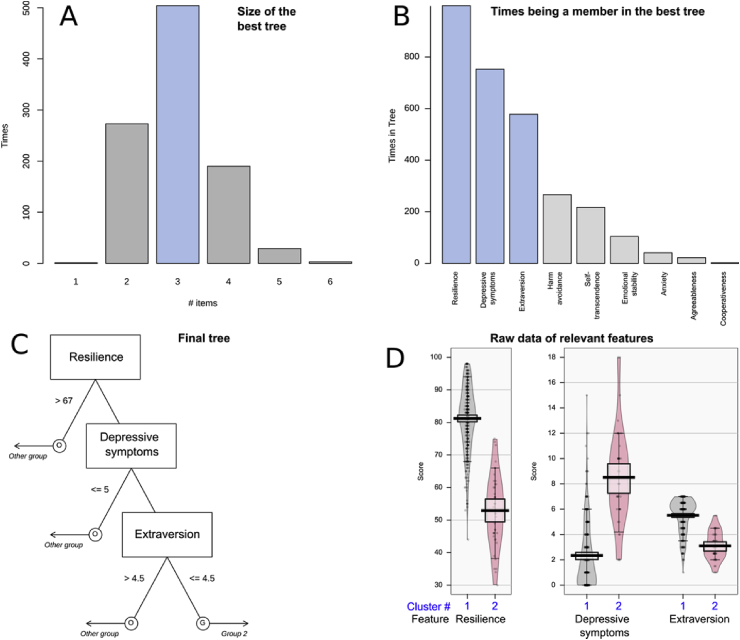
Artificial intelligence-based detection of data structure, implemented as self-organizing neuronal maps, identified two different clusters of patients. A smaller cluster (11.5% of the patients) had comparatively lower resilience, more depressive symptoms and lower extraversion than the other patients. In these patients, life-satisfaction, mood, and life in general were comparatively more impeded by persistent pain.
The results support the initial hypothesis that psychological and sleep-related parameter patterns are meaningful for subgrouping patients with respect to how persistent pain after breast cancer treatments interferes with their life. This indicates that management of pain should address more complex features than just pain intensity. Artificial intelligence is a useful tool in the identification of subgroups of patients based on psychological factors.
乳腺癌幸存者常伴有持续性疼痛。心理和睡眠相关因素调节对疼痛的感知、解释和应对,可能有助于临床表型的形成。本分析旨在验证以下假设,即乳腺癌幸存者可基于与疼痛对患者生活影响相关的心理和睡眠相关参数形成亚组。
我们分析了 337 名接受乳腺癌治疗的女性,获取了她们的心理和睡眠相关参数,以及与疼痛强度和干扰相关的参数。采用有监督和无监督机器学习技术对数据进行分析:(i)根据心理或睡眠相关参数模式检测患者亚组;(ii)解释所检测到的聚类结构;(iii)将该数据结构与疼痛干扰和对生活的影响联系起来。
基于人工智能的数据结构检测,采用自组织神经元图实现,识别出两个不同的患者亚组。一个较小的亚组(占患者的 11.5%)的韧性、抑郁症状和外向性明显低于其他患者。在这些患者中,持续性疼痛对生活满意度、情绪和整体生活的影响较大。
研究结果支持初始假设,即心理和睡眠相关参数模式对于根据乳腺癌治疗后持续性疼痛如何干扰患者生活来对患者进行亚组划分具有重要意义。这表明疼痛管理不仅要关注疼痛强度,还应考虑更复杂的因素。人工智能是基于心理因素识别患者亚组的有用工具。