Veneto Institute of Oncology IOV-IRCCS, Padua, Italy.
Department of Surgery, Oncology and Gastroenterology, University of Padova, Via Gattamelata 64, 35128, Padua, Italy.
J Nanobiotechnology. 2020 Feb 17;18(1):31. doi: 10.1186/s12951-020-00589-3.
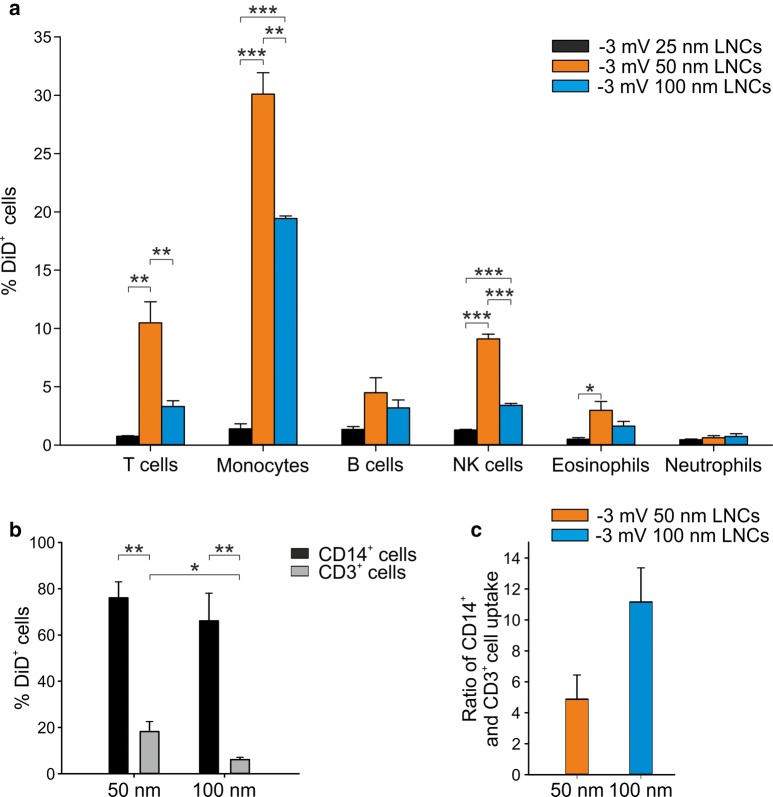
Myeloid derived suppressor cells (MDSCs) and tumor-associated macrophages (TAMs) are two of the major players involved in the inhibition of anti-tumor immune response in cancer patients, leading to poor prognosis. Selective targeting of myeloid cells has therefore become an attractive therapeutic strategy to relieve immunosuppression and, in this frame, we previously demonstrated that lipid nanocapsules (LNCs) loaded with lauroyl-modified gemcitabine efficiently target monocytic MDSCs in melanoma patients. In this study, we investigated the impact of the physico-chemical characteristics of LNCs, namely size and surface potential, towards immunosuppressive cell targeting. We exploited myeloid cells isolated from glioblastoma patients, which play a relevant role in the immunosuppression, to demonstrate that tailored nanosystems can target not only tumor cells but also tumor-promoting cells, thus constituting an efficient system that could be used to inhibit their function.
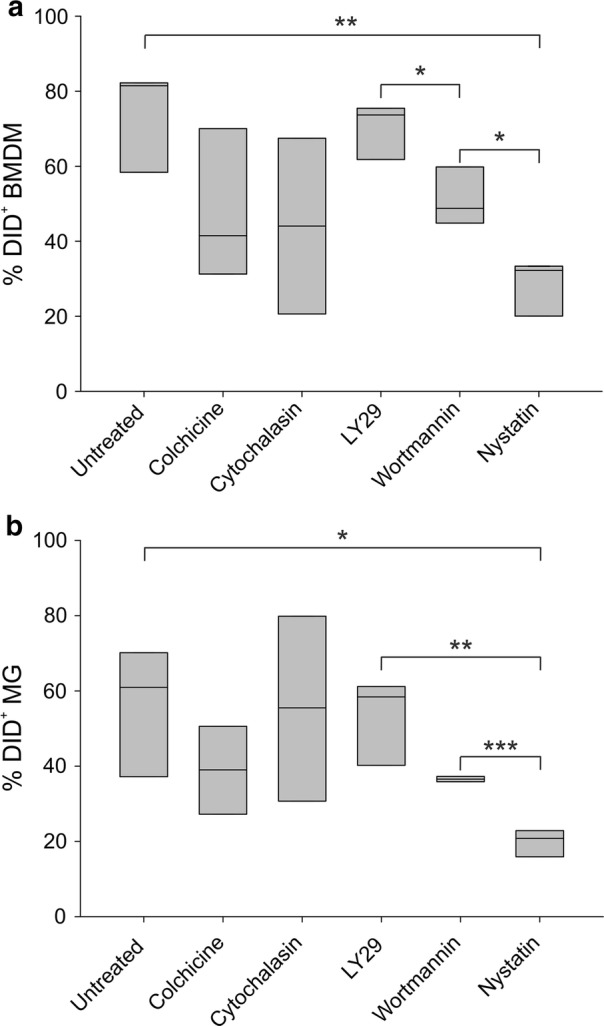
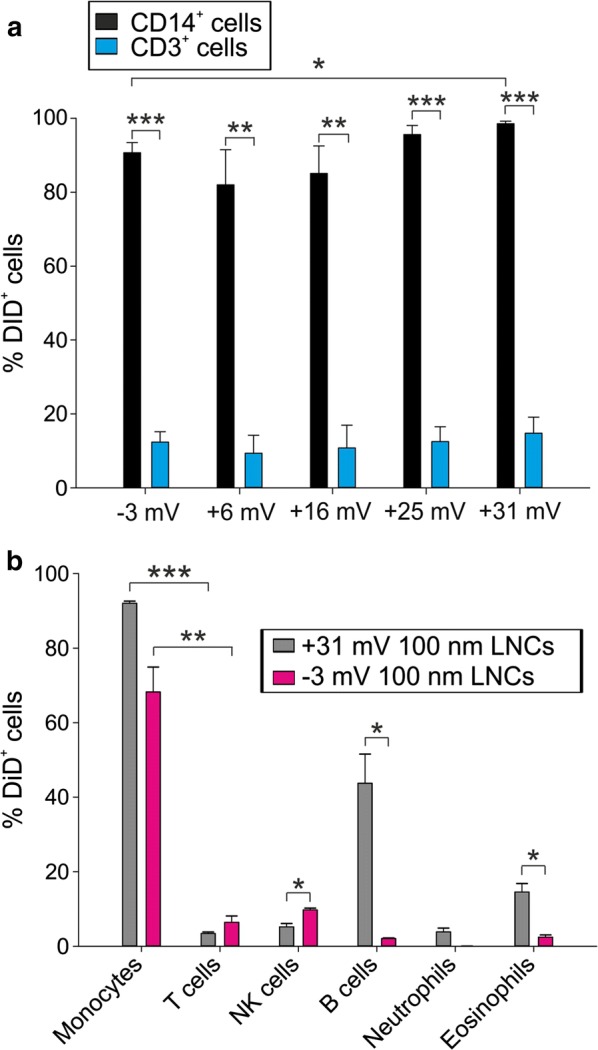
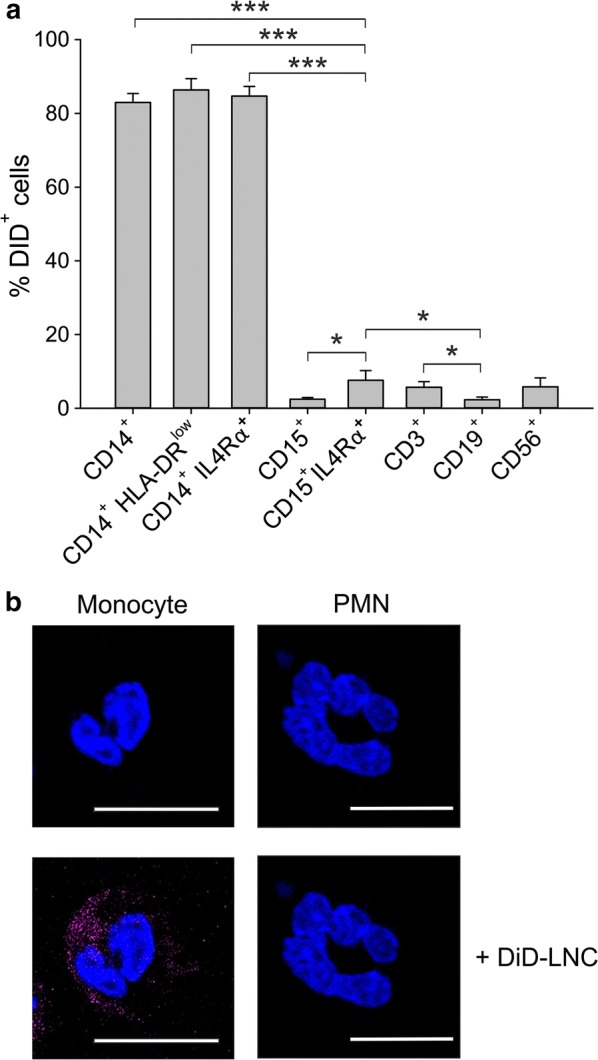
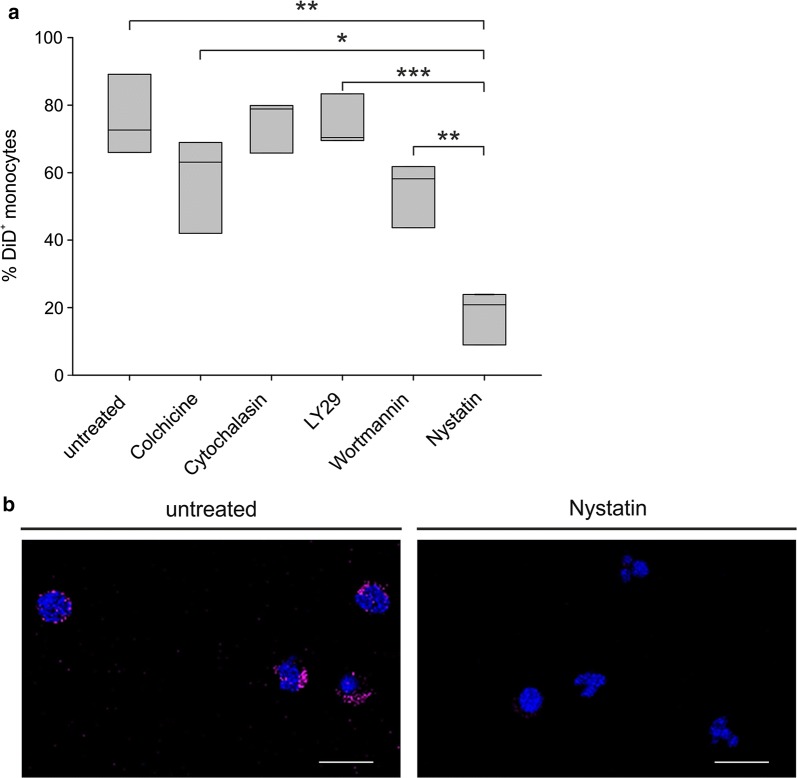
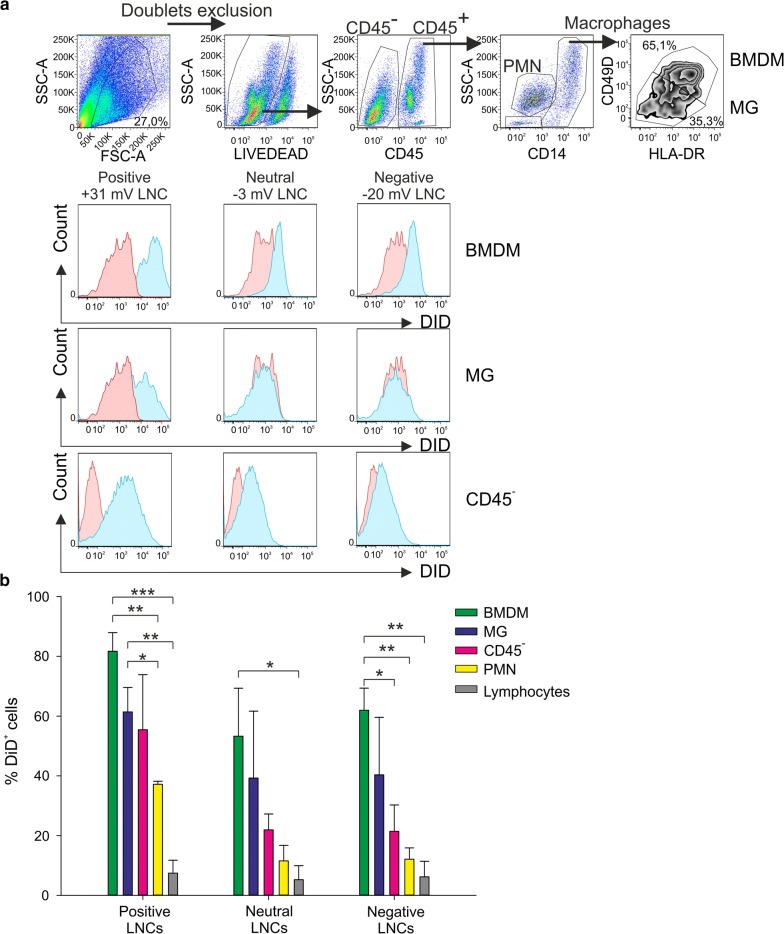
The incorporation of different LNC formulations with a size of 100 nm, carrying overall positive, neutral or negative charge, was evaluated on leukocytes and tumor-infiltrating cells freshly isolated from glioblastoma patients. We observed that the maximum LNC uptake was obtained in monocytes with neutral 100 nm LNCs, while positively charged 100 nm LNCs were more effective on macrophages and tumor cells, maintaining at low level the incorporation by T cells. The mechanism of uptake was elucidated, demonstrating that LNCs are incorporated mainly by caveolae-mediated endocytosis.
We demonstrated that LNCs can be directed towards immunosuppressive cells by simply modulating their size and charge thus providing a novel approach to exploit nanosystems for anticancer treatment in the frame of immunotherapy.
髓系来源的抑制细胞(MDSCs)和肿瘤相关巨噬细胞(TAMs)是参与癌症患者抗肿瘤免疫反应抑制的两个主要参与者,导致预后不良。因此,选择性针对髓样细胞已成为一种有吸引力的治疗策略,以缓解免疫抑制,在这种情况下,我们之前证明负载月桂酰修饰吉西他滨的脂质纳米胶囊(LNC)可有效靶向黑色素瘤患者的单核 MDSC。在这项研究中,我们研究了 LNC 的物理化学特性,即大小和表面电位,对免疫抑制细胞靶向的影响。我们利用从胶质母细胞瘤患者中分离出的髓样细胞,这些细胞在免疫抑制中发挥重要作用,证明了定制的纳米系统不仅可以靶向肿瘤细胞,还可以靶向肿瘤促进细胞,因此构成了一种有效的系统,可以抑制它们的功能。
评估了不同 LNC 制剂的掺入,这些制剂的大小为 100nm,总带正、中或负电荷,用于从胶质母细胞瘤患者新鲜分离的白细胞和肿瘤浸润细胞。我们观察到,中性 100nm LNC 可获得单核细胞的最大 LNC 摄取,而带正电荷的 100nm LNC 对巨噬细胞和肿瘤细胞更有效,同时保持 T 细胞摄取水平低。阐明了摄取的机制,证明 LNC 主要通过小窝蛋白介导的内吞作用被摄取。
我们证明,通过简单地调节 LNC 的大小和电荷,可以将 LNC 靶向免疫抑制细胞,从而为利用纳米系统在免疫治疗框架内进行癌症治疗提供了一种新方法。