Stanford University Department of Psychiatry and Behavioral Sciences, Stanford, CA, USA.
Stanford University Department of Genetics, Stanford, CA, USA.
Transl Psychiatry. 2020 Feb 3;10(1):48. doi: 10.1038/s41398-020-0703-3.
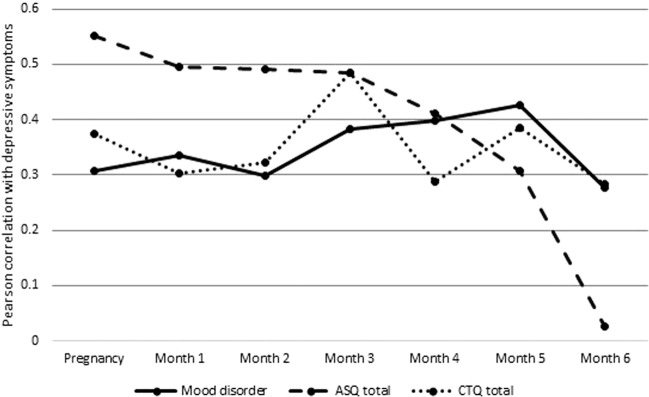
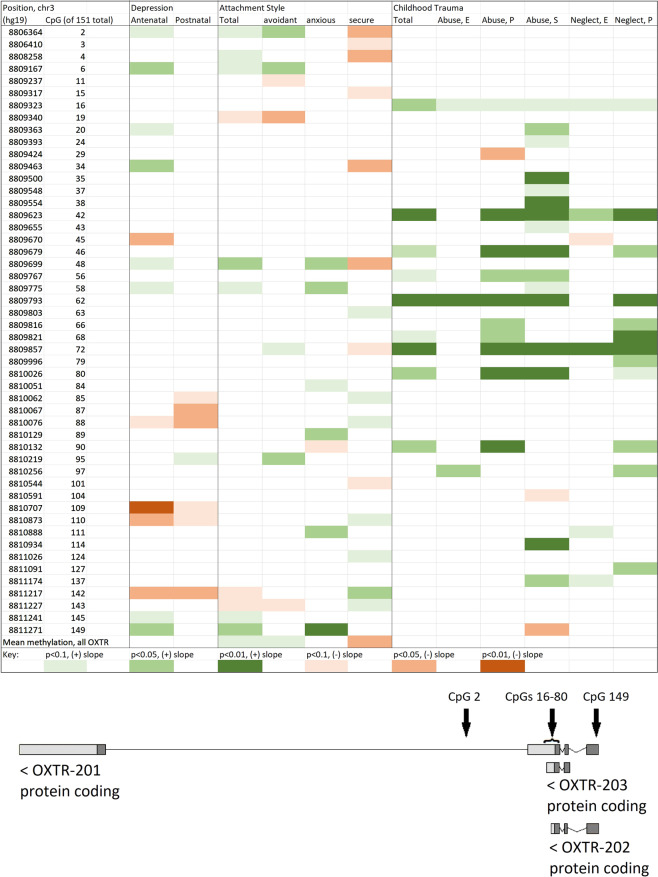
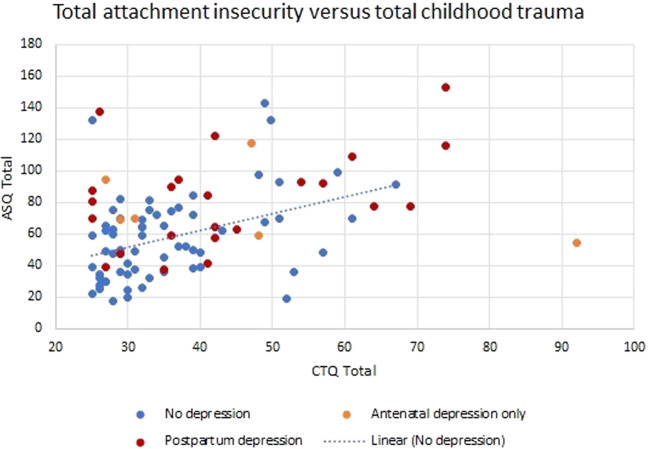
Early life adversity and insecure attachment style are known risk factors for perinatal depression. The biological pathways linking these experiences, however, have not yet been elucidated. We hypothesized that overlap in patterns of DNA methylation in association with each of these phenomena could identify genes and pathways of importance. Specifically, we wished to distinguish between allostatic-load and role-transition hypotheses of perinatal depression. We conducted a large-scale analysis of methylation patterns across 5 × 10 individual CG dinucleotides in 54 women participating in a longitudinal prospective study of perinatal depression, using clustering-based criteria for significance to control for multiple comparisons. We identified 1580 regions in which methylation density was associated with childhood adversity, 3 in which methylation density was associated with insecure attachment style, and 6 in which methylation density was associated with perinatal depression. Shorter telomeres were observed in association with childhood trauma but not with perinatal depression or attachment insecurity. A detailed analysis of methylation density in the oxytocin receptor gene revealed similar patterns of DNA methylation in association with perinatal depression and with insecure attachment style, while childhood trauma was associated with a distinct methylation pattern in this gene. Clinically, attachment style was strongly associated with depression only in pregnancy and the early postpartum, whereas the association of childhood adversity with depression was time-invariant. We concluded that the broad DNA methylation signature and reduced telomere length associated with childhood adversity could indicate increased allostatic load across multiple body systems, whereas perinatal depression and attachment insecurity may be narrower phenotypes with more limited DNA methylation signatures outside the CNS, and no apparent association with telomere length or, by extension, allostatic load. In contrast, the finding of matching DNA methylation patterns within the oxytocin receptor gene for perinatal depression and attachment insecurity is consistent with the theory that the perinatal period is a time of activation of existing attachment schemas for the purpose of structuring the mother-child relationship, and that such activation may occur in part through specific patterns of methylation of the oxytocin receptor gene.
早期生活逆境和不安全的依恋风格是围产期抑郁症的已知危险因素。然而,将这些经历联系起来的生物学途径尚未阐明。我们假设,与这些现象中的每一种现象相关的 DNA 甲基化模式的重叠可以确定重要的基因和途径。具体来说,我们希望区分围产期抑郁症的“全身应激负荷”和“角色转变”假说。我们对参与围产期抑郁症纵向前瞻性研究的 54 名女性的 5 × 10 个个体 CG 二核苷酸进行了大规模的甲基化模式分析,使用基于聚类的显著性标准来控制多重比较。我们确定了 1580 个区域,其中甲基化密度与儿童期逆境相关,3 个区域与不安全的依恋风格相关,6 个区域与围产期抑郁症相关。观察到较短的端粒与儿童期创伤有关,但与围产期抑郁症或依恋不安全感无关。在催产素受体基因中对甲基化密度的详细分析表明,与围产期抑郁症和不安全的依恋风格相关的 DNA 甲基化模式相似,而儿童期创伤与该基因中的独特甲基化模式相关。临床研究表明,依恋风格仅在妊娠和产后早期与抑郁密切相关,而童年逆境与抑郁的关联是时不变的。我们得出的结论是,与儿童期逆境相关的广泛 DNA 甲基化特征和端粒缩短可表明多个身体系统的全身应激负荷增加,而围产期抑郁症和依恋不安全感可能是具有更有限的 CNS 外 DNA 甲基化特征的更窄表型,并且与端粒长度或全身应激负荷没有明显关联。相比之下,在催产素受体基因中发现的围产期抑郁症和依恋不安全感的匹配 DNA 甲基化模式与这样一种理论一致,即围产期是激活现有依恋模式以构建母婴关系的时期,这种激活可能部分通过催产素受体基因的特定甲基化模式发生。