Laboratory of Animal Resources, Center for Disease Biology and Integrative Medicine, Graduate School of Medicine, The University of Tokyo, Tokyo, Japan.
Department of Biological Sciences, School of Science, The University of Tokyo, Tokyo, Japan.
Transl Psychiatry. 2020 Feb 5;10(1):35. doi: 10.1038/s41398-020-0723-z.
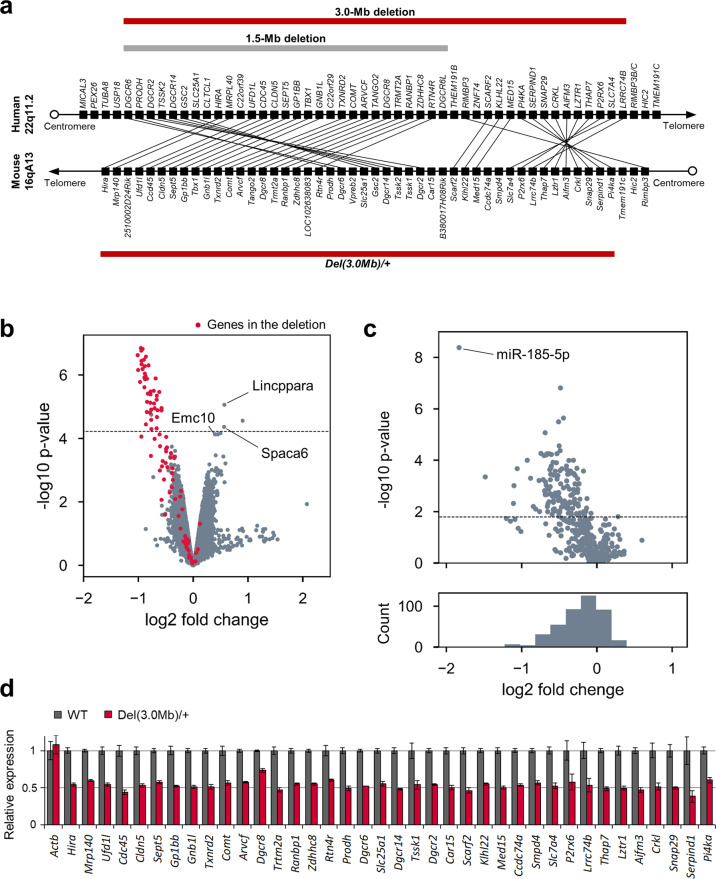
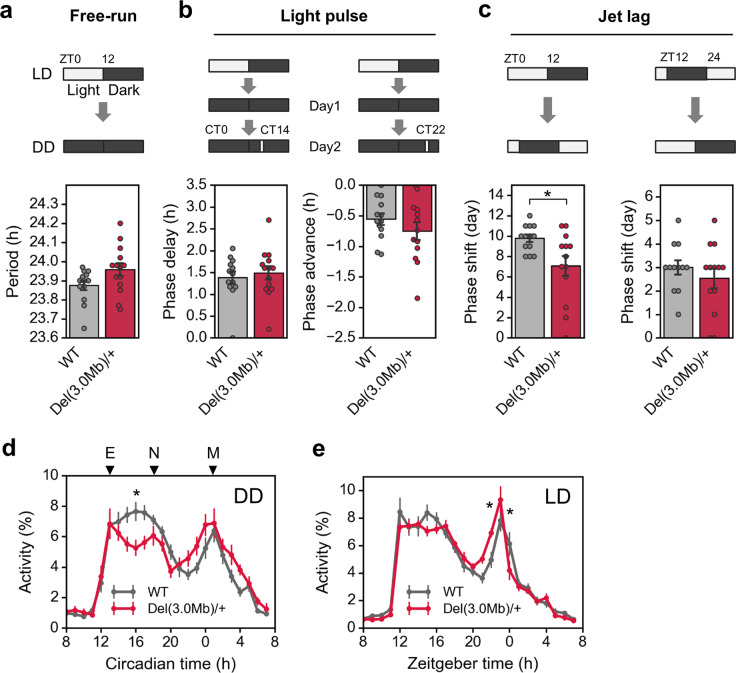
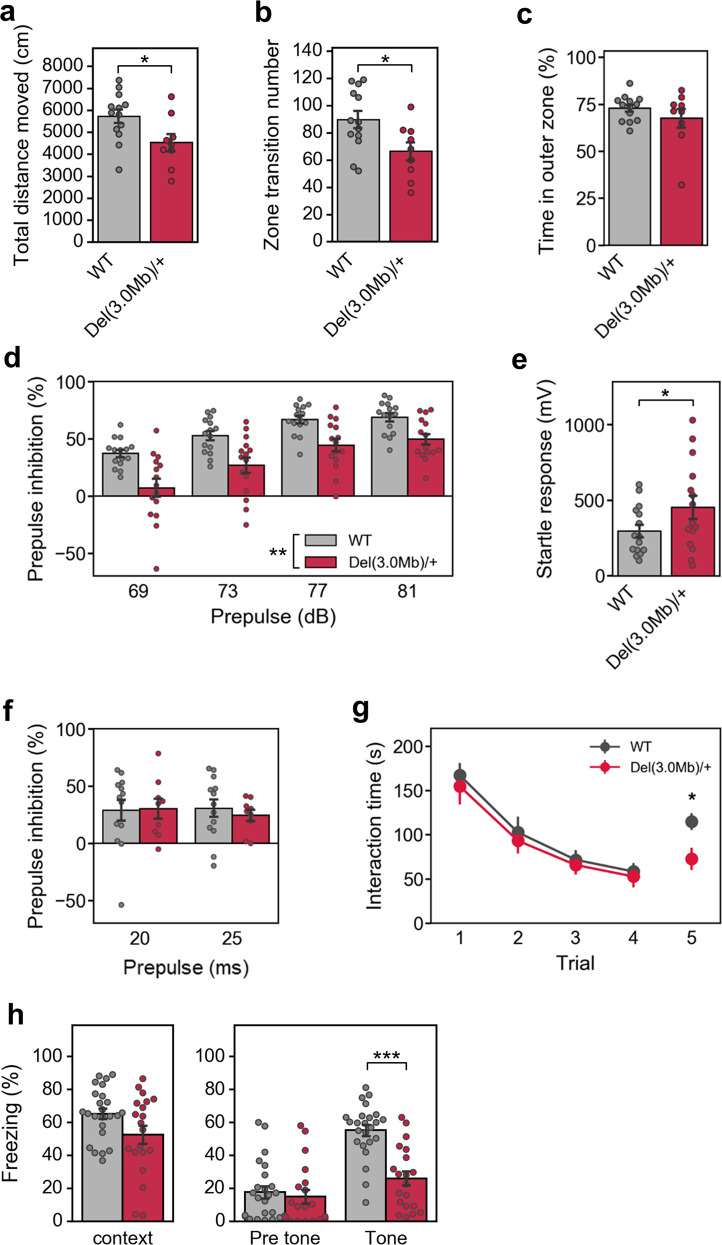
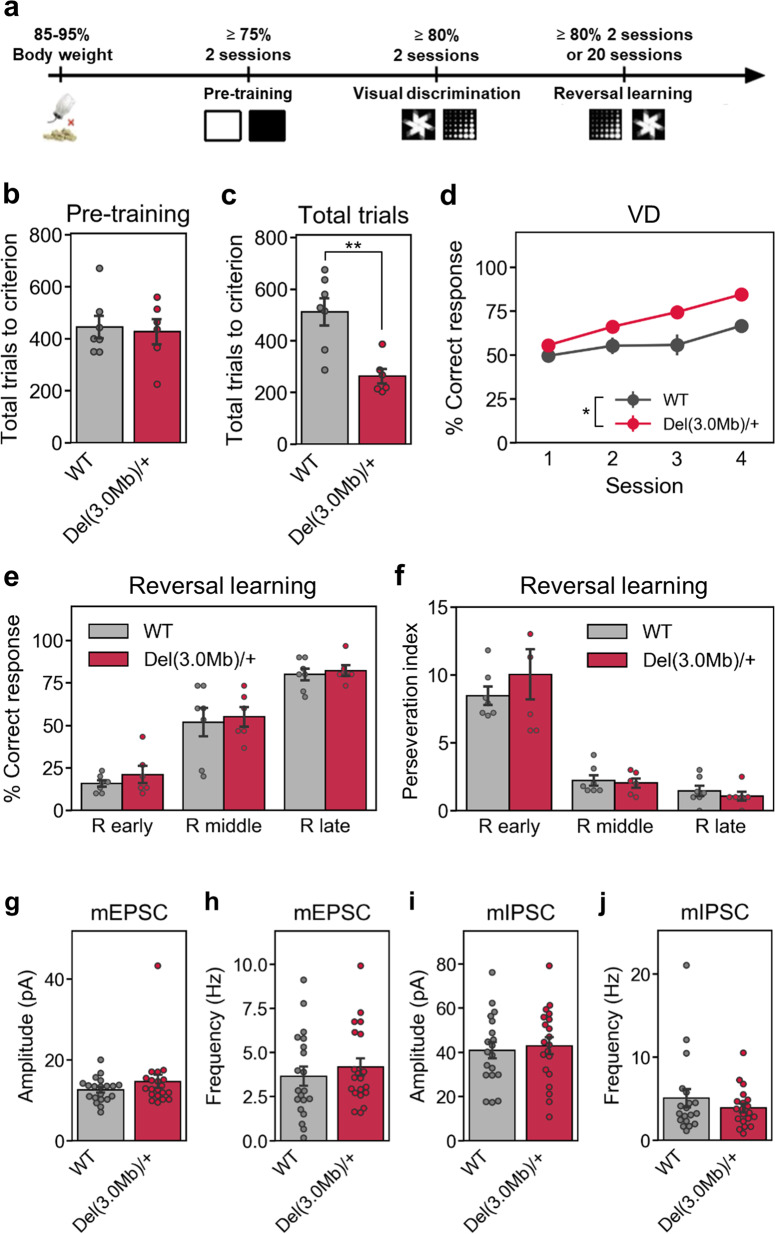
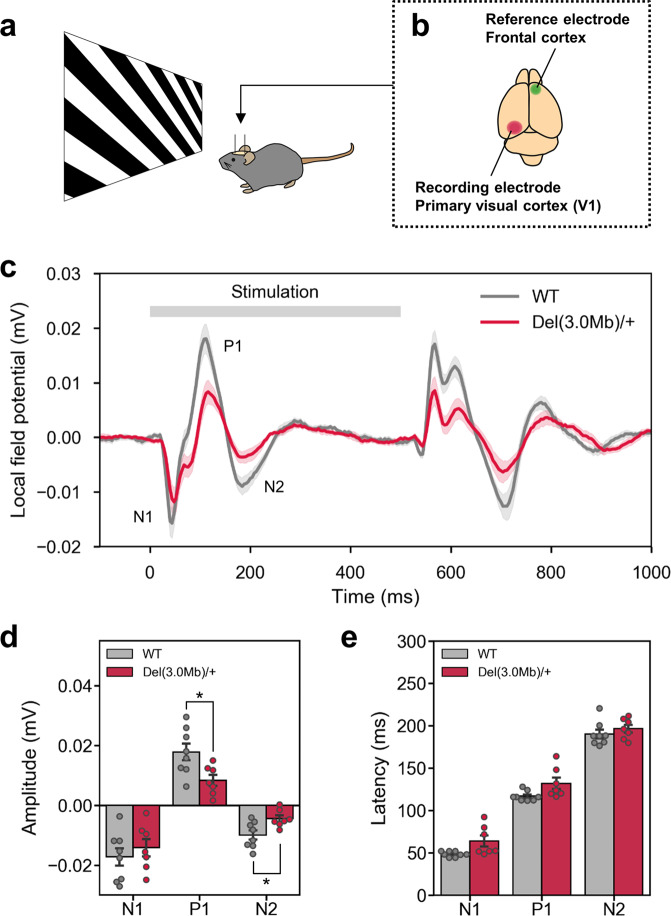
The 22q11.2 deletion syndrome (22q11.2DS) is associated with an increased risk for psychiatric disorders. Although most of the 22q11.2DS patients have a 3.0-Mb deletion, existing mouse models only mimic a minor mutation of 22q11.2DS, a 1.5-Mb deletion. The role of the genes existing outside the 1.5-Mb deletion in psychiatric symptoms of 22q11.2DS is unclear. In this study, we generated a mouse model that reproduced the 3.0-Mb deletion of the 22q11.2DS (Del(3.0 Mb)/ +) using the CRISPR/Cas9 system. Ethological and physiological phenotypes of adult male mutants were comprehensively evaluated by visual-evoked potentials, circadian behavioral rhythm, and a series of behavioral tests, such as measurement of locomotor activity, prepulse inhibition, fear-conditioning memory, and visual discrimination learning. As a result, Del(3.0 Mb)/ + mice showed reduction of auditory prepulse inhibition and attenuated cue-dependent fear memory, which is consistent with the phenotypes of existing 22q11.2DS models. In addition, Del(3.0 Mb)/ + mice displayed an impaired early visual processing that is commonly seen in patients with schizophrenia. Meanwhile, unlike the existing models, Del(3.0 Mb)/ + mice exhibited hypoactivity over several behavioral tests, possibly reflecting the fatigability of 22q11.2DS patients. Lastly, Del(3.0 Mb)/ + mice displayed a faster adaptation to experimental jet lag as compared with wild-type mice. Our results support the validity of Del(3.0 Mb)/ + mice as a schizophrenia animal model and suggest that our mouse model is a useful resource to understand pathogenic mechanisms of schizophrenia and other psychiatric disorders associated with 22q11.2DS.
22q11.2 缺失综合征(22q11.2DS)与精神疾病风险增加有关。尽管大多数 22q11.2DS 患者存在 3.0-Mb 的缺失,但现有的小鼠模型仅模拟了 22q11.2DS 的一个较小突变,即 1.5-Mb 的缺失。在 22q11.2DS 的精神症状中,存在于 1.5-Mb 缺失之外的基因的作用尚不清楚。在这项研究中,我们使用 CRISPR/Cas9 系统生成了一种能够重现 22q11.2DS 的 3.0-Mb 缺失的小鼠模型(Del(3.0 Mb)/ +)。通过视觉诱发电位、昼夜行为节律以及一系列行为测试(如测量运动活性、前脉冲抑制、恐惧条件记忆和视觉辨别学习),全面评估成年雄性突变体的行为表型。结果表明,Del(3.0 Mb)/ + 小鼠表现出听觉前脉冲抑制减少和线索依赖性恐惧记忆减弱,这与现有的 22q11.2DS 模型的表型一致。此外,Del(3.0 Mb)/ + 小鼠表现出早期视觉处理受损,这在精神分裂症患者中很常见。同时,与现有模型不同,Del(3.0 Mb)/ + 小鼠在多项行为测试中表现出活动减少,这可能反映了 22q11.2DS 患者的疲劳。最后,与野生型小鼠相比,Del(3.0 Mb)/ + 小鼠在适应实验性时差方面表现出更快的适应能力。我们的结果支持 Del(3.0 Mb)/ + 小鼠作为精神分裂症动物模型的有效性,并表明我们的小鼠模型是理解精神分裂症和其他与 22q11.2DS 相关的精神疾病的发病机制的有用资源。