School of Dentistry and Oral Health, Griffith University, Gold Coast, QLD, Australia.
Department of Oral and Maxillofacial Surgery, Gold Coast University Hospital, Southport, QLD, Australia.
Clin Exp Dent Res. 2020 Feb;6(1):134-146. doi: 10.1002/cre2.241. Epub 2019 Aug 21.
The aim of this systematic review was to compile the latest evidence to assess the effectiveness of nonsteroidal anti-inflammatory drug(s) (NSAID) in patients with temporomandibular joint disorders (TMDs) in relieving pain. TMDs are a group of musculoskeletal disorders that affect the temporomandibular joint and/or masticatory muscles.
After a literature review, a comprehensive search was conducted via Pubmed, Scopus, Google Scholar, and Cochrane databases with a systematic search strategy. The inclusion criteria were randomised controlled trials in humans, published in the last 50 years evaluating the effect of NSAIDs on TMDs. Although this duration chosen would potentially identify studies that have utilised outdated treatments, research methodology, and TMDs diagnostic criteria, and this has been considered before making clinical recommendation, it was used to advise future methodological changes necessary. The included studies were subjected to full-text review.
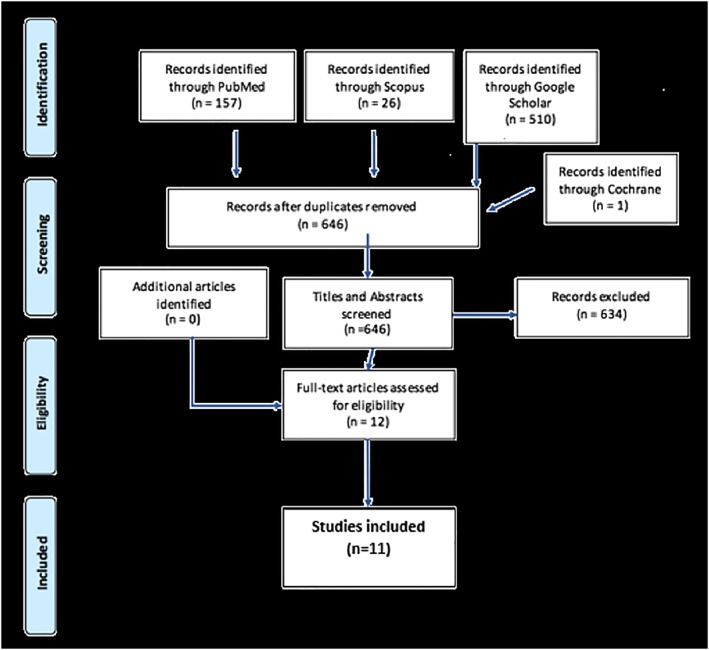
Out of 646 studies initially identified through searches, 12 were selected for full-text review of which 11 were included in the data synthesis. All 11 studies were randomised controlled trials. In total, 424 patients were included in this review. The earliest study included was 1996. Diagnostic criteria varied among all studies, and some did not specify enough signs and symptoms to construct a diagnosis. Intervention varied among all studies, as did the control. Nonspecific diagnosis, variable control groups, and heterogenous intervention protocols affected the outcome of this review. Despite the reduction of pain in the joint and/or masticatory muscles as well as improved range of motion, conclusive clinical recommendation could not be made.
Heterogeneity did not allow for definitive conclusion; however, there was some evidence to support the use of NSAIDs in patients with TMDs for relief of pain. Further studies with strict, consistent diagnostic criteria and treatment are required.
本系统评价的目的是汇集最新证据,评估非甾体抗炎药(NSAIDs)在缓解颞下颌关节紊乱(TMDs)患者疼痛方面的疗效。TMDs 是一组影响颞下颌关节和/或咀嚼肌的肌肉骨骼疾病。
文献回顾后,通过 Pubmed、Scopus、Google Scholar 和 Cochrane 数据库进行全面检索,并采用系统检索策略。纳入标准为评估 NSAIDs 对 TMDs 影响的人类随机对照试验,发表于过去 50 年。虽然选择这个时间段可能会识别出使用过时治疗方法、研究方法和 TMDs 诊断标准的研究,但在提出临床建议之前已经考虑到了这一点,这是为了建议未来必要的方法学改变。纳入的研究均进行了全文审查。
通过检索最初确定了 646 项研究,其中 12 项进行了全文审查,其中 11 项纳入了数据综合分析。所有 11 项研究均为随机对照试验。共有 424 名患者纳入本综述。最早的研究是 1996 年的。所有研究的诊断标准均存在差异,有些研究没有明确足够的体征和症状来做出诊断。所有研究的干预措施均不同,对照组也不同。非特异性诊断、可变对照组和异质干预方案影响了本综述的结果。尽管关节和/或咀嚼肌疼痛减轻以及运动范围改善,但无法做出明确的临床推荐。
异质性不允许得出明确的结论;然而,有一些证据支持 NSAIDs 在 TMDs 患者中缓解疼痛的使用。需要进一步进行具有严格、一致的诊断标准和治疗的研究。