Royal Holloway, University of London, Egham, United Kingdom.
Harvard University, Cambridge, United States.
Elife. 2020 Feb 18;9:e53162. doi: 10.7554/eLife.53162.
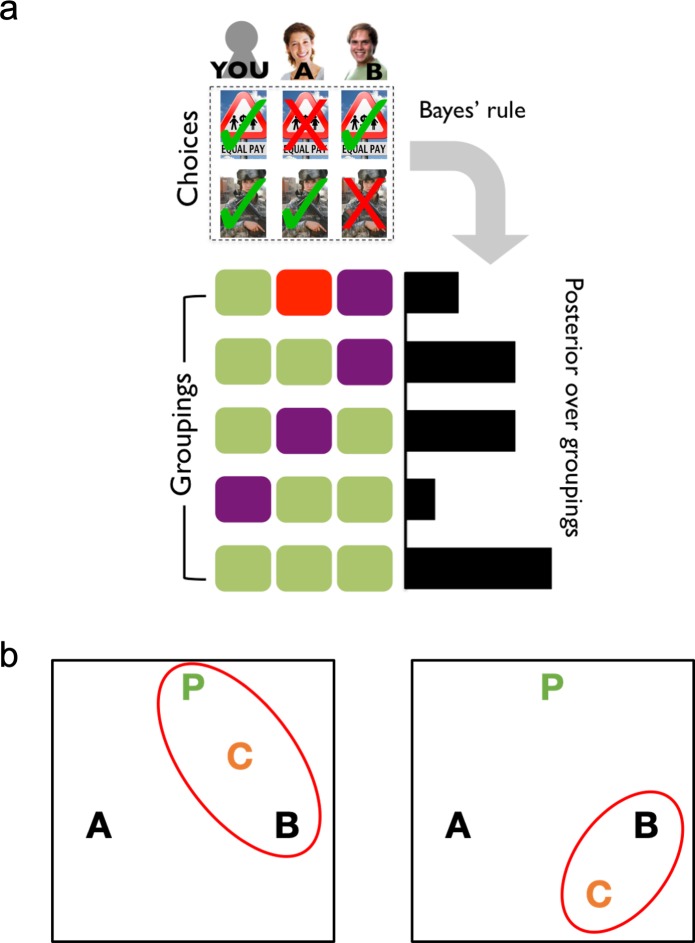
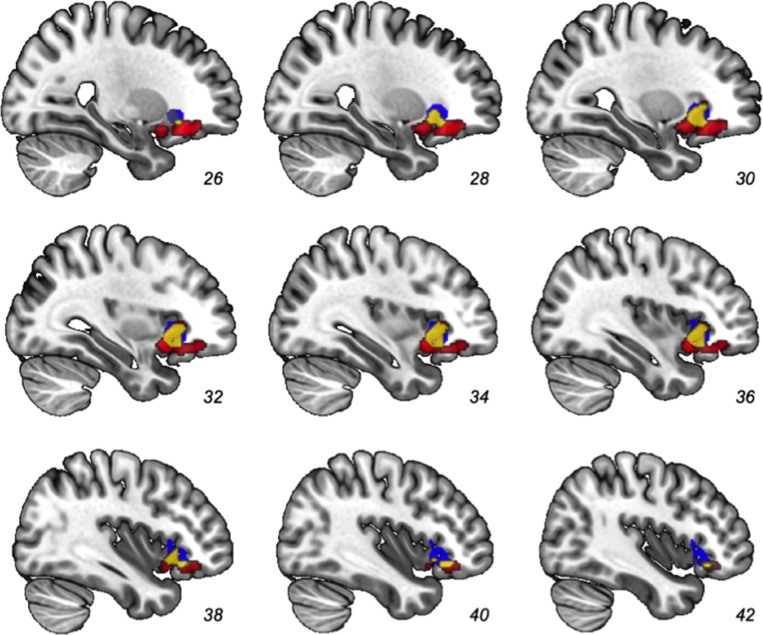
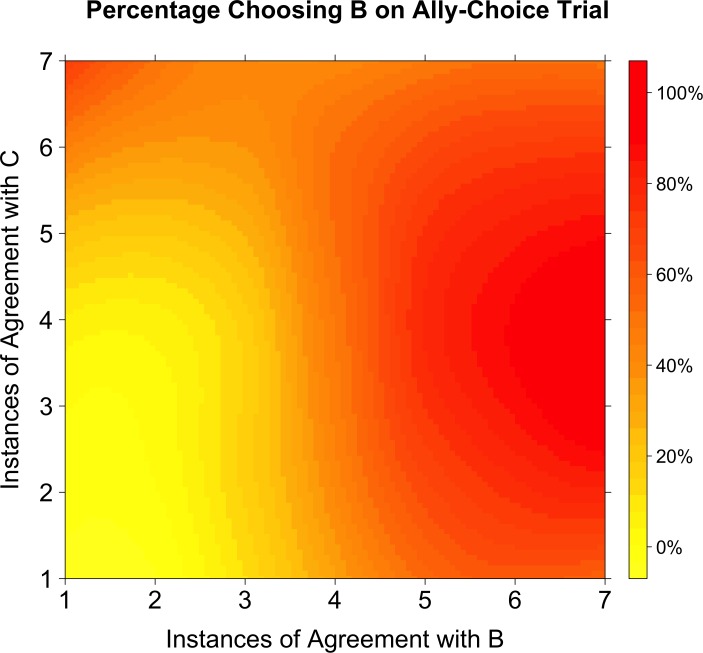
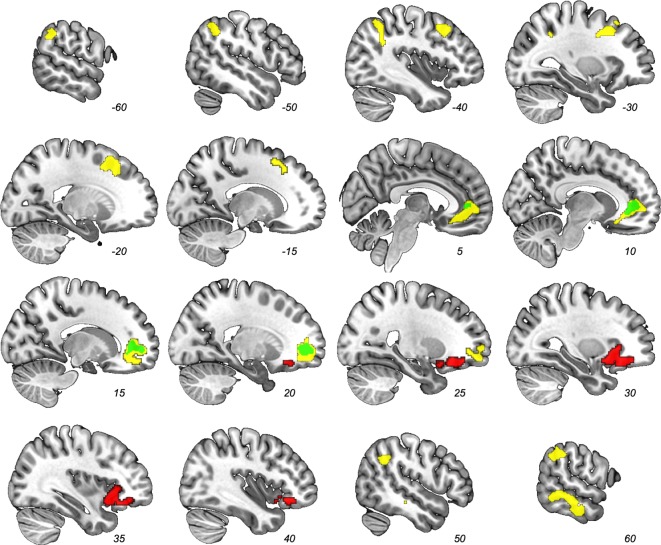
Humans form social coalitions in every society, yet we know little about how we learn and represent social group boundaries. Here we derive predictions from a computational model of latent structure learning to move beyond explicit category labels and interpersonal, or , similarity as the sole inputs to social group representations. Using a model-based analysis of functional neuroimaging data, we find that separate areas correlate with dyadic similarity and latent structure learning. Trial-by-trial estimates of 'allyship' based on dyadic similarity between participants and each agent recruited medial prefrontal cortex/pregenual anterior cingulate (pgACC). Latent social group structure-based allyship estimates, in contrast, recruited right anterior insula (rAI). Variability in the brain signal from rAI improved prediction of variability in ally-choice behavior, whereas variability from the pgACC did not. These results provide novel insights into the psychological and neural mechanisms by which people learn to distinguish 'us' from 'them.'
人类在每个社会中都会形成社会联盟,但我们对如何学习和表示社会群体界限知之甚少。在这里,我们从潜在结构学习的计算模型中得出预测,超越了明确的类别标签和人际或相似性作为社会群体表示的唯一输入。使用基于模型的功能神经影像学数据分析,我们发现不同的区域与二元相似性和潜在结构学习相关。基于参与者之间的二元相似性和每个被招募的代理的“盟友关系”的逐次估计,招募了内侧前额叶皮层/扣带前回(pgACC)。相比之下,基于潜在社会群体结构的“盟友关系”估计则招募了右侧前岛叶(rAI)。rAI 的大脑信号的变异性提高了对盟友选择行为变异性的预测能力,而 pgACC 的变异性则没有。这些结果为人们学习区分“我们”和“他们”的心理和神经机制提供了新的见解。