Molecular Physiology of the Synapse Laboratory, Biomedical Research Institute Sant Pau (IIB Sant Pau), Barcelona, Spain.
Universitat Autònoma de Barcelona, Bellaterra (Cerdanyola del Vallès), Spain.
J Neurochem. 2020 Sep;154(6):618-634. doi: 10.1111/jnc.14988. Epub 2020 Mar 10.
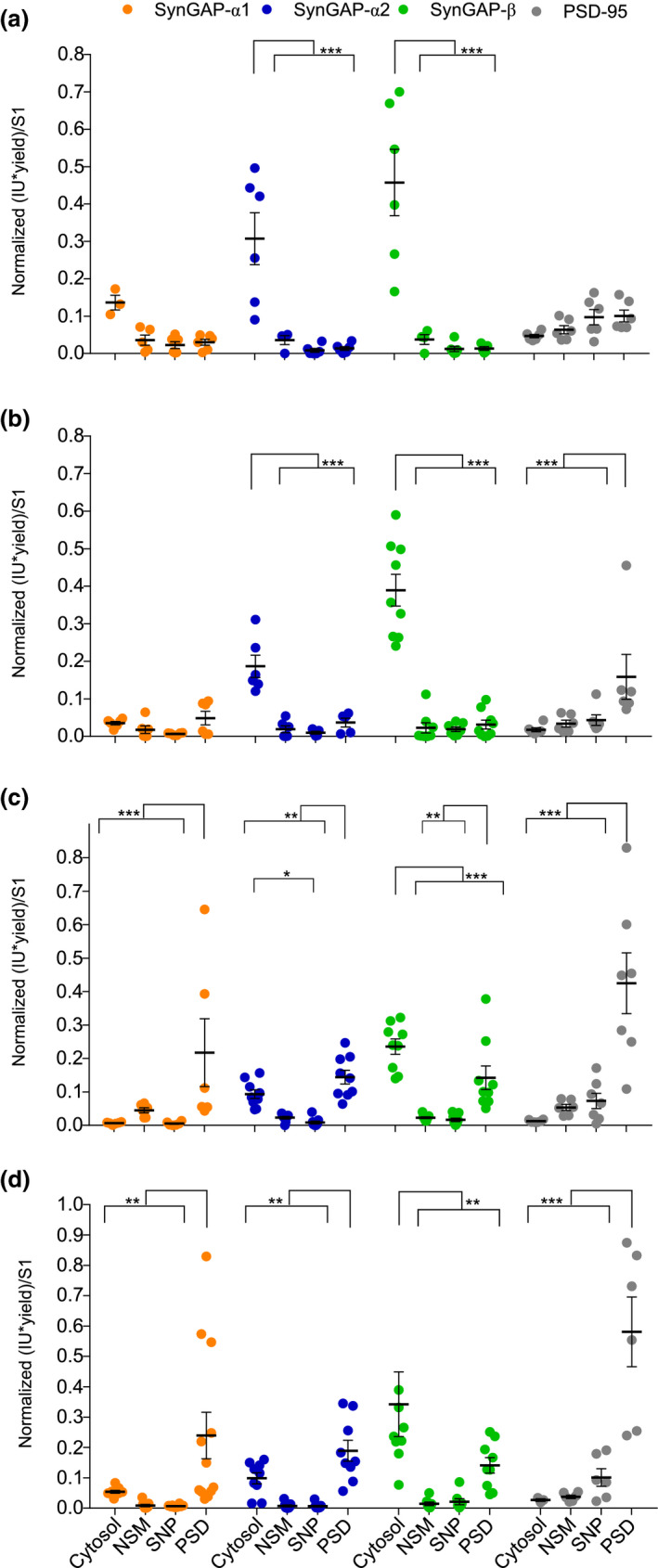
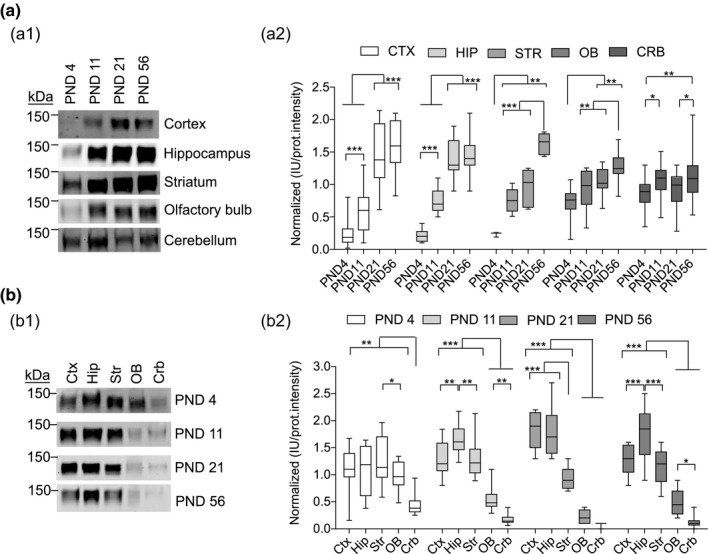
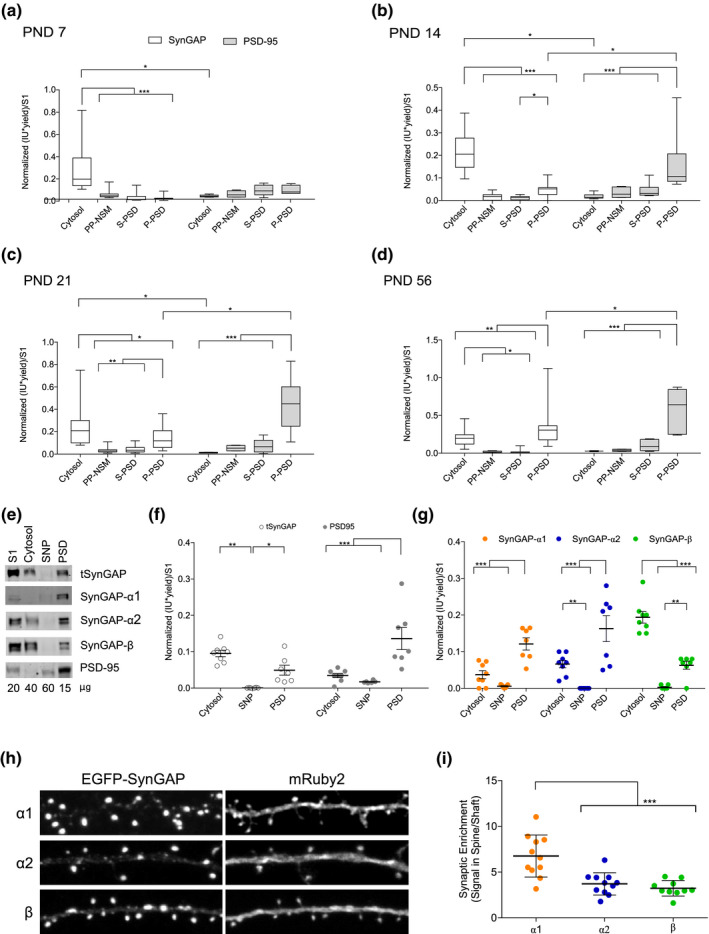
The SynGAP protein is a major regulator of synapse biology and neural circuit function. Genetic variants linked to epilepsy and intellectual disability disrupt synaptic function and neural excitability. SynGAP has been involved in multiple signaling pathways and can regulate small GTPases with very different roles. Yet, the molecular bases behind this pleiotropy are poorly understood. We hypothesize that different SynGAP isoforms will mediate different sets of functions and that deciphering their spatio-temporal expression and subcellular localization will accelerate understanding their multiple functions. Using isoform-specific antibodies recognizing SynGAP in mouse and human samples we found distinctive developmental expression patterns for all SynGAP isoforms in five mouse brain areas. Particularly noticeable was the delayed expression of SynGAP-α1 isoforms, which directly bind to postsynaptic density-95, in cortex and hippocampus during the first 2 weeks of postnatal development. Suggesting that during this period other isoforms would have a more prominent role. Furthermore, we observed subcellular localization differences between isoforms, particularly throughout postnatal development. Consistent with previous reports, SynGAP was enriched in the postsynaptic density in the mature forebrain. However, SynGAP was predominantly found in non-synaptic locations in a period of early postnatal development highly sensitive to SynGAP levels. While, α1 isoforms were always found enriched in the postsynaptic density, α2 isoforms changed from a non-synaptic to a mostly postsynaptic density localization with age and β isoforms were always found enriched in non-synaptic locations. The differential expression and subcellular distribution of SynGAP isoforms may contribute to isoform-specific regulation of small GTPases, explaining SynGAP pleiotropy.
SynGAP 蛋白是突触生物学和神经回路功能的主要调节剂。与癫痫和智力障碍相关的遗传变异会破坏突触功能和神经兴奋性。SynGAP 参与了多种信号通路,并且可以调节具有非常不同作用的小 GTPases。然而,这种多效性的分子基础还知之甚少。我们假设不同的 SynGAP 异构体将介导不同的功能集,并且破译它们的时空表达和亚细胞定位将加速对其多种功能的理解。使用针对小鼠和人类样本中的 SynGAP 的同种型特异性抗体,我们发现所有 SynGAP 同种型在五个小鼠脑区中的发育表达模式都具有独特的特征。特别引人注目的是 SynGAP-α1 同种型的表达延迟,其在出生后发育的前 2 周内在皮层和海马体中直接与突触后密度-95 结合。这表明在此期间,其他同种型将具有更突出的作用。此外,我们观察到同种型之间的亚细胞定位差异,特别是在整个出生后发育过程中。与之前的报道一致,SynGAP 在成熟前脑的突触后密度中丰富。然而,SynGAP 主要存在于早期出生后发育期间对 SynGAP 水平高度敏感的非突触位置。而α1 同种型始终在突触后密度中富集,α2 同种型随着年龄的增长从非突触位置转变为主要突触后密度定位,而β 同种型始终在非突触位置富集。SynGAP 同种型的差异表达和亚细胞分布可能有助于小 GTPases 的同种型特异性调节,从而解释 SynGAP 的多效性。