Department of Biomedical Engineering, Yale University, New Haven, Connecticut, USA.
Department of Biomedical Engineering, Maastricht University, Maastricht, The Netherlands.
J Hypertens. 2020 Jul;38(7):1312-1321. doi: 10.1097/HJH.0000000000002400.
Increased central artery stiffness associates with cardiovascular disease. Among other factors, hypertension and aging are strong contributors to central artery stiffening, yet it has been difficult to separate their effects. Herein, we study isolated and combined effects of hypertension and aging on central artery remodeling in multiple mouse models as a function of sex.
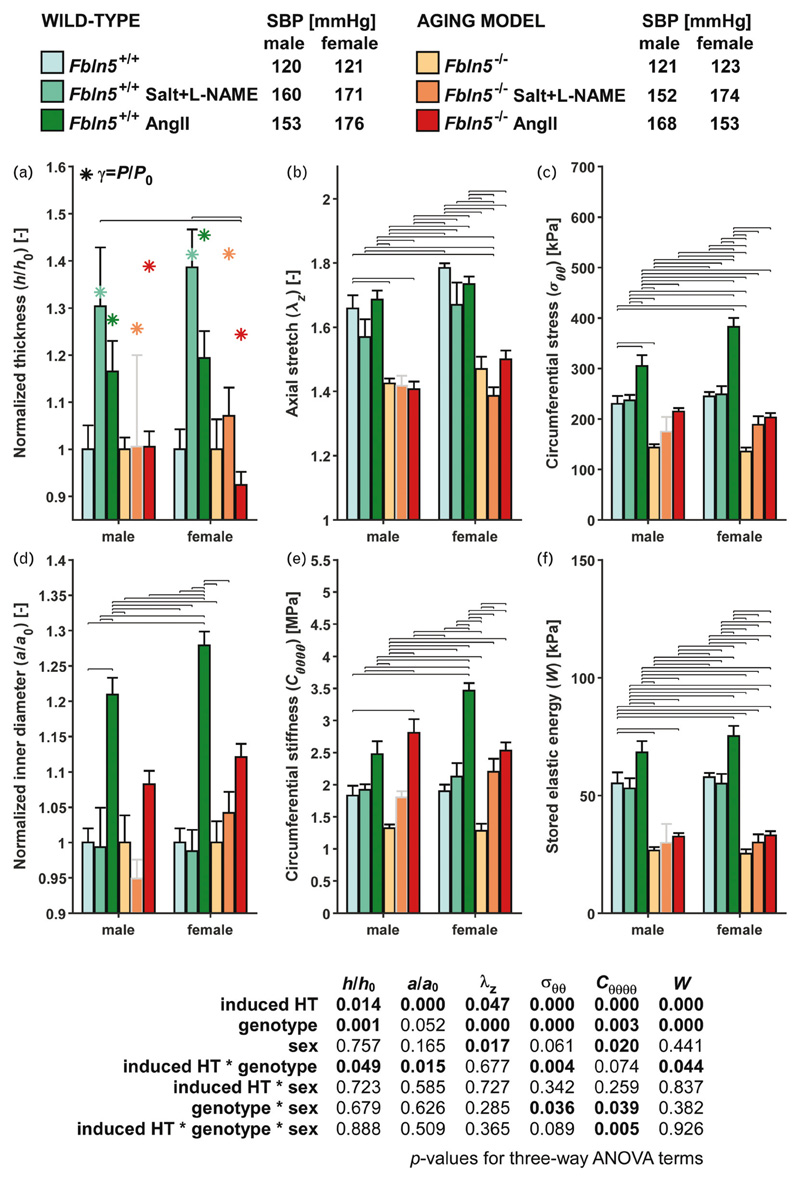
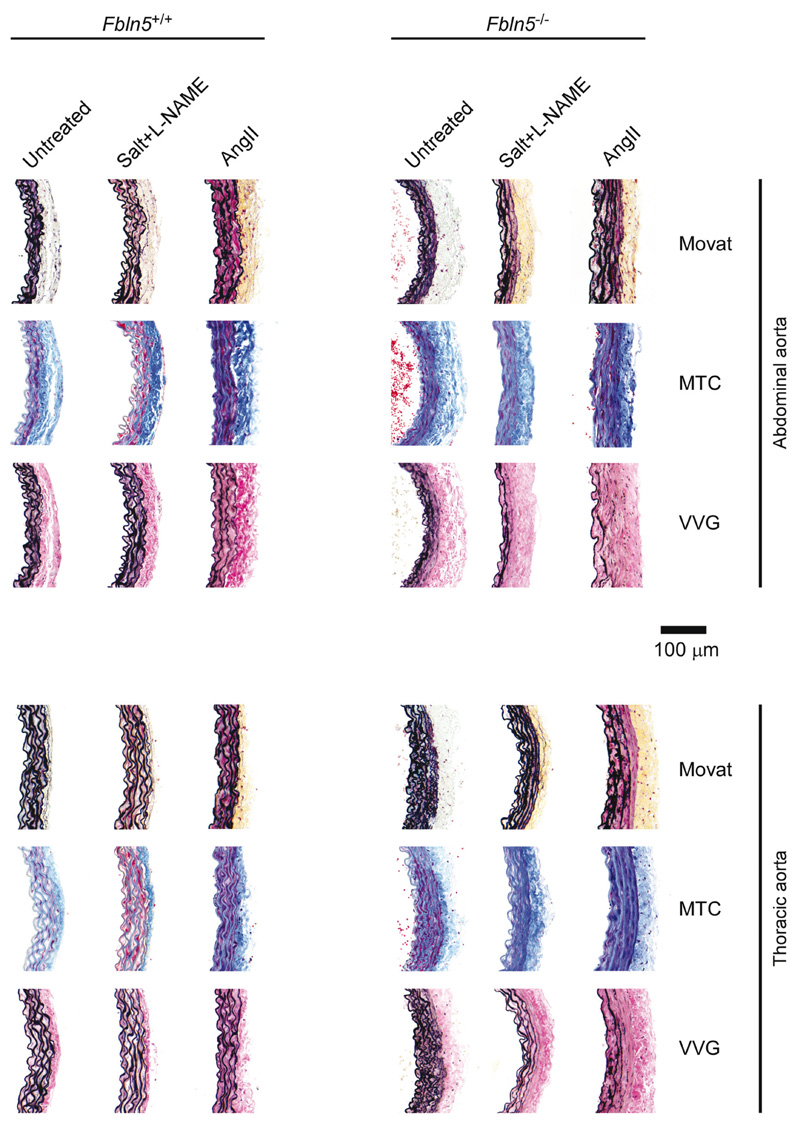
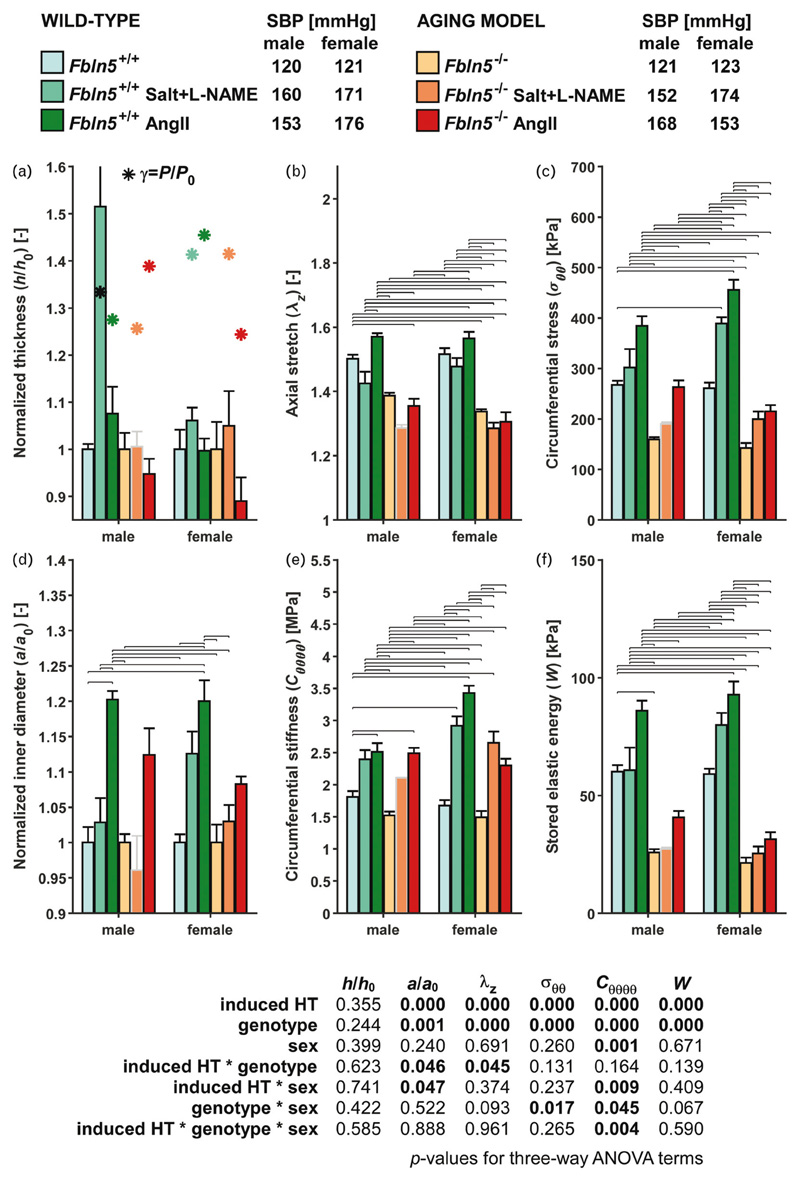
We biomechanically phenotyped the aorta as a function of two different methods of inducing hypertension [infusion of angiotensin II (AngII) or combining a high salt diet with inhibition of endothelial-derived nitric oxide synthase using L-NAME] in male and female wild-type and fibulin-5 null mice, the latter of which models aspects of aortic aging.
Despite increasing blood pressure similarly, salt + L-NAME led to adaptive and maladaptive remodeling in the abdominal and thoracic aorta, respectively, whereas AngII caused luminal dilatation but little remodeling of the wall. Importantly, effects of aging were more dramatic than those resulting from induced hypertension and, consequently, superimposing hypertension on aging led to modest additional changes in luminal radius and wall thickness, though wall stress and stiffness increased mainly because of the elevated pressure.
Our results suggest that effects of hypertension on aortic remodeling are modest when superimposed on aging in mice, largely independent of sex. These findings are consistent with general observations in humans and in spontaneously hypertensive rats, though separated here for the first time in a rodent model characterized by a severe loss of elastic fiber integrity similar to that found in the aged human aorta.
动脉僵硬度增加与心血管疾病有关。在其他因素中,高血压和衰老对动脉僵硬度的增加有很大的影响,但很难将它们的影响分开。在此,我们研究了在多个小鼠模型中,高血压和衰老对中央动脉重塑的单独和联合作用,以及性别对其的影响。
我们采用两种不同的方法(血管紧张素 II (AngII)输注或高盐饮食联合内皮源性一氧化氮合酶抑制剂 L-NAME),在雄性和雌性野生型和弹性蛋白 5 缺失小鼠中,对主动脉进行生物力学表型分析,后者模型模拟了主动脉的衰老。
尽管血压升高相似,但盐+L-NAME 分别导致了腹主动脉和胸主动脉的适应性和失调性重塑,而 AngII 导致了管腔扩张,但对壁的重塑作用很小。重要的是,衰老的影响比诱导性高血压的影响更显著,因此,将高血压与衰老叠加,会导致管腔半径和壁厚度的适度变化,但由于压力升高,壁应力和僵硬度增加。
我们的结果表明,在小鼠中,高血压对主动脉重塑的影响在叠加衰老时是适度的,且主要与性别无关。这些发现与人类和自发性高血压大鼠的一般观察结果一致,但在这里首次在一种啮齿动物模型中分开,该模型具有类似于人类衰老主动脉的严重弹性纤维完整性丧失。