Cho Hyun-Min, Lee Kang-Hoon, Shen Yi-Ming, Shin Tae-Jin, Ryu Pan-Dong, Choi Min-Cheol, Kang Kyung-Sun, Cho Je-Yoel
Department of Biochemistry, BK21 PLUS Program for Creative Veterinary Science Research and Research Institute for Veterinary Science, College of Veterinary Medicine, Seoul National University, Seoul, South Korea.
Department of Veterinary Pharmacology, College of Veterinary Medicine, Seoul National University, Seoul, South Korea.
Mol Ther Nucleic Acids. 2020 Mar 6;19:1186-1197. doi: 10.1016/j.omtn.2020.01.007. Epub 2020 Jan 18.
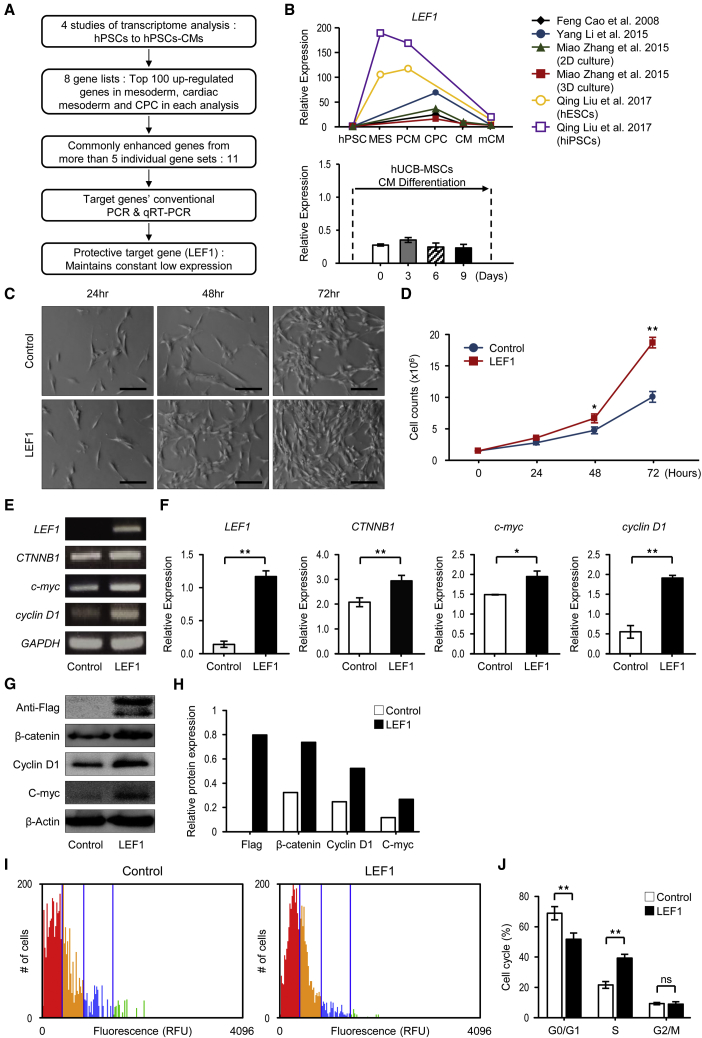
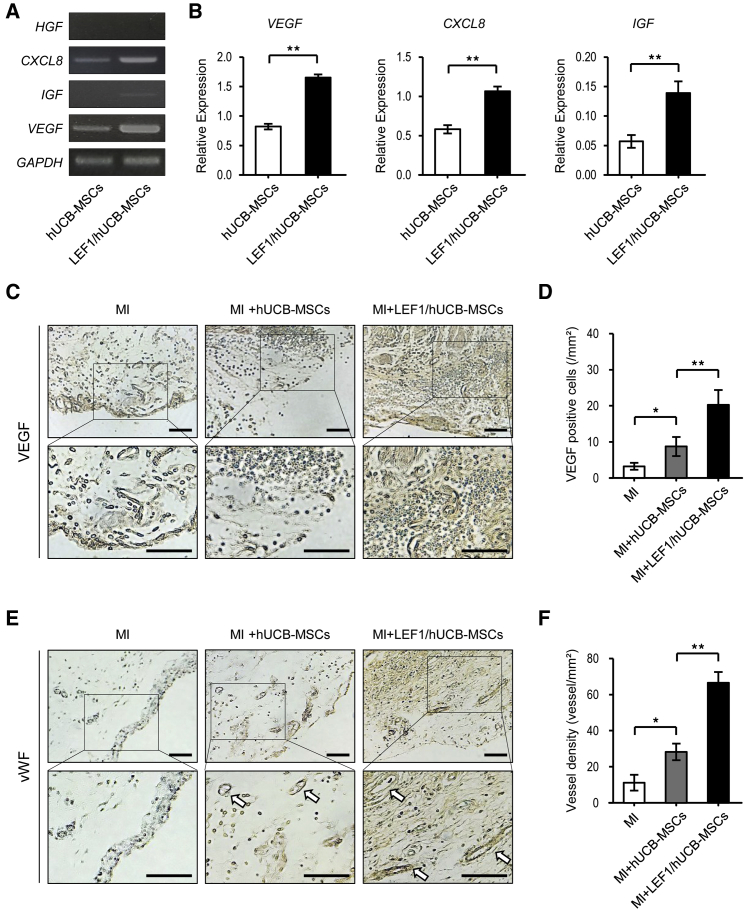
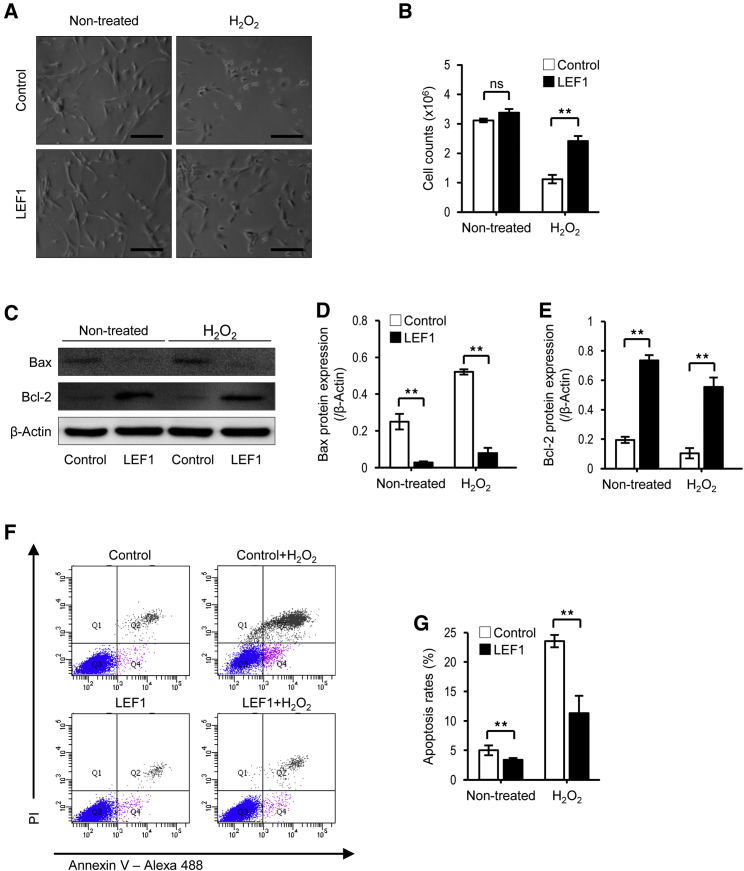
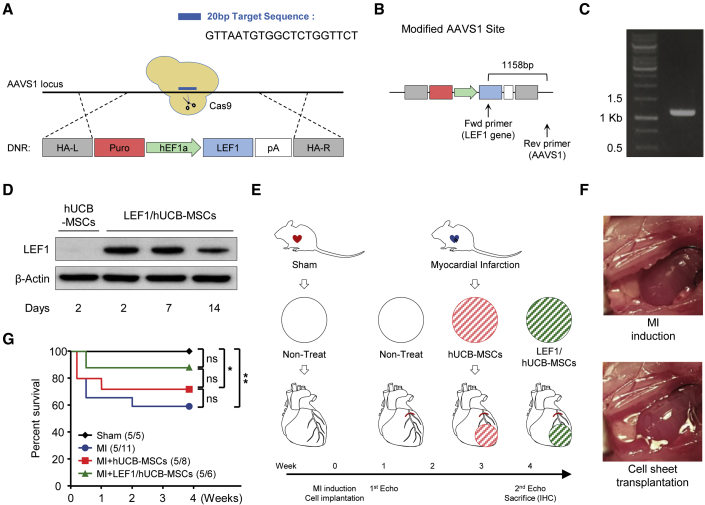
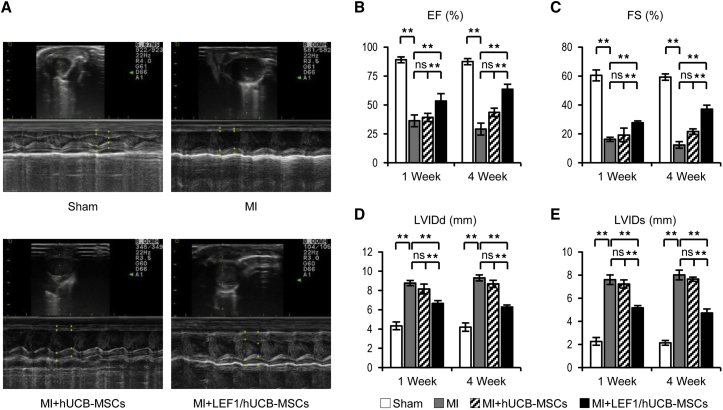
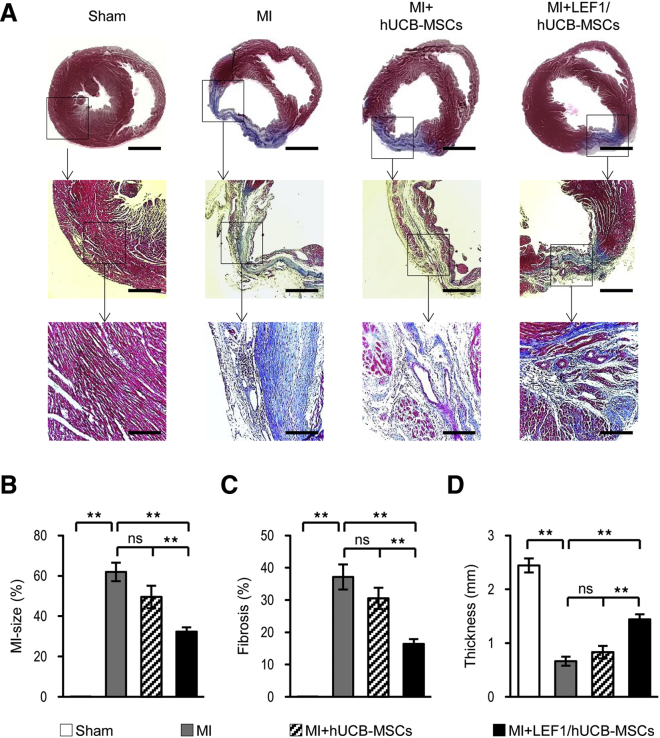
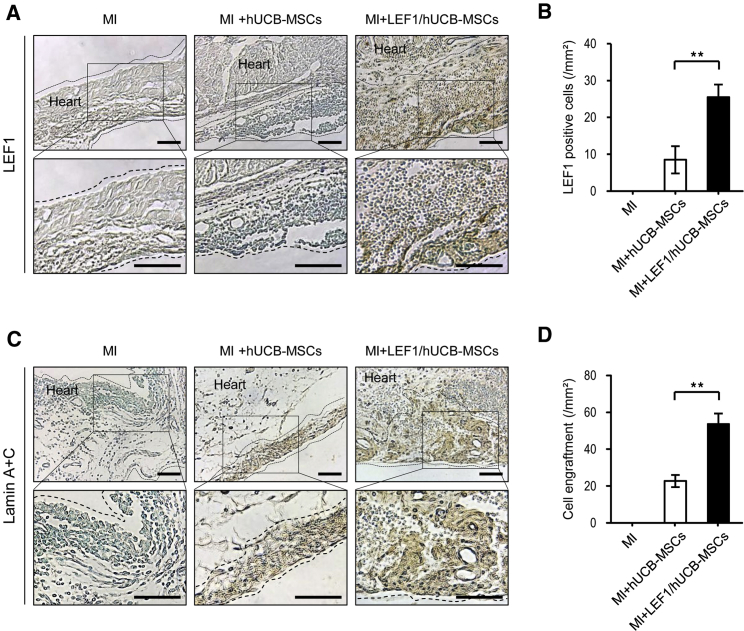
Stem cell-based therapy is one of the most attractive approaches to ischemic heart diseases, such as myocardial infarction (MI). We evaluated the cardio-protective effects of the human umbilical cord blood-derived mesenchymal stem cells (hUCB-MSCs) stably expressing lymphoid enhancer-binding factor 1 (LEF1; LEF1/hUCB-MSCs) in a rat model of MI. LEF1 overexpression in hUCB-MSCs promoted cell-proliferation and anti-apoptotic effects in hypoxic conditions. For the application of its therapeutic effects in vivo, the LEF1 gene was introduced into an adeno-associated virus integration site 1 (AAVS1) locus, known as a safe harbor site on chromosome 19 by CRISPR/Cas9-mediated gene integration in hUCB-MSCs. Transplantation of LEF1/hUCB-MSCs onto the infarction region in the rat model significantly improved overall survival. The cardio-protective effect of LEF1/hUCB-MSCs was proven by echocardiogram parameters, including greatly improved left-ventricle ejection fraction (EF) and fractional shortening (FS). Moreover, histology and immunohistochemistry successfully presented reduced MI region and fibrosis by LEF1/hUCB-MSCs. We found that these overall positive effects of LEF1/hUCB-MSCs are attributed by increased proliferation and survival of stem cells in oxidative stress conditions and by the secretion of various growth factors by LEF1. In conclusion, this study suggests that the stem cell-based therapy, conjugated with genome editing of transcription factor LEF1, which promotes cell survival, could be an effective therapeutic strategy for cardiovascular disease.
基于干细胞的疗法是治疗缺血性心脏病(如心肌梗死,MI)最具吸引力的方法之一。我们在大鼠心肌梗死模型中评估了稳定表达淋巴样增强因子1(LEF1;LEF1/hUCB-MSCs)的人脐带血间充质干细胞(hUCB-MSCs)的心脏保护作用。hUCB-MSCs中LEF1的过表达促进了缺氧条件下的细胞增殖和抗凋亡作用。为了在体内应用其治疗效果,通过CRISPR/Cas9介导的基因整合,将LEF1基因导入腺相关病毒整合位点1(AAVS1),该位点位于19号染色体上的一个安全位点。将LEF1/hUCB-MSCs移植到大鼠模型的梗死区域可显著提高总体生存率。LEF1/hUCB-MSCs的心脏保护作用通过超声心动图参数得到证实,包括左心室射血分数(EF)和缩短分数(FS)的显著改善。此外,组织学和免疫组化结果显示LEF1/hUCB-MSCs可减少梗死区域和纤维化。我们发现,LEF1/hUCB-MSCs的这些总体积极作用归因于氧化应激条件下干细胞增殖和存活的增加以及LEF1分泌的各种生长因子。总之,本研究表明,结合促进细胞存活的转录因子LEF1的基因组编辑的基于干细胞的疗法可能是治疗心血管疾病的有效策略。