Borgers Jessica S W, Tobin Richard P, Vorwald Victoria M, Smith Joshua M, Davis Dana M, Kimball Abigail K, Clambey Eric T, Couts Kasey L, McWilliams Jennifer A, Jordan Kimberly R, Torphy Robert J, Schulick Richard, McCarter Martin D
Department of Surgery, School of Medicine, University of Colorado Anschutz Medical Campus, Aurora, CO 80045.
Radboud University Medical Center, 6525 GA Nijmegen, the Netherlands.
Immunohorizons. 2020 Feb 18;4(2):82-92. doi: 10.4049/immunohorizons.1900089.
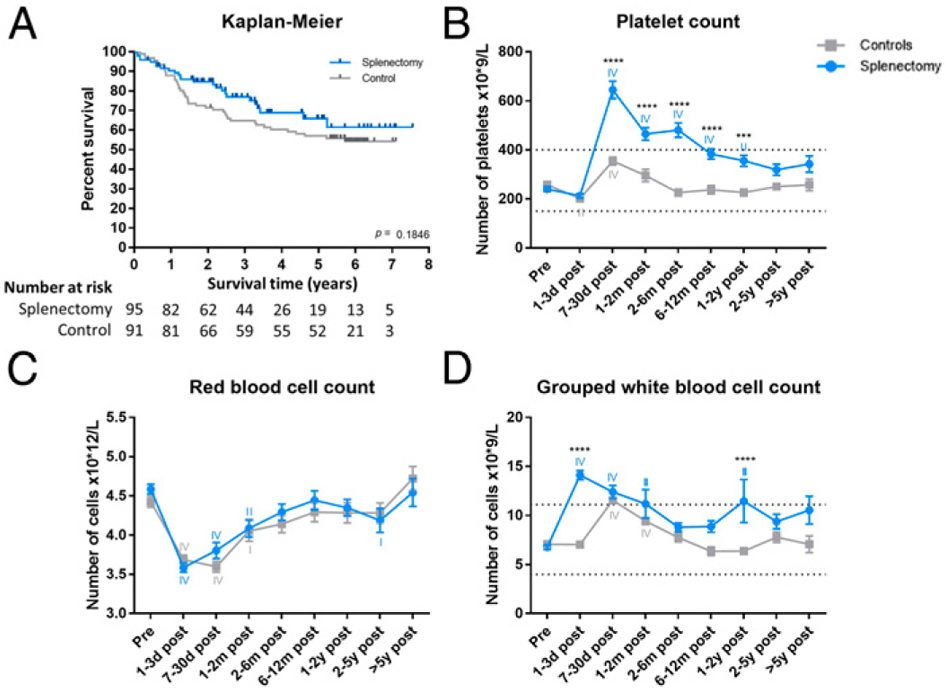
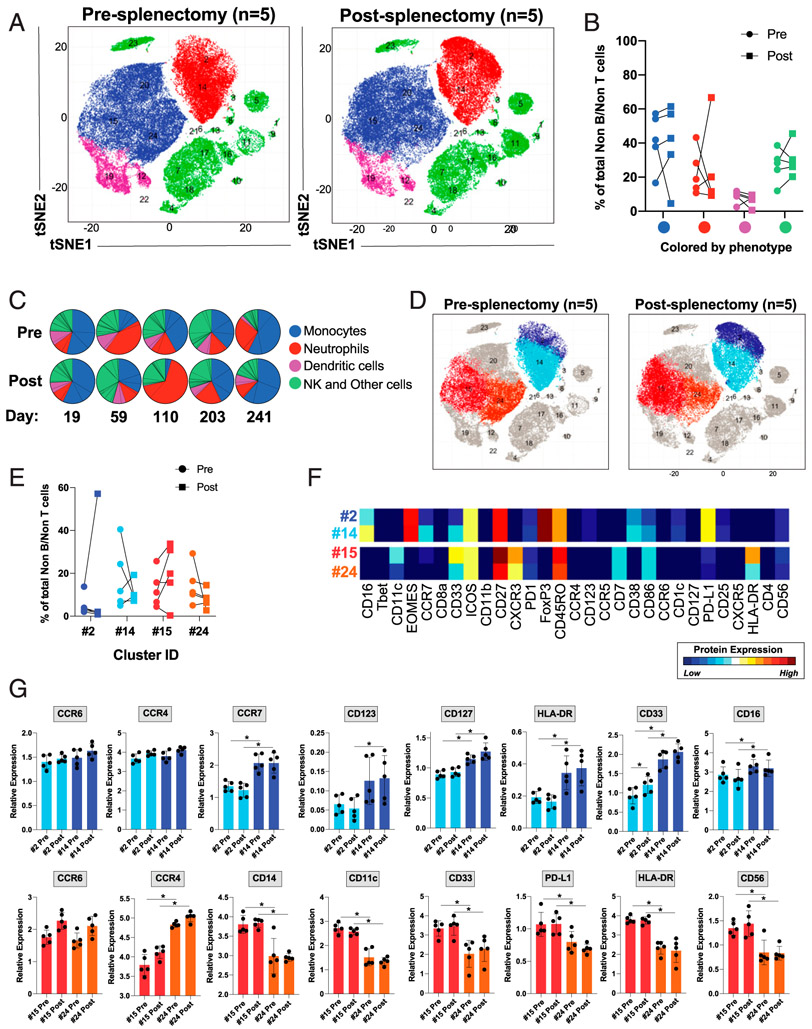
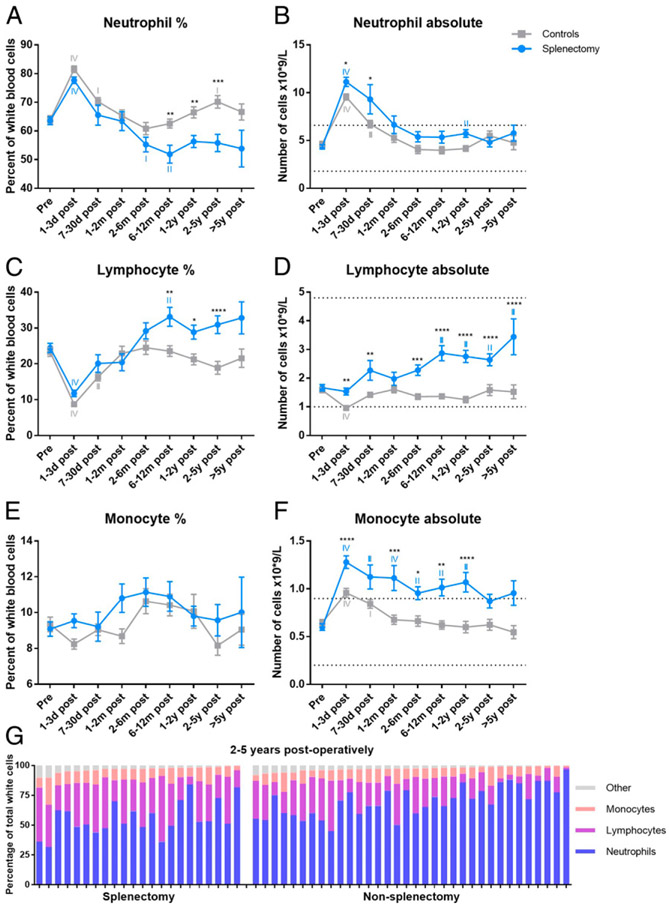
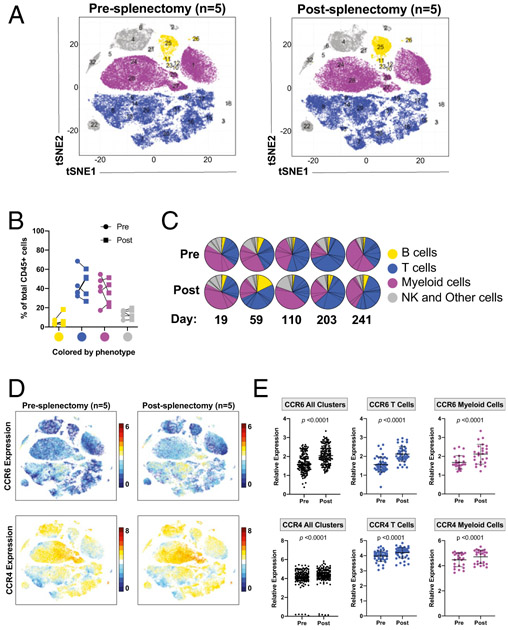
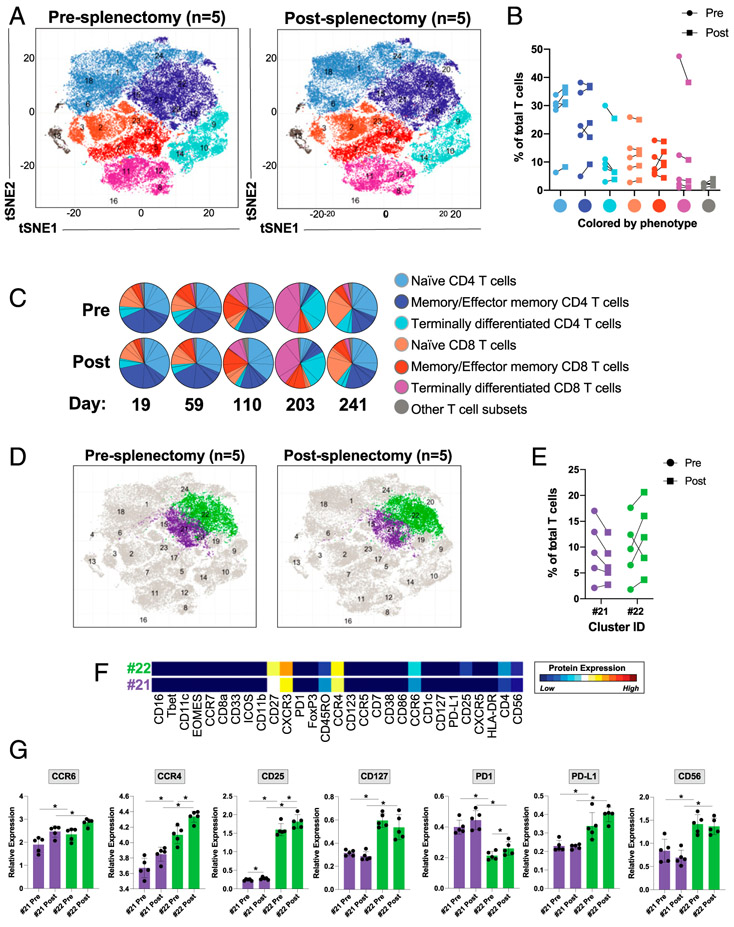
Although the consequences of splenectomy are well understood in mice, much less is known about the immunologic changes that occur following splenectomy in humans. We sought to characterize the circulating immune cell populations of patients before and after elective splenectomy to determine if these changes are related to postsplenectomy survival outcomes. Retrospective clinical information was collected from 95 patients undergoing elective splenectomy compared with 91 patients undergoing pancreaticoduodenectomy (Whipple procedure). We further analyzed peripheral blood from five patients in the splenectomy group, collected before and after surgery, using single-cell cytometry by time-of-flight mass spectrometry. We compared pre- and postsplenectomy data to characterize both the major and minor immune cell populations in significantly greater detail. Compared with patients undergoing a Whipple procedure, splenectomized patients had significant and long-lasting elevated counts of lymphocytes, monocytes, and basophils. Cytometry by time-of-flight mass spectroscopy analysis demonstrated that the elevated lymphocytes primarily consisted of naive CD4 T cells and a population of activated CD25CD56CD4 T cells, whereas the elevated monocyte counts were mainly mature, activated monocytes. We also observed a significant increase in the expression of the chemokine receptors CCR6 and CCR4 on several cellular populations. Taken together, these data indicate that significant immunological changes take place following splenectomy. Whereas other groups have compared splenectomized patients to healthy controls, this study compared patients undergoing elective splenectomy to those undergoing a similar major abdominal surgery. Overall, we found that splenectomy results in significant long-lasting changes in circulating immune cell populations and function.
虽然脾切除术在小鼠中的后果已为人熟知,但对于人类脾切除术后发生的免疫变化却知之甚少。我们试图对择期脾切除术前和术后患者的循环免疫细胞群体进行表征,以确定这些变化是否与脾切除术后的生存结果相关。我们收集了95例接受择期脾切除术患者的回顾性临床信息,并与91例接受胰十二指肠切除术(惠普尔手术)的患者进行比较。我们还使用飞行时间质谱单细胞流式细胞术分析了脾切除组5例患者手术前后采集的外周血。我们比较了脾切除术前和术后的数据,以更详细地表征主要和次要免疫细胞群体。与接受惠普尔手术的患者相比,脾切除患者的淋巴细胞、单核细胞和嗜碱性粒细胞计数显著且持久升高。飞行时间质谱流式细胞术分析表明,升高的淋巴细胞主要由初始CD4 T细胞和一群活化的CD25CD56CD4 T细胞组成,而升高的单核细胞计数主要是成熟的活化单核细胞。我们还观察到几种细胞群体上趋化因子受体CCR6和CCR4的表达显著增加。综上所述,这些数据表明脾切除术后发生了显著的免疫变化。其他研究小组将脾切除患者与健康对照进行了比较,而本研究将接受择期脾切除术的患者与接受类似大型腹部手术的患者进行了比较。总体而言,我们发现脾切除术会导致循环免疫细胞群体和功能发生显著的长期变化。