Brenner Philip, Citarella Anna, Wingård Louise, Sundström Anders
Department of Medicine Solna, Centre for Pharmacoepidemiology, Karolinska Institutet, SE-171 76 Stockholm, Sweden.
BMC Rheumatol. 2020 Feb 12;4:9. doi: 10.1186/s41927-019-0106-3. eCollection 2020.
Rheumatoid arthritis (RA), psoriatic arthritis (PsA) and ankylosing spondylitis (AS) are autoimmune disorders associated with an increased risk for depression, anxiety and sleeping problems. The objective of this study was to analyze use of antidepressants and benzodiazepine-related hypnotics (BRH) in Sweden before and after first time treatment with anti-TNF and non-biological systemic (NBS) treatments among patients with the above diagnoses, and to correlate such use with that of randomly selected population controls.
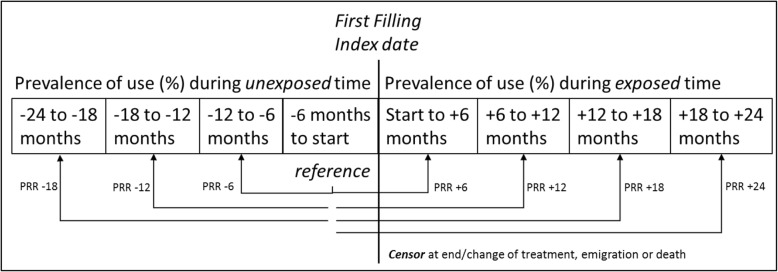
Patients and dispensed drugs were identified in nationwide Swedish healthcare registers. Proportions of subjects filling prescriptions of antidepressants and BRH from 2 years before start of treatment (index-date), and 2 years after index date were assessed. Using the period -6 months to index-date as reference, prevalence rate ratios were computed for 6 months' intervals before and after index. For up to ten randomly selected population controls per patient, the same measures were calculated.
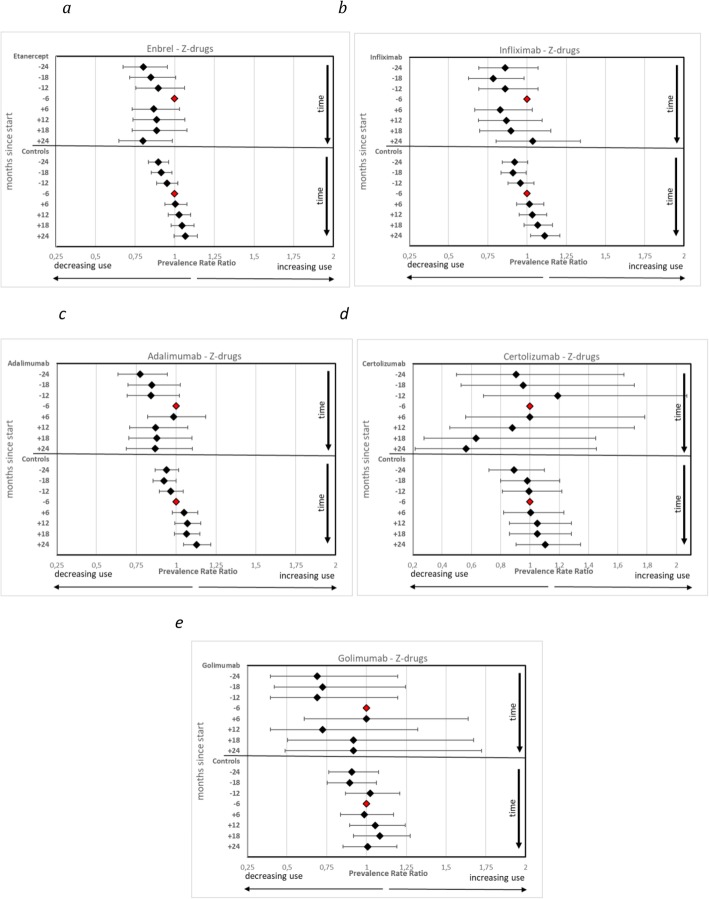
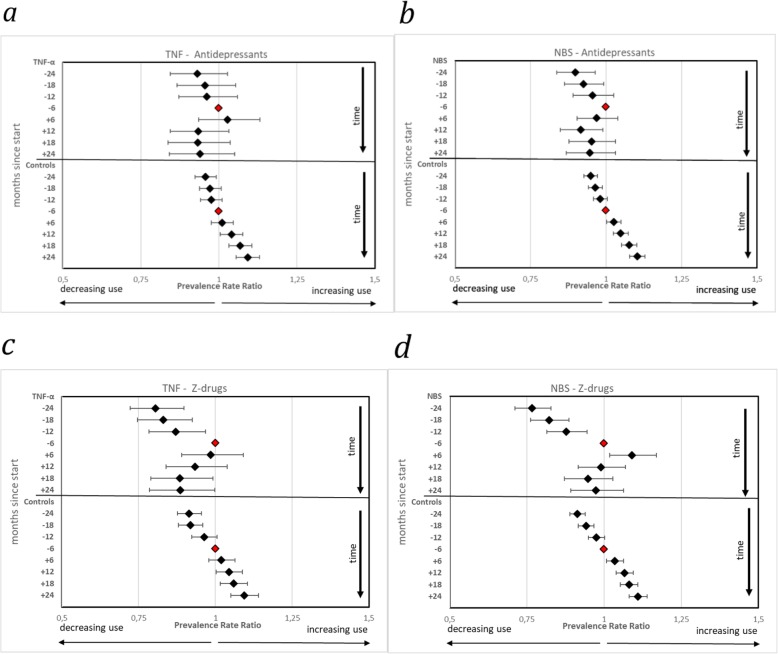
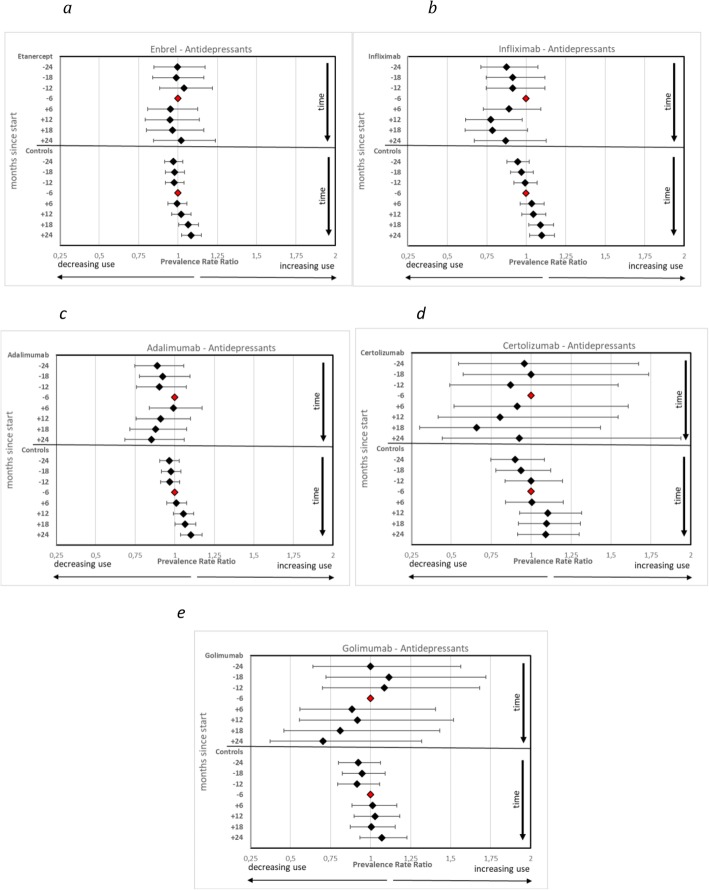
A total of 6256 patients started anti-TNF treatment, and 13,241 NBS treatment. The mean age at index was 52.0 for the anti-TNF group and 56.1 for NBS. Use of antidepressants and BRH was similar in both treatment groups (10.4-12.8%), significantly more common than in the controls (6.6 to 7.6%). For all patients, proportions filling prescriptions for antidepressants and BRH decreased directly or soon after the index; no such changes were seen in the controls, who all showed a slow but steady increase in use over time. Starters of anti-TNF treatment did not show clearer decreases in use of psychotropics than those initiating NBS.
Decreased rates of dispensed psychotropic drugs after the time of anti-TNF and NBS treatment initiation were seen among patients with autoimmune disorders but not population controls. This may correspond to treatment effects of anti-TNF and NBS also on psychiatric symptoms among these patients.
类风湿性关节炎(RA)、银屑病关节炎(PsA)和强直性脊柱炎(AS)是自身免疫性疾病,与抑郁、焦虑和睡眠问题风险增加相关。本研究的目的是分析瑞典上述诊断患者首次接受抗TNF和非生物系统性(NBS)治疗前后抗抑郁药和苯二氮䓬类相关催眠药(BRH)的使用情况,并将这种使用情况与随机选择的人群对照组进行关联。
在瑞典全国医疗保健登记册中识别患者和所配发的药物。评估从治疗开始前2年(索引日期)到索引日期后2年开具抗抑郁药和BRH处方的受试者比例。以索引日期前6个月为参考期,计算索引前后6个月间隔的患病率比。为每位患者随机选择多达10名人群对照组,计算相同的指标。
共有6256例患者开始抗TNF治疗,13241例患者开始NBS治疗。抗TNF组索引时的平均年龄为52.0岁,NBS组为56.1岁。两个治疗组中抗抑郁药和BRH的使用情况相似(10.4 - 12.8%),明显高于对照组(6.6%至7.6%)。对于所有患者,开具抗抑郁药和BRH处方的比例在索引时或之后直接下降;对照组未出现此类变化,其使用量随时间缓慢但稳步增加。开始抗TNF治疗的患者与开始NBS治疗的患者相比,精神药物使用量的下降并不更明显。
自身免疫性疾病患者在开始抗TNF和NBS治疗后,精神药物的配药率下降,但人群对照组未出现这种情况。这可能对应于抗TNF和NBS对这些患者精神症状的治疗效果。