Zhang Jing, Yin Xue-Ren, Li Heng, Xu Meng, Zhang Meng-Xue, Li Shao-Jia, Liu Xiao-Fen, Shi Yan-Na, Grierson Donald, Chen Kun-Song
Zhejiang Provincial Key Laboratory of Horticultural Plant Integrative Biology, Zhejiang University, Hangzhou, China.
The State Agriculture Ministry Laboratory of Horticultural Plant Growth, Development and Quality Improvement, Zhejiang University, Hangzhou, China.
J Exp Bot. 2020 May 30;71(10):3172-3184. doi: 10.1093/jxb/eraa085.
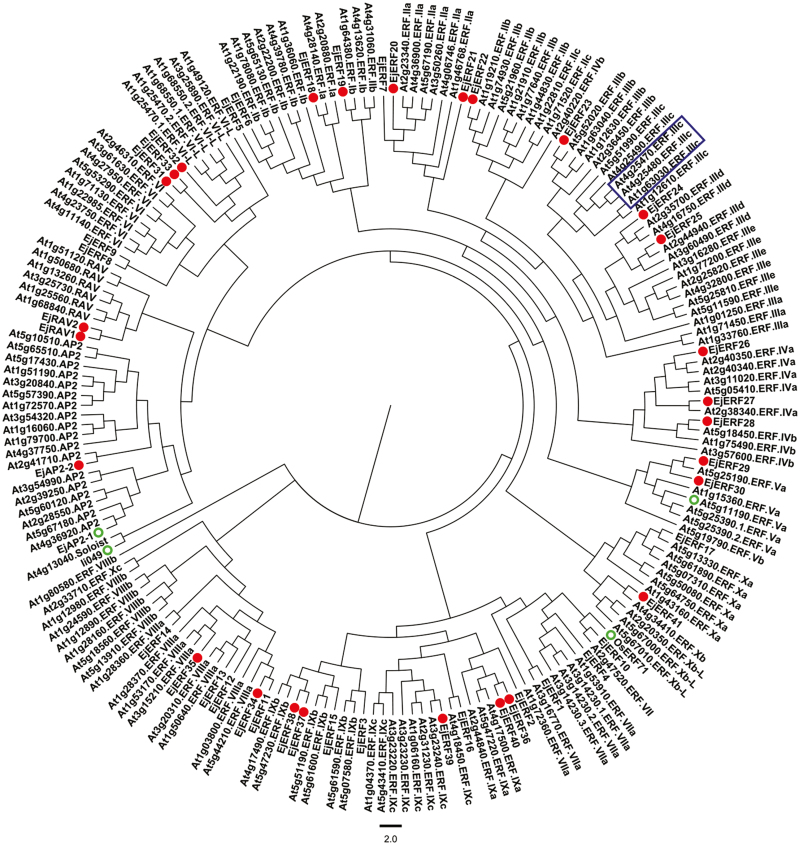
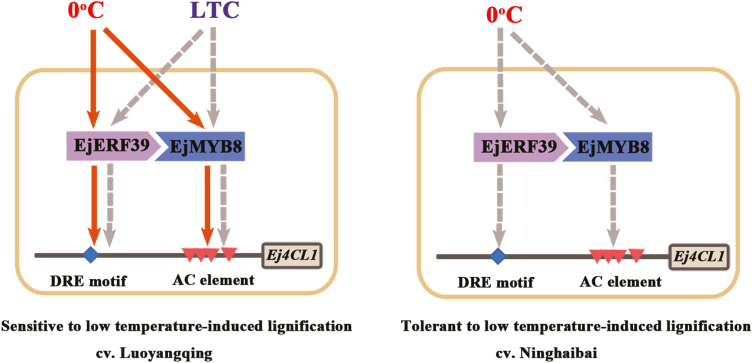
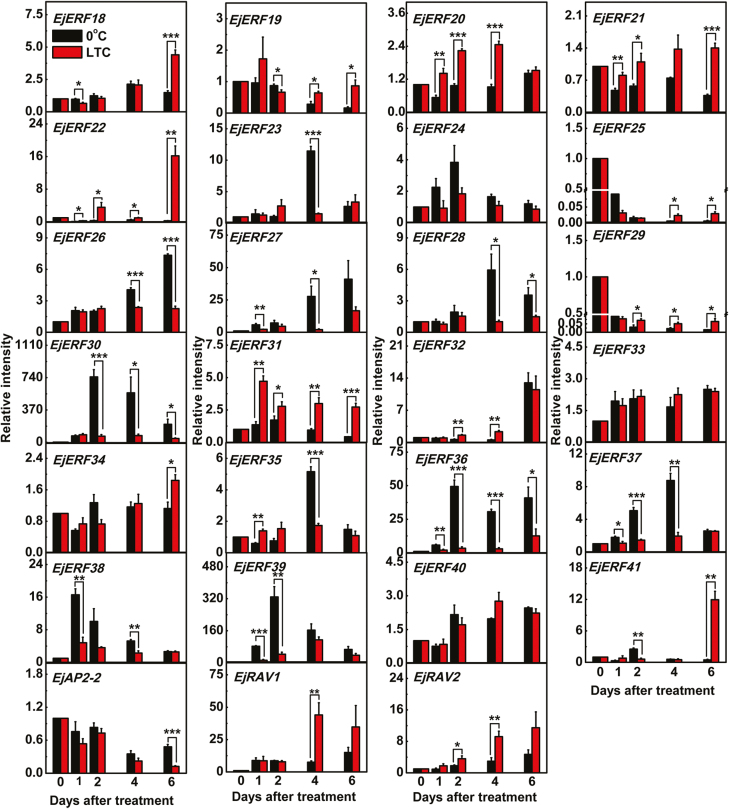
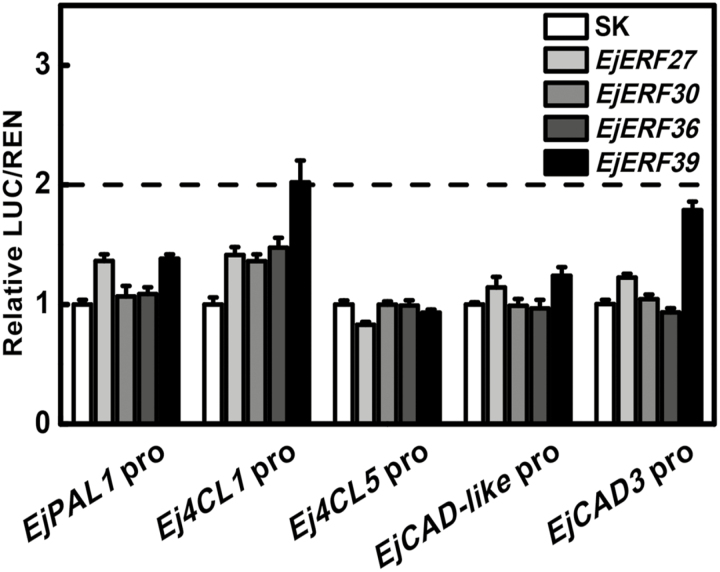
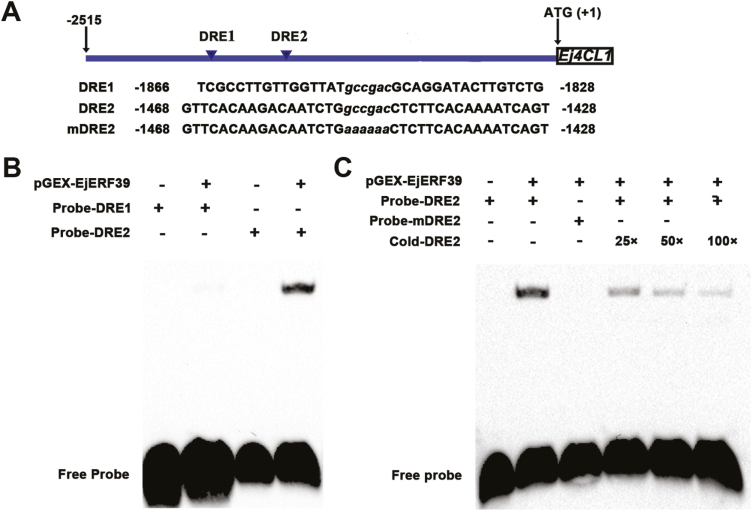
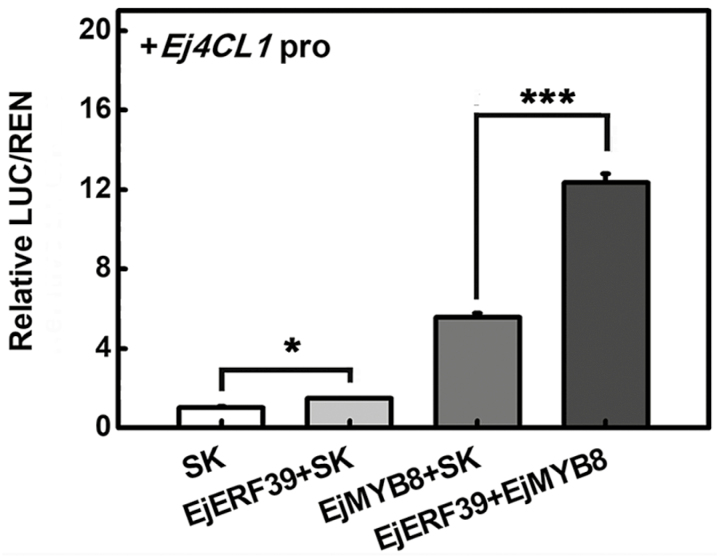
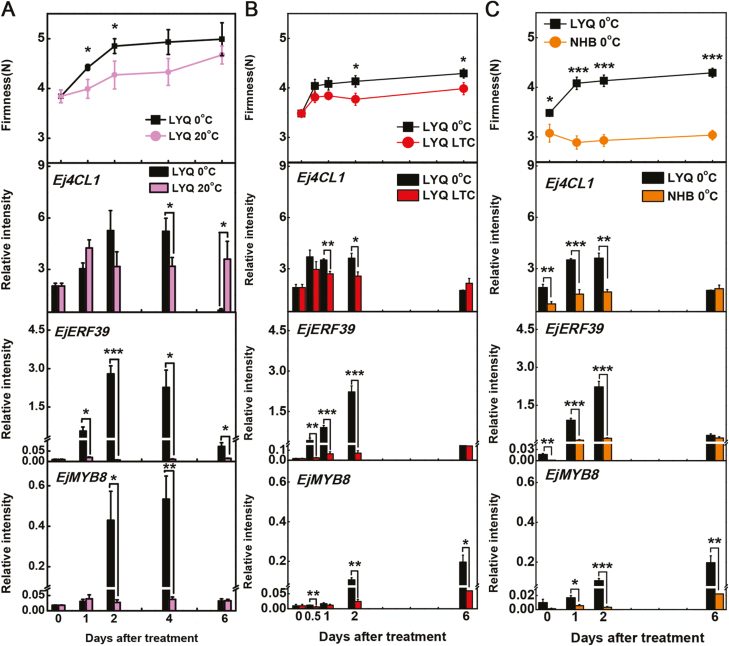
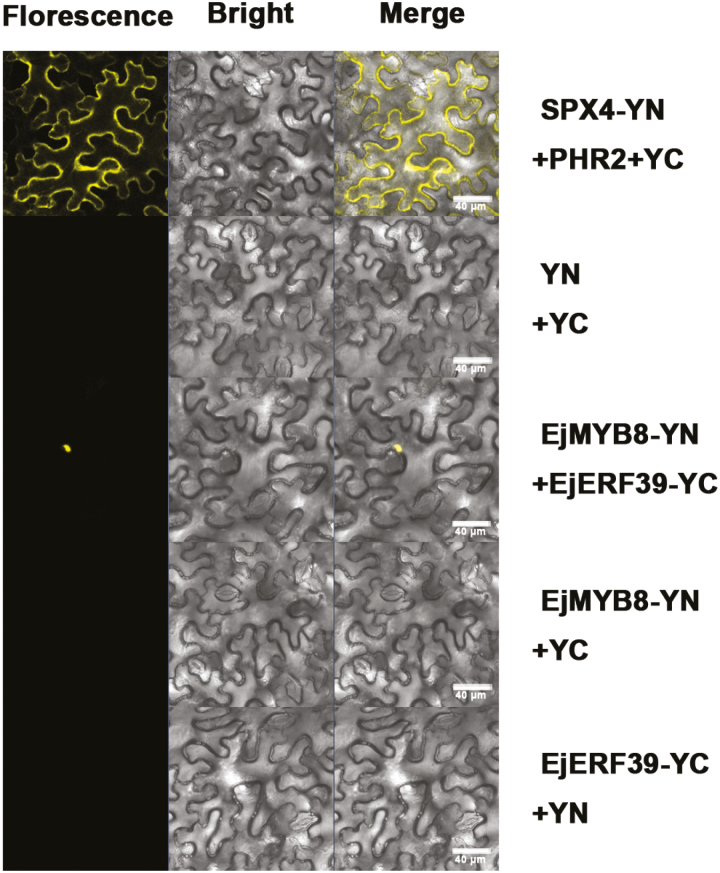
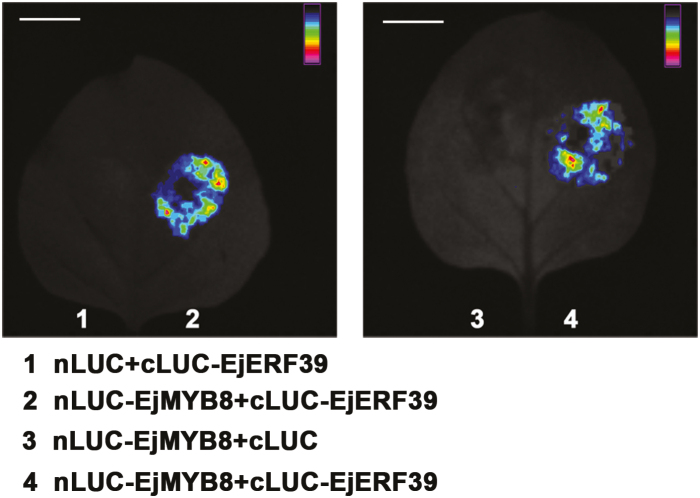
Flesh lignification is a specific chilling response that causes deterioration in the quality of stored red-fleshed loquat fruit (Eribotrya japonica) and is one aspect of wider chilling injury. APETALA2/ETHLENE RESPONSIVE FACTOR (AP2/ERF) transcription factors are important regulators of plant low-temperature responses and lignin biosynthesis. In this study, the expression and action of 27 AP2/ERF genes from the red-fleshed loquat cultivar 'Luoyangqing' were investigated in order to identify transcription factors regulating low-temperature-induced lignification. EjERF27, EjERF30, EjERF36, and EjERF39 were significantly induced by storage at 0 °C but inhibited by a low-temperature conditioning treatment (pre-storage at 5 °C for 6 days before storage at 0 °C, which reduces low-temperature-induced lignification), and their transcript levels positively correlated with flesh lignification. A dual-luciferase assay indicated that EjERF39 could transactivate the promoter of the lignin biosynthetic gene Ej4CL1, and an electrophoretic mobility shift assay confirmed that EjERF39 recognizes the DRE element in the promoter region of Ej4CL1. Furthermore, the combination of EjERF39 and the previously characterized EjMYB8 synergistically transactivated the Ej4CL1 promoter, and both transcription factors showed expression patterns correlated with lignification in postharvest treatments and red-fleshed 'Luoyangqing' and white-fleshed 'Ninghaibai' cultivars with different lignification responses. Bimolecular fluorescence complementation and luciferase complementation imaging assays confirmed direct protein-protein interaction between EjERF39 and EjMYB8. These data indicate that EjERF39 is a novel cold-responsive transcriptional activator of Ej4CL1 that forms a synergistic activator complex with EjMYB8 and contributes to loquat fruit lignification at low temperatures.
果肉木质化是一种特定的冷害反应,会导致贮藏的红肉枇杷果实(枇杷)品质下降,是更广泛的冷害的一个方面。APETALA2/乙烯反应因子(AP2/ERF)转录因子是植物低温反应和木质素生物合成的重要调节因子。在本研究中,对红肉枇杷品种‘洛阳青’的27个AP2/ERF基因的表达和作用进行了研究,以鉴定调控低温诱导木质化的转录因子。EjERF27、EjERF30、EjERF36和EjERF39在0℃贮藏时显著诱导,但在低温预处理(0℃贮藏前在5℃预贮藏6天,可减少低温诱导的木质化)时受到抑制,其转录水平与果肉木质化呈正相关。双荧光素酶试验表明,EjERF39可以反式激活木质素生物合成基因Ej4CL1的启动子,电泳迁移率变动分析证实EjERF39识别Ej4CL1启动子区域的DRE元件。此外,EjERF39与先前鉴定的EjMYB8协同反式激活Ej4CL1启动子,并且这两个转录因子在采后处理以及具有不同木质化反应的红肉‘洛阳青’和白肉‘宁海白’品种中的表达模式与木质化相关。双分子荧光互补和荧光素酶互补成像试验证实了EjERF39与EjMYB8之间存在直接的蛋白质-蛋白质相互作用。这些数据表明,EjERF39是Ej4CL1的一种新型冷响应转录激活因子,它与EjMYB8形成协同激活复合物,并在低温下促进枇杷果实木质化。