Department of Cardiology, Zhongshan Hospital, Fudan University, Shanghai, China.
Shanghai Institute of Cardiovascular Diseases, Shanghai, China.
J Cell Mol Med. 2020 Apr;24(7):4082-4091. doi: 10.1111/jcmm.15060. Epub 2020 Feb 19.
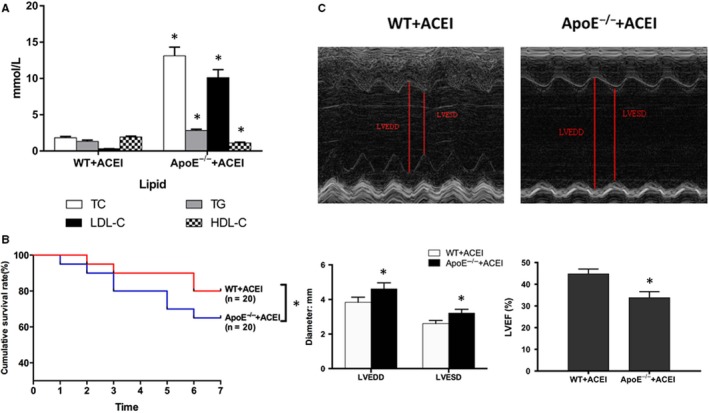
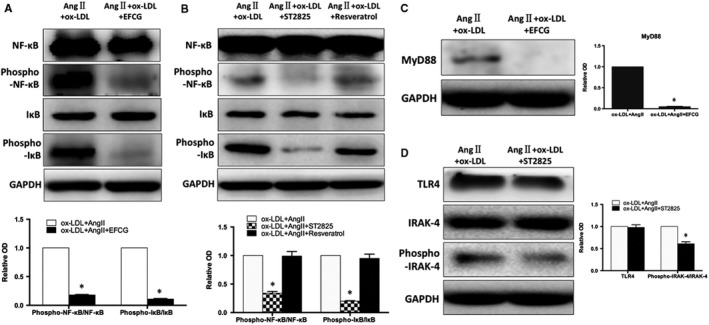
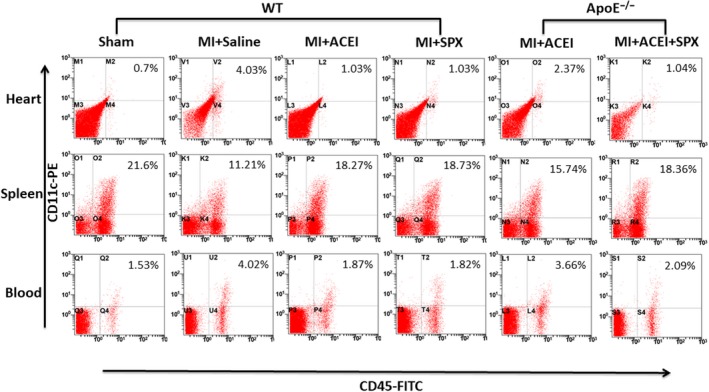
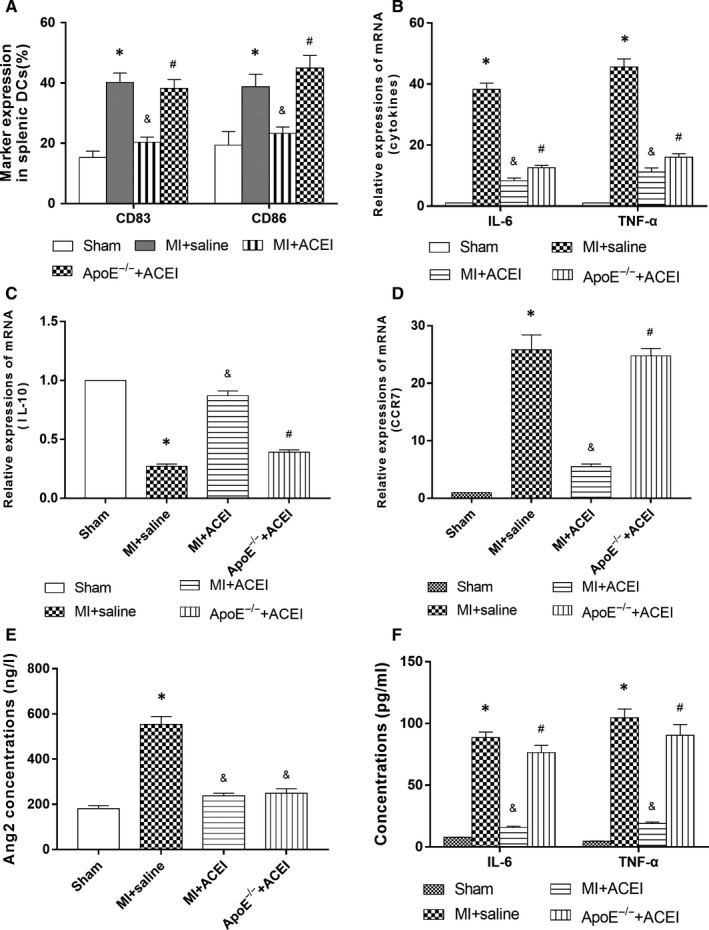
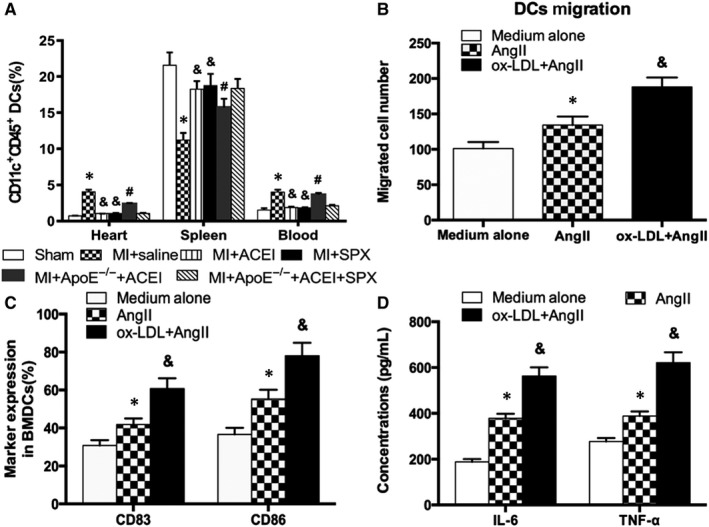
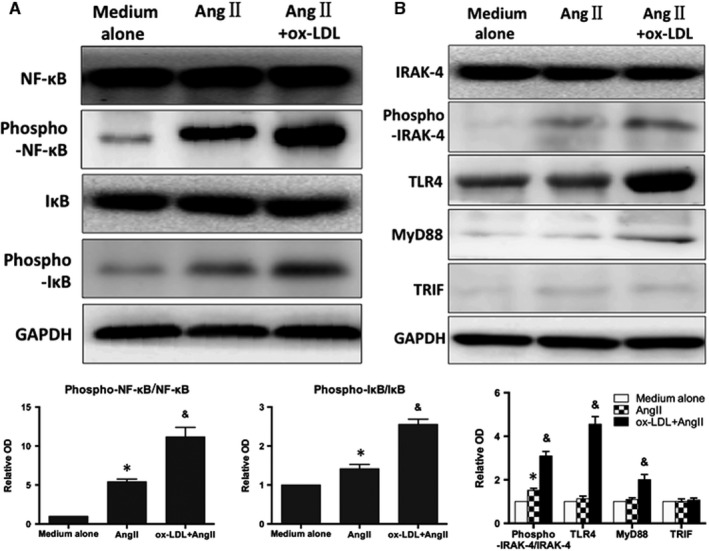
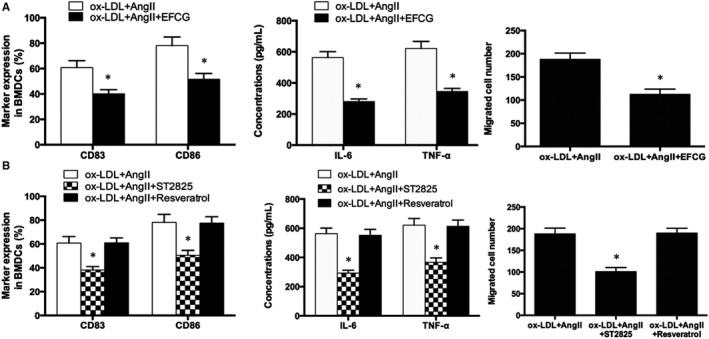
To investigate the prevention of cardiac remodelling and inflammatory immune response after myocardial infarction (MI) via ACEI regulating dendritic cells (DCs), we explored whether the protective effect of ACEI was repressed under hyperlipidemic environment. In vivo, the survival rate and left ventricular function of the mice were recorded on day 7 after MI. Tissue samples of the myocardium, spleen, bone marrow and peripheral blood were assessed for Ang II concentration, inflammatory cytokines and DCs expression. In vitro, DCs were treated with ox-LDL + Ang II, simulating the internal environment of MI in ApoE mice to explore the mechanism involved in the DCs maturation and inflammation. Under hyperlipidemic circumstances, we found that the cardioprotective effect of ACEI was attenuated through regulating DCs maturation and inflammation after MI, affecting survival rate and left ventricular function. Effects of lisinopril on the release of spleen-derived DCs and myocardial infiltration were also reduced under hyperlipidemic conditions. In vitro, immune maturation and inflammation of DCs were further induced by ox-LDL on the basis of Ang II treatment, as indicated by the upregulation of CD83, CD86, and the expressions of cytokines and chemokines. Furthermore, ox-LDL could activate TLR4-MyD88 signalling pathway, promoting IRAK-4 and NF-κB. The present study demonstrated that ACEI reduced the recruitment of DCs to the infarct site, leading to a higher survival rate and improved function. However, this effect was inhibited under hyperlipidemic environment. TLR4-MyD88 signalling pathway may be responsible for the molecular mechanism involved in the immune maturation and inflammation of DCs induced by ox-LDL.
为了研究 ACEI 通过调节树突状细胞(DC)预防心肌梗死后的心脏重构和炎症免疫反应,我们探讨了 ACEI 的保护作用是否在高脂血症环境下受到抑制。在体内,记录 MI 后第 7 天小鼠的存活率和左心室功能。评估心肌、脾脏、骨髓和外周血组织样本中的 Ang II 浓度、炎症细胞因子和 DCs 表达。在体外,用 ox-LDL+Ang II 处理 DCs,模拟 ApoE 小鼠 MI 中的内环境,以探讨 DCs 成熟和炎症涉及的机制。在高脂血症情况下,我们发现 ACEI 通过调节 MI 后 DCs 的成熟和炎症来减弱其对心脏的保护作用,从而影响存活率和左心室功能。在高脂血症条件下,培哚普利对脾源性 DCs 的释放和心肌浸润的作用也降低。在体外,ox-LDL 在 Ang II 处理的基础上进一步诱导 DCs 的免疫成熟和炎症,表现为 CD83、CD86 的上调以及细胞因子和趋化因子的表达。此外,ox-LDL 可以激活 TLR4-MyD88 信号通路,促进 IRAK-4 和 NF-κB。本研究表明,ACEI 减少了 DCs 向梗死部位的募集,从而提高了存活率和改善了功能。然而,这种作用在高脂血症环境下受到抑制。TLR4-MyD88 信号通路可能是 ox-LDL 诱导的 DCs 免疫成熟和炎症涉及的分子机制的责任。