Center for Neuroscience Research, Children's Research Institute, Children's National Hospital, Washington, DC, 20010, USA.
Institute for Biomedical Sciences, The George Washington University, Washington, DC, 20052, USA.
Nat Commun. 2020 Feb 19;11(1):964. doi: 10.1038/s41467-020-14762-7.
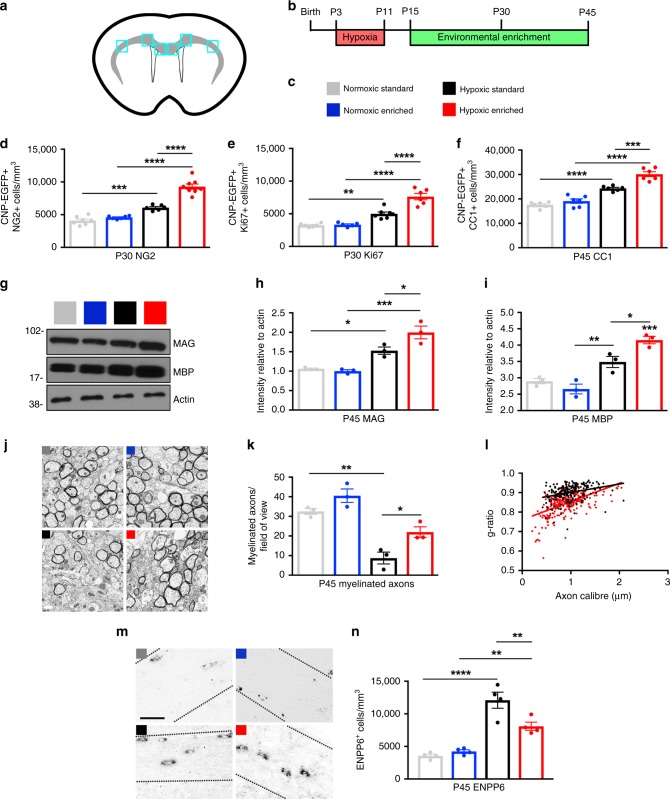
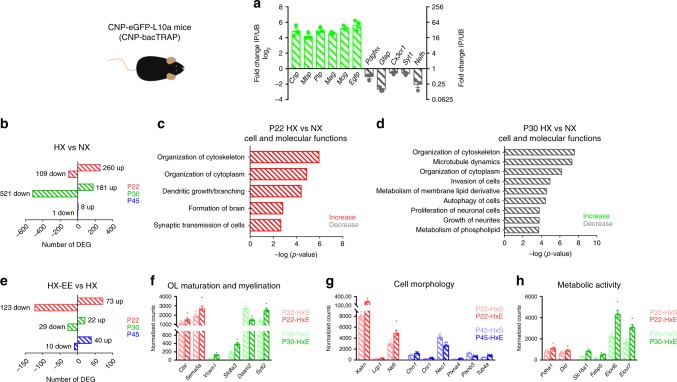
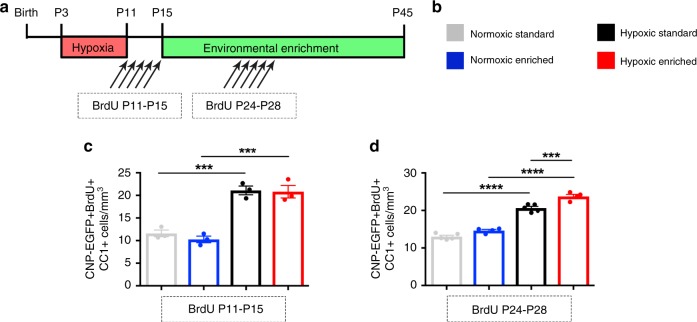
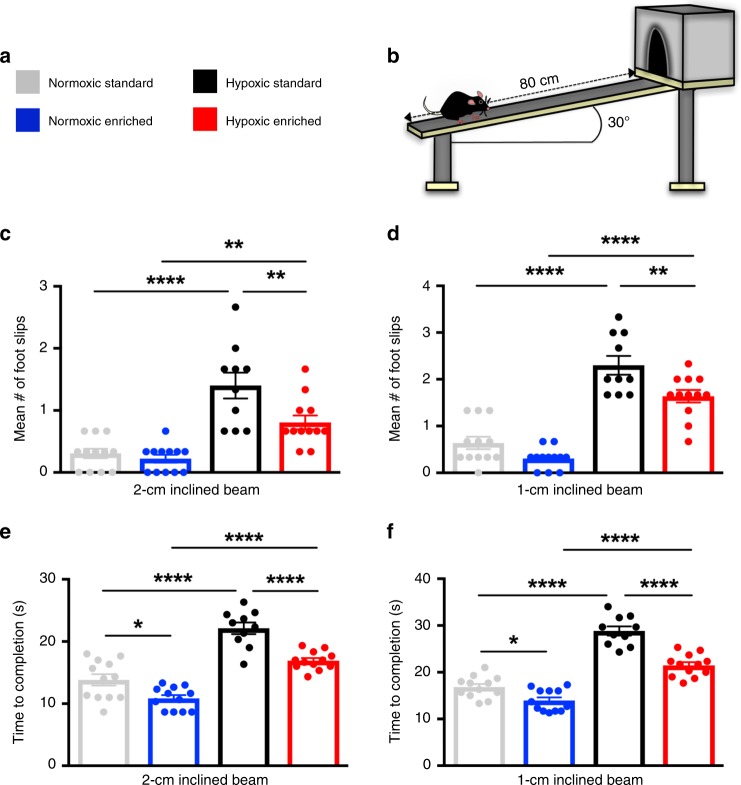
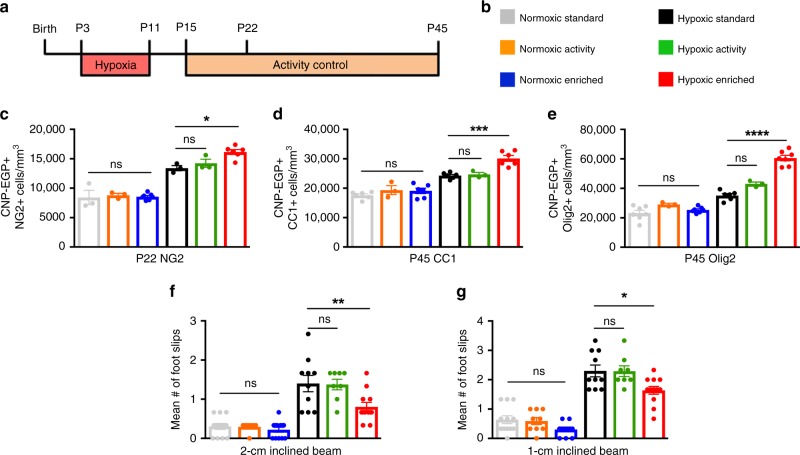
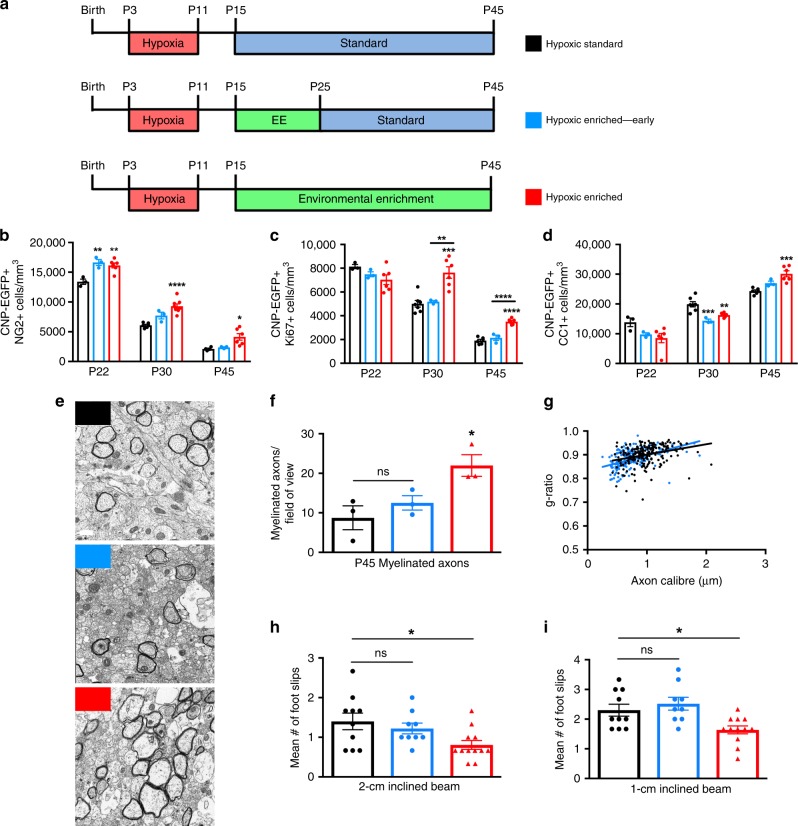
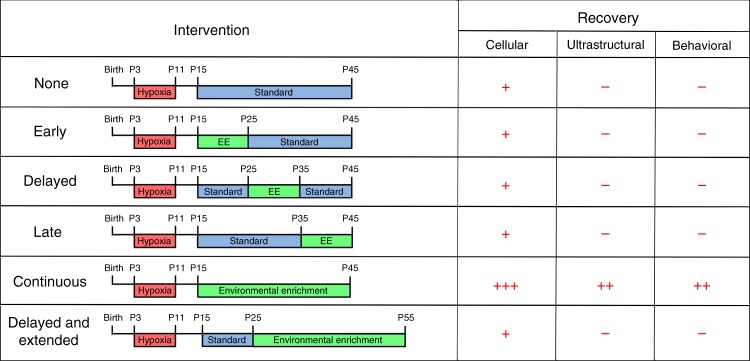
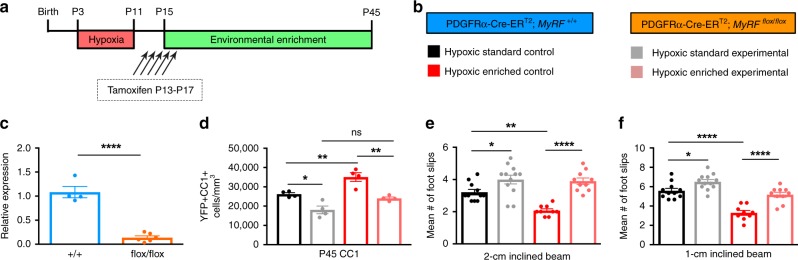
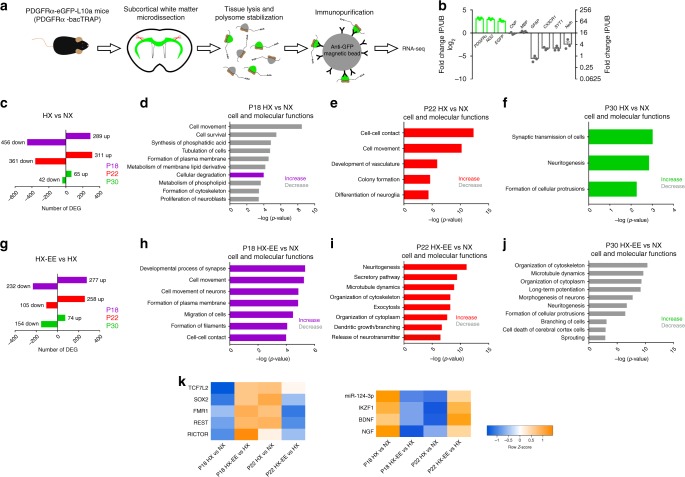
Hypoxic damage to the developing brain due to preterm birth causes many anatomical changes, including damage to the periventricular white matter. This results in the loss of glial cells, significant disruptions in myelination, and thereby cognitive and behavioral disabilities seen throughout life. Encouragingly, these neurological morbidities can be improved by environmental factors; however, the underlying cellular mechanisms remain unknown. We found that early and continuous environmental enrichment selectively enhances endogenous repair of the developing white matter by promoting oligodendroglial maturation, myelination, and functional recovery after perinatal brain injury. These effects require increased exposure to socialization, physical activity, and cognitive enhancement of surroundings-a complete enriched environment. Using RNA-sequencing, we identified oligodendroglial-specific responses to hypoxic brain injury, and uncovered molecular mechanisms involved in enrichment-induced recovery. Together, these results indicate that myelin plasticity induced by modulation of the neonatal environment can be targeted as a therapeutic strategy for preterm birth.
早产儿出生导致的脑部缺氧性损伤会引起许多解剖学变化,包括脑室周围白质损伤。这会导致少突胶质细胞的丧失,髓鞘形成出现显著中断,从而导致终生认知和行为障碍。令人鼓舞的是,这些神经发育障碍可以通过环境因素得到改善;然而,其潜在的细胞机制尚不清楚。我们发现,早期和持续的环境丰富度选择性地通过促进少突胶质细胞成熟、髓鞘形成和围产期脑损伤后的功能恢复,来增强发育中白质的内源性修复。这些效果需要增加社交、体育活动和认知增强环境的接触——即完全丰富的环境。通过 RNA 测序,我们鉴定了少突胶质细胞对缺氧性脑损伤的特异性反应,并揭示了与富集诱导恢复相关的分子机制。总之,这些结果表明,通过调节新生儿环境诱导的髓鞘可塑性可以作为治疗早产儿出生的一种策略。