Forbes Thomas A, Gallo Vittorio
Center for Neuroscience Research, Children's Research Institute, Children's National Medical Center, Washington, DC 20010, USA; The George Washington University School of Medicine and Health Sciences, Washington, DC 20037, USA.
Trends Neurosci. 2017 Sep;40(9):572-587. doi: 10.1016/j.tins.2017.06.009. Epub 2017 Aug 22.
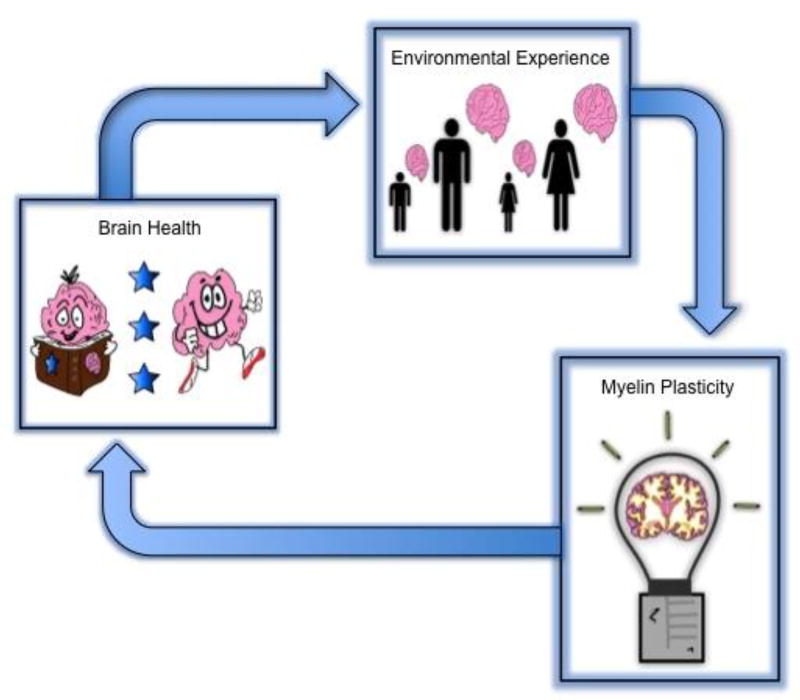
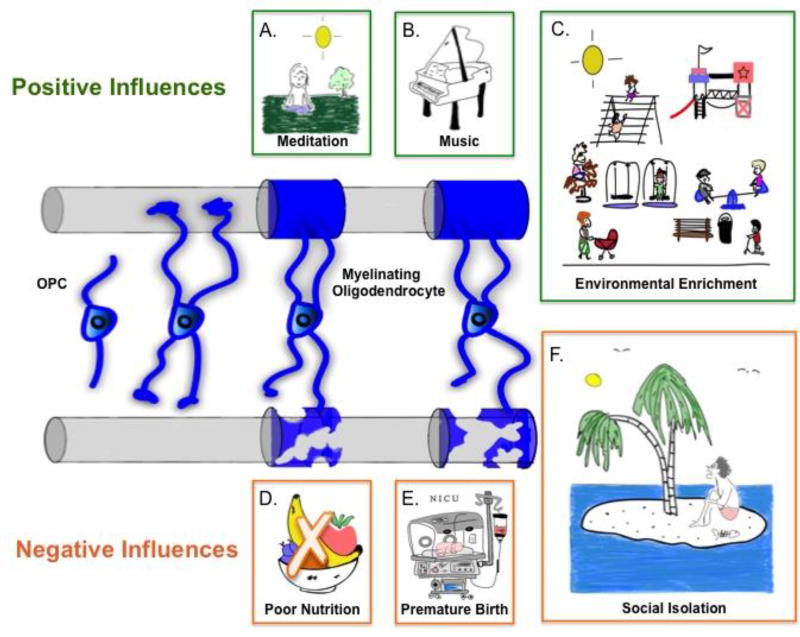
To date, studies have demonstrated the dynamic influence of exogenous environmental stimuli on multiple regions of the brain. This environmental influence positively and negatively impacts programs governing myelination, and acts on myelinating oligodendrocyte (OL) cells across the human lifespan. Developmentally, environmental manipulation of OL progenitor cells (OPCs) has profound effects on the establishment of functional cognitive, sensory, and motor programs. Furthermore, central nervous system (CNS) myelin remains an adaptive entity in adulthood, sensitive to environmentally induced structural changes. Here, we discuss the role of environmental stimuli on mechanisms governing programs of CNS myelination under normal and pathological conditions. Importantly, we highlight how these extrinsic cues can influence the intrinsic power of myelin plasticity to promote functional recovery.
迄今为止,研究已经证明了外源性环境刺激对大脑多个区域的动态影响。这种环境影响对髓鞘形成相关程序产生正负两方面的作用,并在人类整个生命周期中作用于形成髓鞘的少突胶质细胞(OL)。在发育过程中,对少突胶质前体细胞(OPC)进行环境调控会对功能性认知、感觉和运动程序的建立产生深远影响。此外,中枢神经系统(CNS)的髓鞘在成年期仍然是一个适应性实体,对环境诱导的结构变化敏感。在此,我们讨论环境刺激在正常和病理条件下对中枢神经系统髓鞘形成程序调控机制的作用。重要的是,我们强调这些外在信号如何影响髓鞘可塑性的内在能力以促进功能恢复。