Division of Paleontology (Invertebrates), American Museum of Natural History, Central Part West 79th Street, New York, NY, 10024, USA.
Institut für Geologie, Mineralogie und Geophysik, Ruhr-Universität Bochum, Bochum, 44801, Germany.
Sci Rep. 2020 Feb 19;10(1):2950. doi: 10.1038/s41598-020-59748-z.
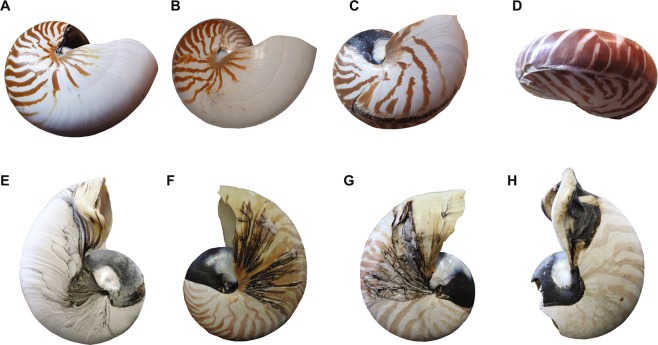
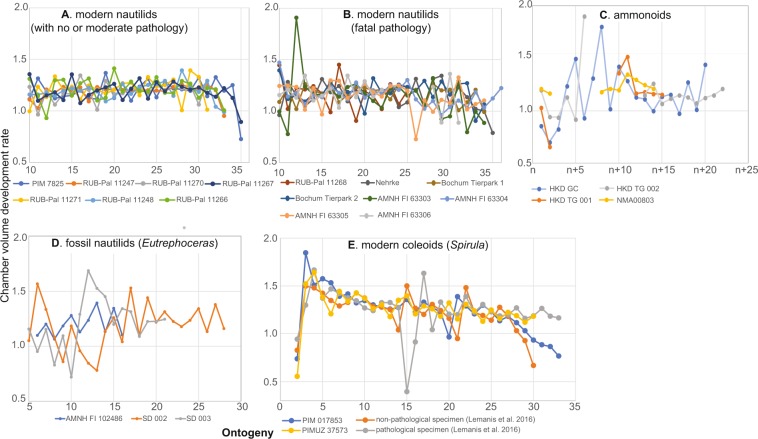
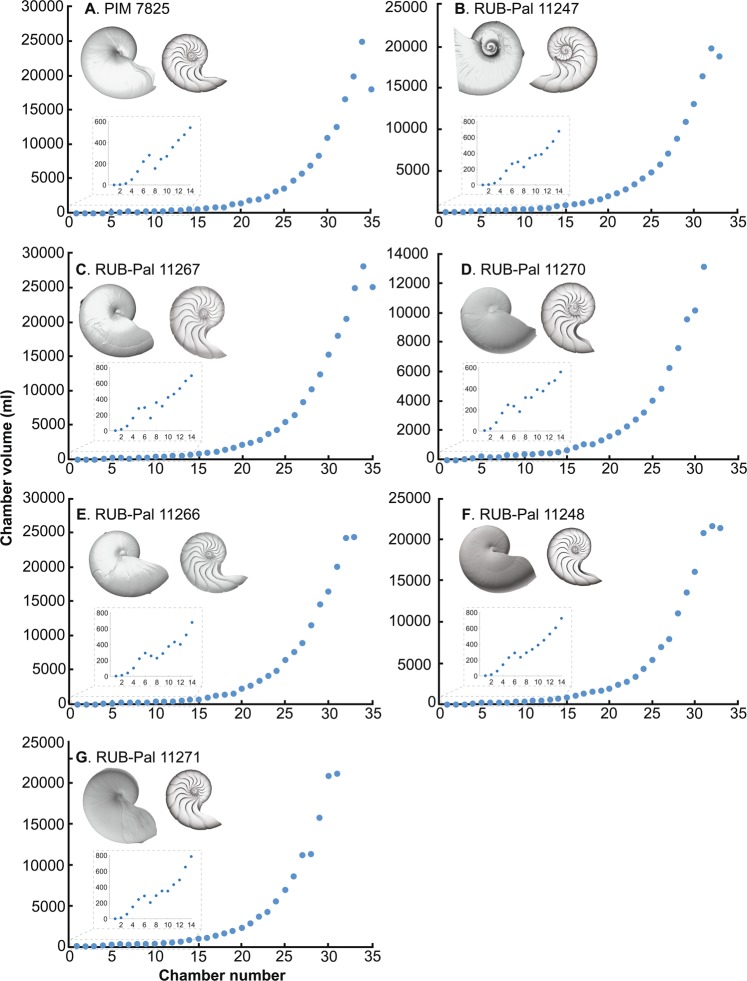
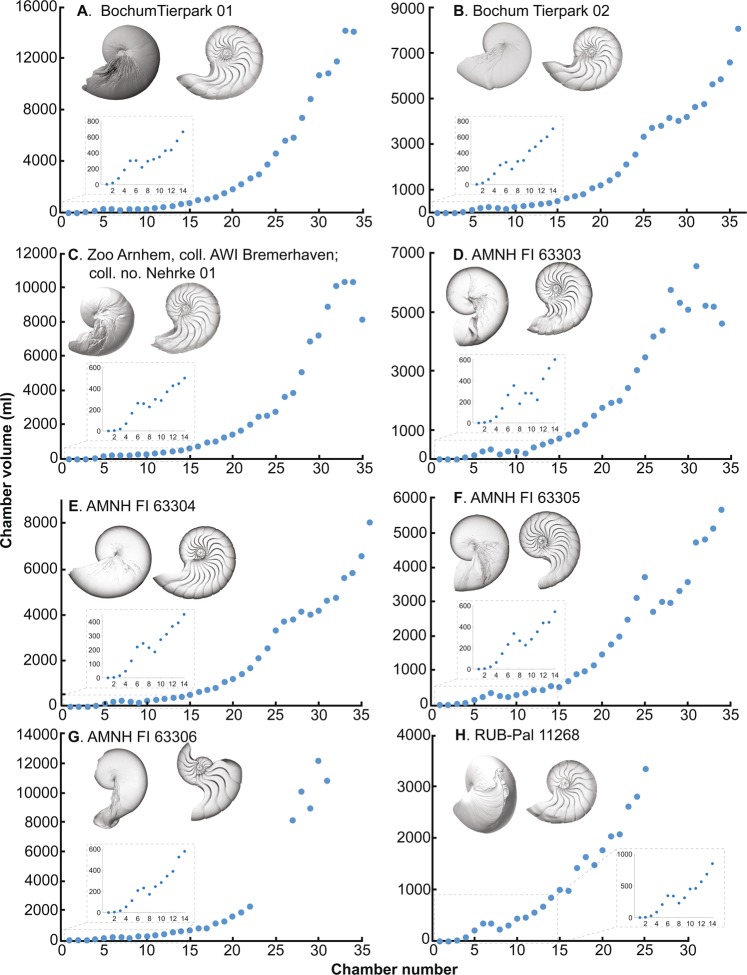
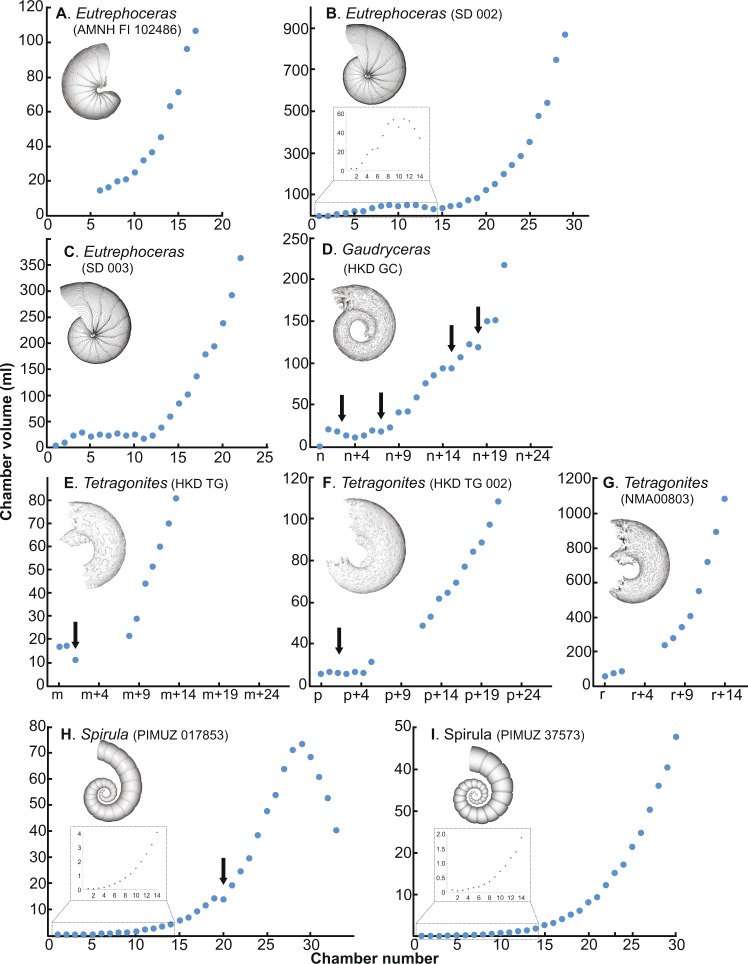
Reconstructing the physiology of extinct organisms is key to understanding mechanisms of selective extinction during biotic crises. Soft tissues of extinct organisms are rarely preserved and, therefore, a proxy for physiological aspects is needed. Here, we examine whether cephalopod conchs yield information about their physiology by assessing how the formation of chambers respond to external stimuli such as environmental changes. We measured chamber volume through ontogeny to detect differences in the pattern of chamber volume development in nautilids, coleoids, and ammonoids. Results reveal that the differences between ontogenetic trajectories of these cephalopods involve the presence or absence of abrupt decreases of chamber volume. Accepting the link between metabolic rate and growth, we assume that this difference is rooted in metabolic rates that differ between cephalopod clades. High metabolic rates combined with small hatching size in ammonoids as opposed to lower metabolic rates and much larger hatchlings in most nautilids may explain the selective extinction of ammonoids as a consequence of low food availability at the end of the Cretaceous.
重建已灭绝生物的生理学是理解生物危机期间选择性灭绝机制的关键。已灭绝生物的软组织很少保存下来,因此需要一种生理方面的替代物。在这里,我们通过评估腔室的形成如何对外界刺激(如环境变化)做出反应,来研究头足类动物的壳是否能提供有关其生理学的信息。我们通过个体发育来测量腔室体积,以检测鹦鹉螺目、章鱼目和菊石目的腔室体积发育模式的差异。结果表明,这些头足类动物的个体发育轨迹之间的差异涉及腔室体积是否突然减小。鉴于代谢率与生长之间存在联系,我们假设这种差异源于不同头足类动物支系之间的代谢率差异。菊石目的高代谢率加上较小的孵化大小,而大多数鹦鹉螺目的代谢率较低且孵化出的幼体大得多,这可能解释了菊石目的选择性灭绝是由于白垩纪末期食物供应不足所致。