Johnson Mae K A, Johnson Oscar P J, Johnson Reagan A, Johnson Marc T J
Clarkson Secondary School Mississauga ON Canada.
Springfield Public School Mississauga ON Canada.
Ecol Evol. 2020 Jan 20;10(3):1639-1647. doi: 10.1002/ece3.6020. eCollection 2020 Feb.
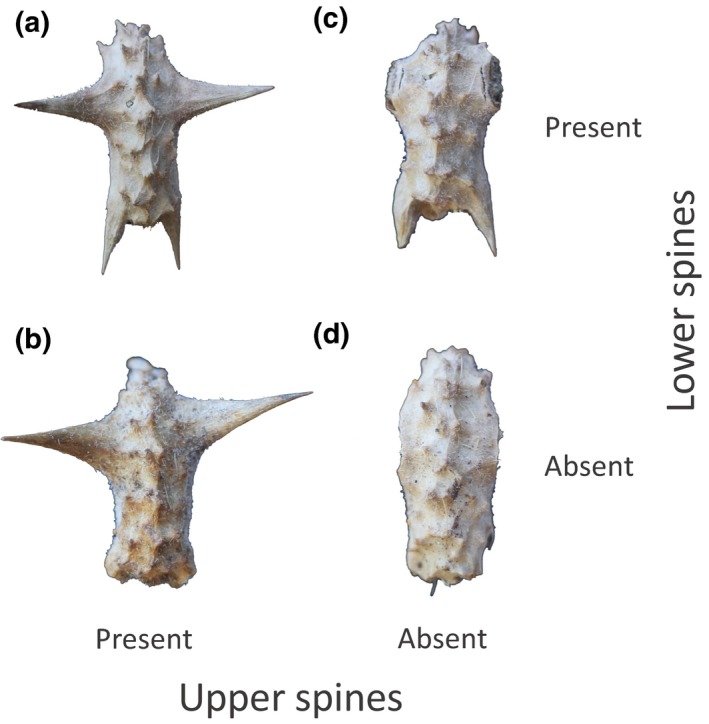
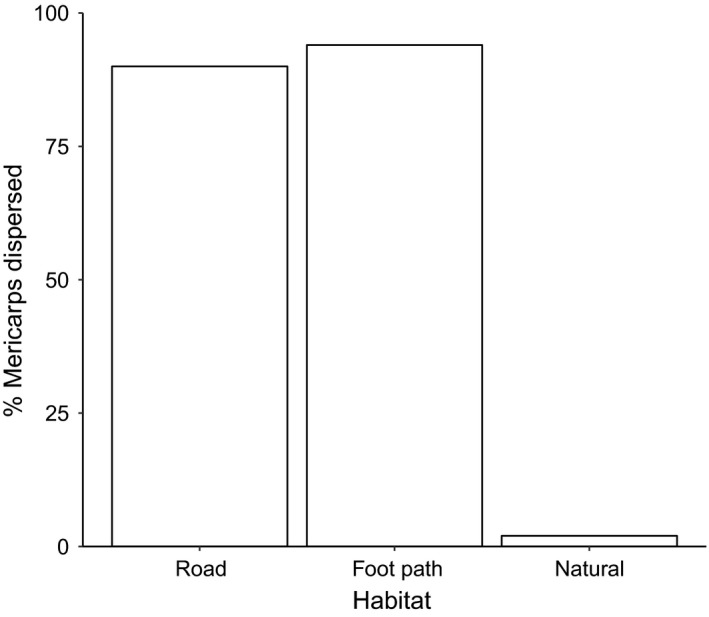
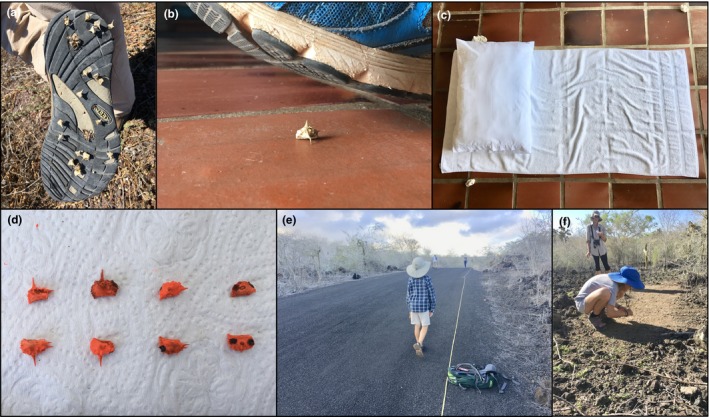
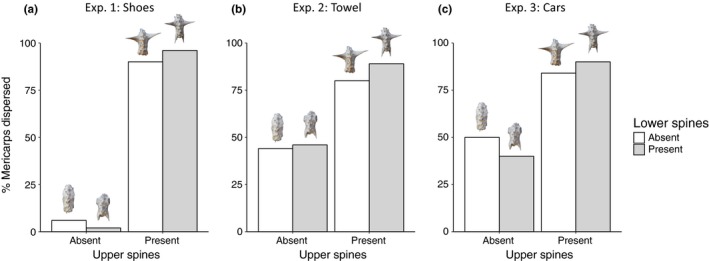
Dispersal has important ecological and evolutionary consequences for populations, but understanding the role of specific traits in dispersal can be difficult and requires careful experimentation. Moreover, understanding how humans alter dispersal is an important question, especially on oceanic islands where anthropogenic disturbance through species introductions can dramatically alter native ecosystems.In this study, we investigated the functional role of spines in seed dispersal of the plant caltrop ( L., Zygophyllaceae) by anthropogenic dispersal agents. We also tested whether humans or wildlife are more important seed dispersers of on the Galápagos. is found on tropical mainland and oceanic island habitats. The dispersal structure of is called a mericarp, and they are typically protected by one pair of upper spines and a second pair of lower spines, but the presence and size of spines varies within and between populations. On the Galápagos, the upper and lower spines protect mericarps from seed predation by Darwin's finches. We tested whether spines play a dual role in dispersal by factorially manipulating the presence/absence of the upper and lower spines to simulate natural variation in mericarp morphology.The upper spines greatly facilitated seed dispersal, whereas the lower spines had no discernible effect on dispersal. The presence of upper spines increased dispersal rate on shoes by pedestrians 23-fold, on fabrics (e.g., towels) and cars by nearly twofold, and the presence of upper spines increased dispersal distance by cars sixfold. When comparing dispersal rates in habitats with high (roads and foot paths) versus low (arid forest) anthropogenic activity, dispersal rates were demonstrably higher in the habitats with more human activity.These results have important implications for understanding the ecology and evolution of plant dispersal in the Anthropocene. Spines on the fruits of play important functional roles in anthropogenic dispersal, whereas native and introduced wildlife plays a minor role in dispersal on inhabited islands of the Galápagos. Our results imply that seed predators and humans are jointly shaping the ecology and evolution of contemporary populations of on the Galápagos.
扩散对种群具有重要的生态和进化影响,但了解特定性状在扩散中的作用可能很困难,需要进行仔细的实验。此外,了解人类如何改变扩散是一个重要问题,特别是在海洋岛屿上,通过物种引入造成的人为干扰会极大地改变当地生态系统。在本研究中,我们调查了刺在蒺藜草(蒺藜科)种子扩散中通过人为扩散媒介所起的功能作用。我们还测试了人类或野生动物在加拉帕戈斯群岛上作为蒺藜草种子扩散者哪个更重要。蒺藜草生长在热带大陆和海洋岛屿栖息地。蒺藜草的扩散结构称为分果爿,它们通常由一对上刺和第二对下刺保护,但刺的存在和大小在种群内部和种群之间存在差异。在加拉帕戈斯群岛,上刺和下刺保护分果爿免受达尔文雀的种子捕食。我们通过因子操纵上刺和下刺的有无来模拟分果爿形态的自然变化,测试刺在扩散中是否发挥双重作用。上刺极大地促进了种子扩散,而下刺对扩散没有明显影响。上刺的存在使行人鞋子上的扩散率提高了23倍,在织物(如毛巾)和汽车上的扩散率提高了近两倍,上刺的存在使汽车的扩散距离增加了六倍。当比较人为活动高(道路和小径)与低(干旱森林)的栖息地中的扩散率时,人为活动较多的栖息地中的扩散率明显更高。这些结果对于理解人类世植物扩散的生态学和进化具有重要意义。蒺藜草果实上的刺在人为扩散中发挥着重要的功能作用,而本地和引入的野生动物在加拉帕戈斯有人居住岛屿上的扩散中作用较小。我们的结果表明,种子捕食者和人类共同塑造了加拉帕戈斯群岛上当代蒺藜草种群的生态学和进化。