Thakar Monica S, Kearl Tyce J, Malarkannan Subramaniam
Laboratory of Molecular Immunology and Immunotherapy, Blood Research Institute, Versiti, Milwaukee, WI, United States.
Department of Pediatrics, Medical College of Wisconsin, Milwaukee, WI, United States.
Front Oncol. 2020 Jan 31;9:1529. doi: 10.3389/fonc.2019.01529. eCollection 2019.
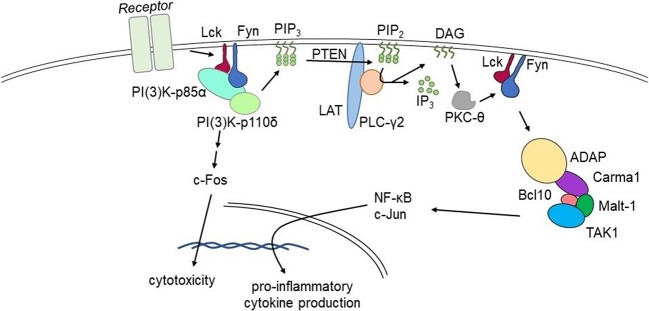
Chimeric Antigen Receptor (CAR)-based therapies offer a promising, targeted approach to effectively treat relapsed or refractory B cell malignancies. However, the treatment-related toxicity defined as cytokine-release syndrome (CRS) often develops in patients, and if uncontrolled, can be fatal. Grading systems have now been developed to further characterize and objectify clinical findings in order to provide algorithm-based guidance on CRS-related treatment decisions. The pharmacological treatments associated with these algorithms suppress inflammation through a variety of mechanisms and are paramount to improving the safety profile of CAR-based therapies. However, fatalities are still occurring, and there are downsides to these treatments, including the possibility of disrupting CAR-T cell persistence. This review article will describe the clinical presentation and current management of CRS, and through our now deeper understanding of downstream signaling pathways, will provide a molecular framework to formulate new hypotheses regarding clinical applications to contain proinflammatory cytokines responsible for CRS.
基于嵌合抗原受体(CAR)的疗法为有效治疗复发或难治性B细胞恶性肿瘤提供了一种有前景的靶向方法。然而,被定义为细胞因子释放综合征(CRS)的治疗相关毒性在患者中经常出现,如果不加以控制,可能会致命。现在已经开发出分级系统来进一步描述和客观化临床发现,以便为与CRS相关的治疗决策提供基于算法的指导。与这些算法相关的药物治疗通过多种机制抑制炎症,对于改善基于CAR的疗法的安全性至关重要。然而,死亡事件仍在发生,并且这些治疗存在一些缺点,包括可能破坏CAR-T细胞的持久性。这篇综述文章将描述CRS的临床表现和当前管理方法,并通过我们现在对下游信号通路的更深入理解,提供一个分子框架,以形成关于临床应用的新假设,以控制导致CRS的促炎细胞因子。