HealthPartners Center for Memory and Aging, 295 Phalen Boulevard, Saint Paul, MN, 55130, USA.
HealthPartners Institute, Bloomington, MN, USA.
Drugs R D. 2020 Mar;20(1):11-15. doi: 10.1007/s40268-020-00296-2.
Individuals with Down syndrome are likely to develop clinical and neuropathological brain changes resembling Alzheimer's disease dementia by the ages of 35-40 years. Intranasal insulin is a potential treatment for neurodegenerative disease that has been shown to reduce amyloid plaque burden and improve verbal memory performance in normal as well as memory-impaired adults. Investigations have shown that rapid-acting insulins may result in superior cognitive benefits compared with regular insulin.
The primary objective of this study was to measure the safety and feasibility of intranasal rapid-acting glulisine in subjects with Down syndrome. Secondarily, we estimated the effects of intranasal glulisine on cognition and memory in Down syndrome.
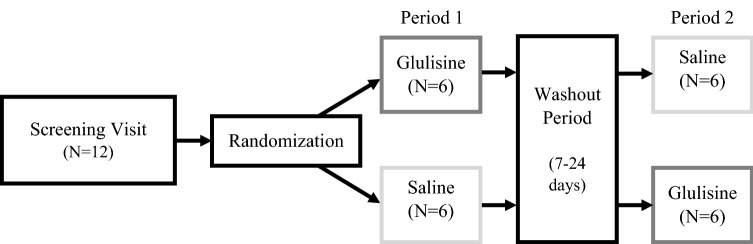
A single-center, single-dose, randomized, double-blind, placebo-controlled, cross-over pilot study was performed to test the safety of intranasal glulisine vs placebo in 12 subjects with Down syndrome aged ≥ 35 years. Intranasal administration utilized the Impel NeuroPharma I109 Precision Olfactory Delivery (POD) device. The primary outcomes were the occurrence of any or related adverse and serious adverse events. Secondary post-treatment cognitive outcome measures included performance on the Fuld Object-Memory Evaluation and Rivermead Behavioral Memory Test.
Intranasal glulisine was safe and well tolerated in the Down syndrome population. No adverse or serious adverse events were observed.
Further investigations are necessary to better evaluate the potential cognitive-enhancing role of intranasal insulin in the Down syndrome population. CLINICALTRIALS.
NCT02432716.
唐氏综合征患者在 35-40 岁时可能会出现类似于阿尔茨海默病痴呆的临床和神经病理学脑改变。鼻内胰岛素是一种治疗神经退行性疾病的潜在方法,已被证明可减少淀粉样斑块负担,并改善正常和记忆受损成年人的言语记忆表现。研究表明,与常规胰岛素相比,速效胰岛素可能会带来更好的认知益处。
本研究的主要目的是测量鼻内速效赖脯胰岛素在唐氏综合征患者中的安全性和可行性。其次,我们估计鼻内赖脯胰岛素对唐氏综合征认知和记忆的影响。
进行了一项单中心、单次剂量、随机、双盲、安慰剂对照、交叉先导研究,以测试 12 名年龄≥35 岁的唐氏综合征患者鼻内给予赖脯胰岛素与安慰剂的安全性。鼻内给药采用 ImpelNeuroPharma I109 精密嗅觉传递(POD)装置。主要结局是任何或相关不良和严重不良事件的发生。次要的治疗后认知结局测量包括使用 Fuld 对象记忆评估和 Rivermead 行为记忆测试的表现。
鼻内赖脯胰岛素在唐氏综合征人群中安全且耐受良好。未观察到不良或严重不良事件。
需要进一步研究以更好地评估鼻内胰岛素在唐氏综合征人群中的潜在认知增强作用。临床试验.gov 注册号:NCT02432716。