Key Laboratory of Major Chronic Diseases of Nervous System of Liaoning Province, Health Sciences Institute of China Medical University, Shenyang, 110122, China.
Key Laboratory of Medical Cell Biology of Ministry of Education, Health Sciences Institute of China Medical University, Shenyang, 110122, China.
Curr Neuropharmacol. 2023;21(1):67-86. doi: 10.2174/1570159X20666220817140737.
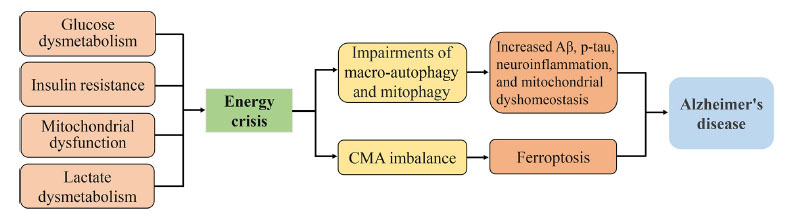
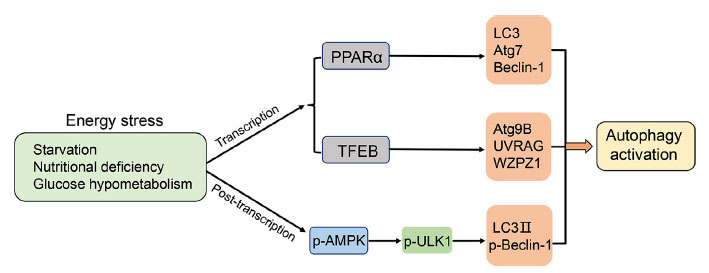
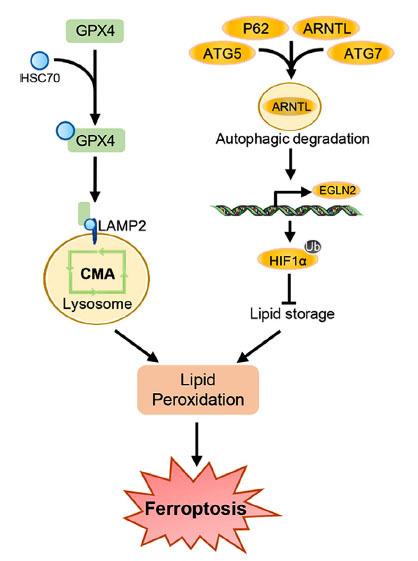
Alzheimer's disease (AD) is one of the most common neurodegenerative diseases worldwide. The occult nature of the onset and the uncertainty of the etiology largely impede the development of therapeutic strategies for AD. Previous studies revealed that the disorder of energy metabolism in the brains of AD patients appears far earlier than the typical pathological features of AD, suggesting a tight association between energy crisis and the onset of AD. Energy crisis in the brain is known to be induced by the reductions in glucose uptake and utilization, which may be ascribed to the diminished expressions of cerebral glucose transporters (GLUTs), insulin resistance, mitochondrial dysfunctions, and lactate dysmetabolism. Notably, the energy sensors such as peroxisome proliferators-activated receptor (PPAR), transcription factor EB (TFEB), and AMP-activated protein kinase (AMPK) were shown to be the critical regulators of autophagy, which play important roles in regulating beta-amyloid (Aβ) metabolism, tau phosphorylation, neuroinflammation, iron dynamics, as well as ferroptosis. In this study, we summarized the current knowledge on the molecular mechanisms involved in the energy dysmetabolism of AD and discussed the interplays existing between energy crisis, autophagy, and ferroptosis. In addition, we highlighted the potential network in which autophagy may serve as a bridge between energy crisis and ferroptosis in the progression of AD. A deeper understanding of the relationship between energy dysmetabolism and AD may provide new insight into developing strategies for treating AD; meanwhile, the energy crisis in the progression of AD should gain more attention.
阿尔茨海默病(AD)是全球最常见的神经退行性疾病之一。其发病隐匿,病因不确定,在很大程度上阻碍了 AD 治疗策略的发展。先前的研究表明,AD 患者大脑中的能量代谢紊乱出现得远比 AD 的典型病理特征早得多,这表明能量危机与 AD 的发病之间存在紧密联系。众所周知,大脑中的能量危机是由葡萄糖摄取和利用减少引起的,这可能归因于脑葡萄糖转运蛋白(GLUTs)的表达减少、胰岛素抵抗、线粒体功能障碍和乳酸代谢紊乱。值得注意的是,过氧化物酶体增殖物激活受体(PPAR)、转录因子 EB(TFEB)和 AMP 激活蛋白激酶(AMPK)等能量传感器被证明是自噬的关键调节因子,自噬在调节β-淀粉样蛋白(Aβ)代谢、tau 磷酸化、神经炎症、铁动态以及铁死亡方面发挥着重要作用。在本研究中,我们总结了 AD 能量代谢障碍涉及的分子机制的现有知识,并讨论了能量危机、自噬和铁死亡之间存在的相互作用。此外,我们强调了自噬可能在 AD 进展过程中作为能量危机和铁死亡之间桥梁的潜在网络。深入了解能量代谢紊乱与 AD 之间的关系可能为开发治疗 AD 的策略提供新的思路;同时,AD 进展过程中的能量危机应引起更多关注。