Max Planck Institute for Biophysical Chemistry, Göttingen, Germany.
University of Marburg, Marburg, Germany.
PLoS Biol. 2020 Feb 20;18(2):e3000361. doi: 10.1371/journal.pbio.3000361. eCollection 2020 Feb.
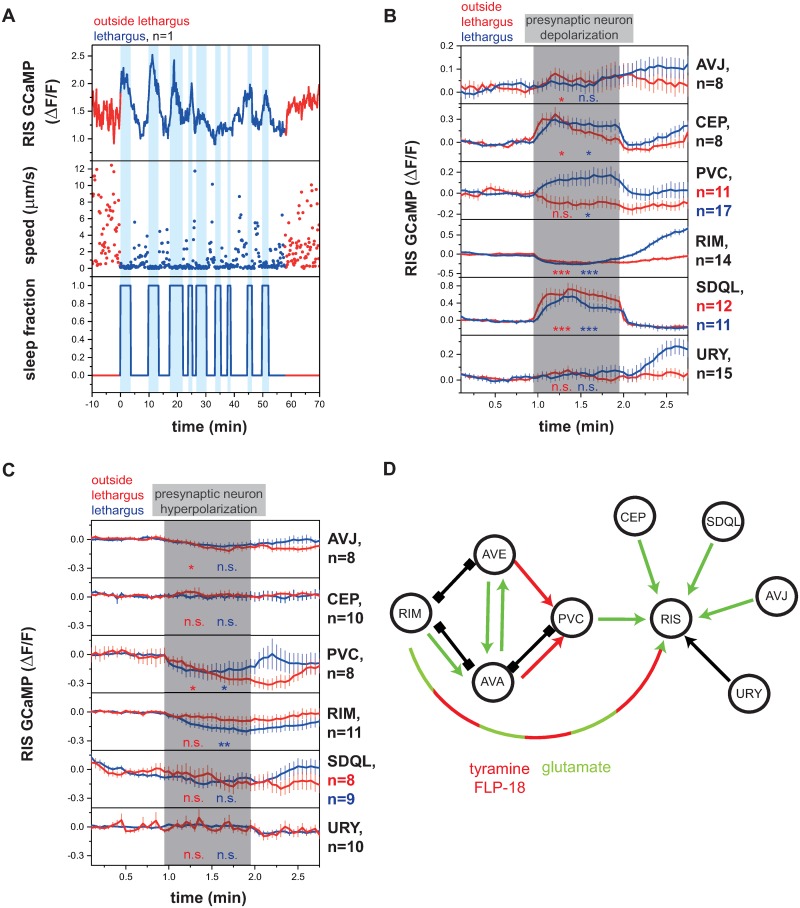
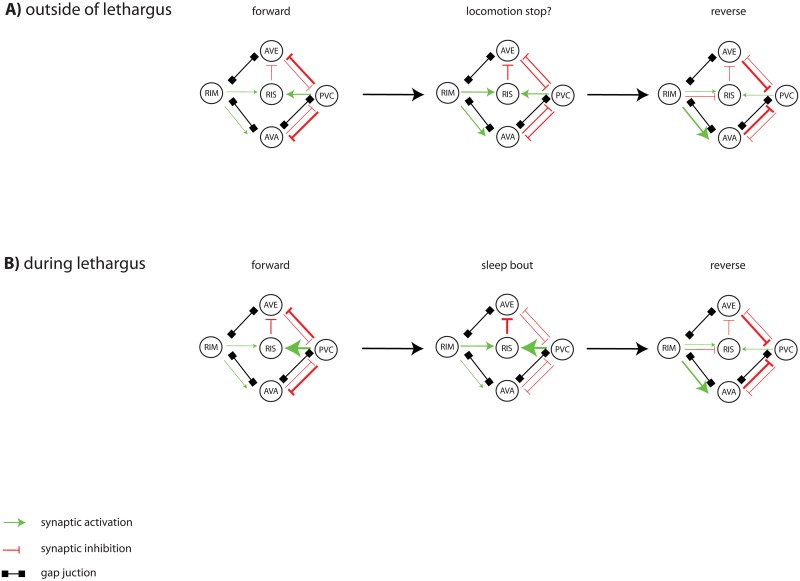
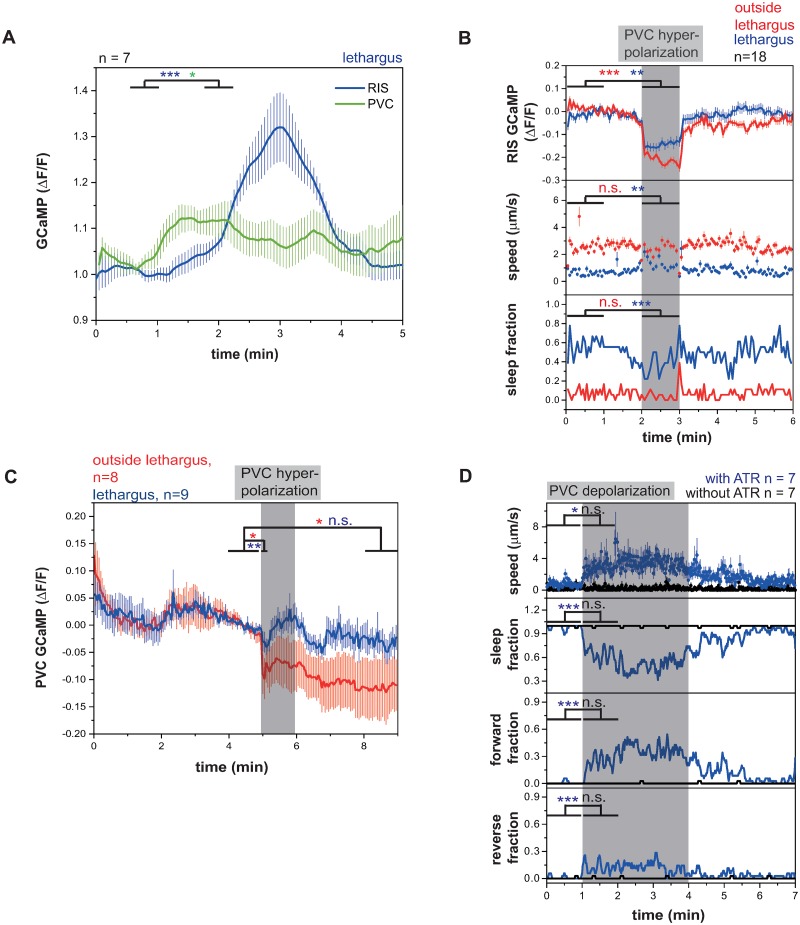
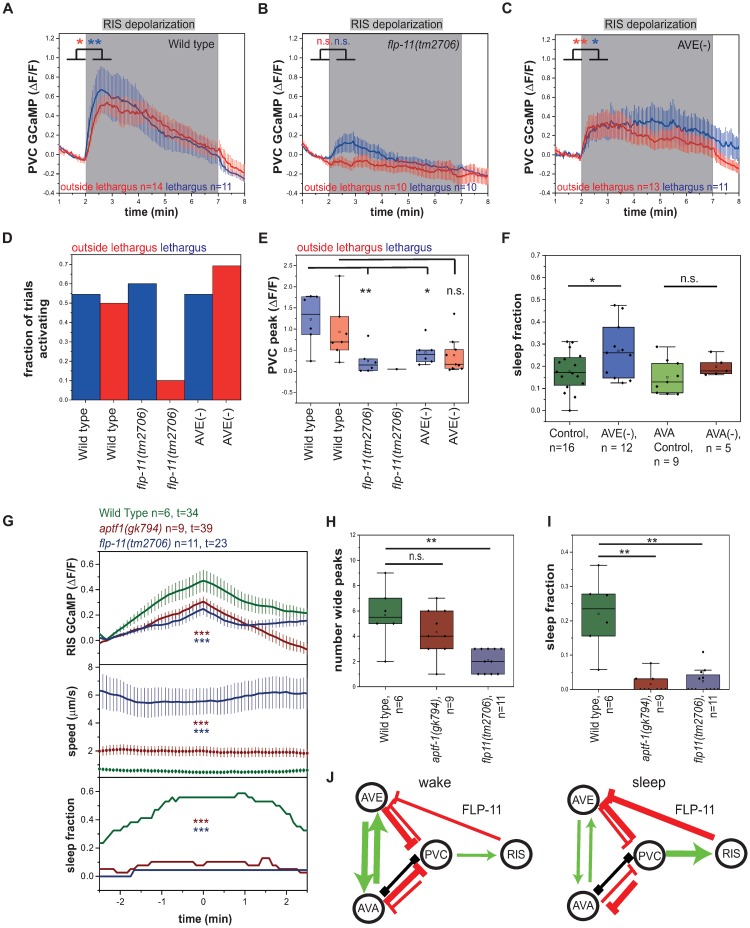
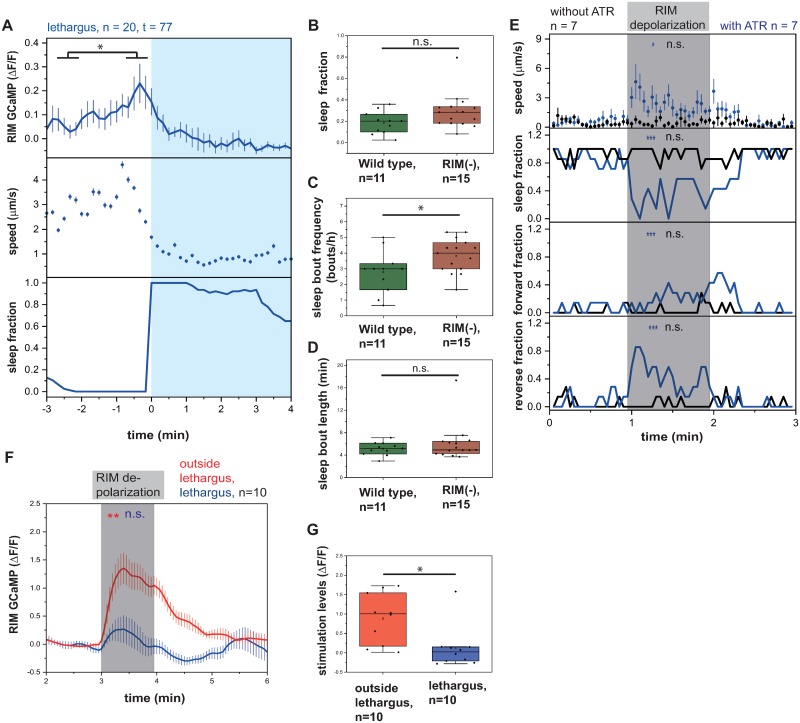
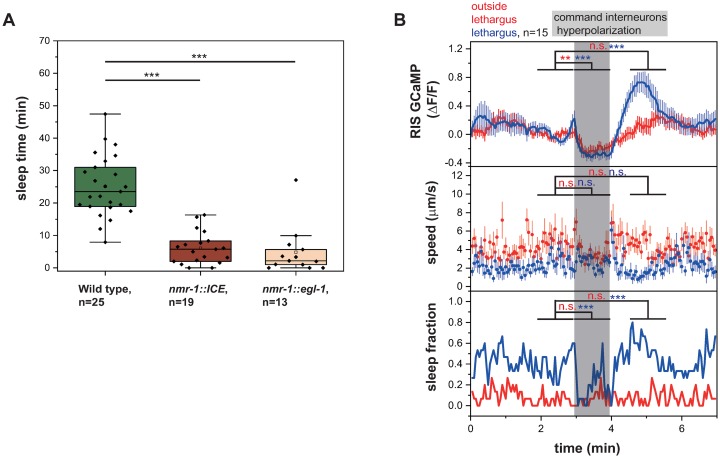
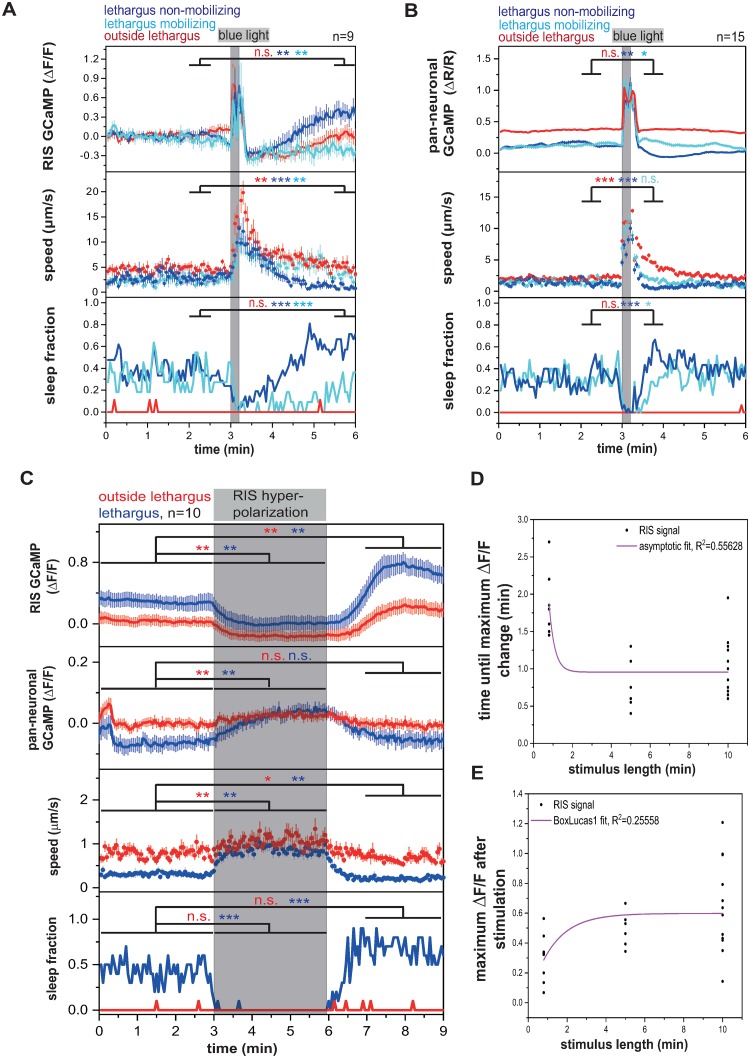
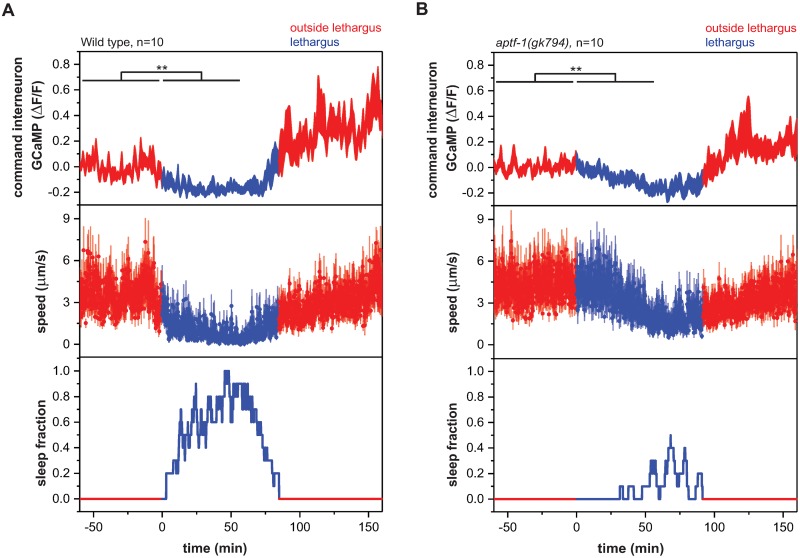
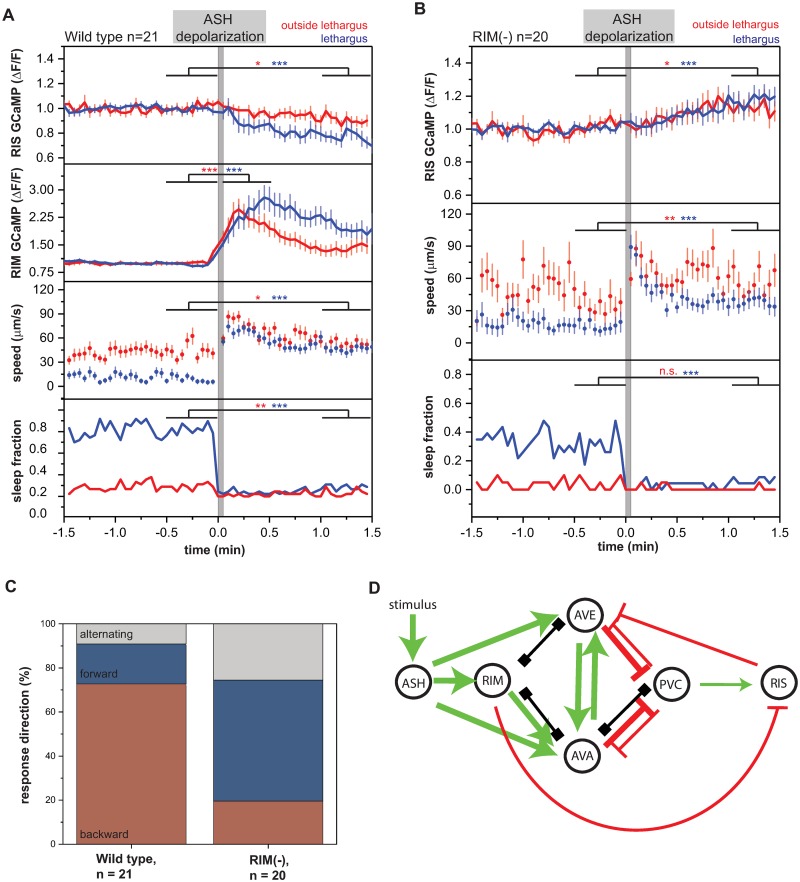
Sleep-active neurons depolarize during sleep to suppress wakefulness circuits. Wake-active wake-promoting neurons in turn shut down sleep-active neurons, thus forming a bipartite flip-flop switch. However, how sleep is switched on is unclear because it is not known how wakefulness is translated into sleep-active neuron depolarization when the system is set to sleep. Using optogenetics in Caenorhabditis elegans, we solved the presynaptic circuit for depolarization of the sleep-active RIS neuron during developmentally regulated sleep, also known as lethargus. Surprisingly, we found that RIS activation requires neurons that have known roles in wakefulness and locomotion behavior. The RIM interneurons-which are active during and can induce reverse locomotion-play a complex role and can act as inhibitors of RIS when they are strongly depolarized and as activators of RIS when they are modestly depolarized. The PVC command interneurons, which are known to promote forward locomotion during wakefulness, act as major activators of RIS. The properties of these locomotion neurons are modulated during lethargus. The RIMs become less excitable. The PVCs become resistant to inhibition and have an increased capacity to activate RIS. Separate activation of neither the PVCs nor the RIMs appears to be sufficient for sleep induction; instead, our data suggest that they act in concert to activate RIS. Forward and reverse circuit activity is normally mutually exclusive. Our data suggest that RIS may be activated at the transition between forward and reverse locomotion states, perhaps when both forward (PVC) and reverse (including RIM) circuit activity overlap. While RIS is not strongly activated outside of lethargus, altered activity of the locomotion interneurons during lethargus favors strong RIS activation and thus sleep. The control of sleep-active neurons by locomotion circuits suggests that sleep control may have evolved from locomotion control. The flip-flop sleep switch in C. elegans thus requires an additional component, wake-active sleep-promoting neurons that translate wakefulness into the depolarization of a sleep-active neuron when the worm is sleepy. Wake-active sleep-promoting circuits may also be required for sleep state switching in other animals, including in mammals.
在睡眠期间,活跃的神经元去极化以抑制觉醒回路。反过来,活跃的促觉醒神经元会关闭睡眠活跃神经元,从而形成双稳态翻转开关。然而,由于不清楚如何将觉醒转化为睡眠活跃神经元去极化,因此不清楚如何开启睡眠,因为当系统设置为睡眠时,睡眠活跃神经元的去极化。我们使用秀丽隐杆线虫中的光遗传学方法,解决了发育调节睡眠(也称为昏睡)期间睡眠活跃的 RIS 神经元去极化的突触前回路。令人惊讶的是,我们发现 RIS 的激活需要在觉醒和运动行为中具有已知作用的神经元。RIM 中间神经元在清醒期间活跃并且可以诱导反向运动,它们起着复杂的作用,当它们被强烈去极化时可以作为 RIS 的抑制剂,当它们被适度去极化时可以作为 RIS 的激活剂。已知在觉醒期间促进正向运动的 PVC 命令中间神经元是 RIS 的主要激活剂。这些运动神经元的特性在昏睡期间会发生变化。RIM 变得兴奋性降低。PVC 对抑制的抵抗力增加并且激活 RIS 的能力增加。单独激活 PVC 或 RIM 似乎不足以诱导睡眠;相反,我们的数据表明它们协同作用以激活 RIS。正向和反向电路活动通常是互斥的。我们的数据表明,RIS 可能在正向和反向运动状态之间的过渡时被激活,也许是在正向(PVC)和反向(包括 RIM)电路活动重叠时。虽然 RIS 在昏睡之外没有被强烈激活,但在昏睡期间运动神经元的活性改变有利于强烈激活 RIS 并因此促进睡眠。运动回路对睡眠活跃神经元的控制表明,睡眠控制可能是从运动控制进化而来的。因此,秀丽隐杆线虫中的翻转睡眠开关需要一个额外的组件,即活跃的促觉醒神经元,当蠕虫困倦时,它将觉醒转化为睡眠活跃神经元的去极化。活跃的促觉醒睡眠促进电路可能也需要其他动物,包括哺乳动物的睡眠状态切换。