Conesa Carlos M, Saez Angela, Navarro-Neila Sara, de Lorenzo Laura, Hunt Arthur G, Sepúlveda Edgar B, Baigorri Roberto, Garcia-Mina Jose M, Zamarreño Angel M, Sacristán Soledad, Del Pozo Juan C
Centro de Biotecnología y Genómica de Plantas (CBGP), Instituto Nacional de Investigación y Tecnología Agraria y Alimentaria (INIA), Campus de Montegancedo, Pozuelo de Alarcón, 28223 Madrid, Spain.
Centro de Biotecnología y Genómica de Plantas (CBGP) and Escuela Técnica Superior de Ingeniería Agronómica, Agroambiental y de Biosistemas (ETSIAAB), Universidad Polictécnica de Madrid, Campus de Montegancedo, Pozuelo de Alarcón, 28223 Madrid, Spain.
Plants (Basel). 2020 Feb 16;9(2):251. doi: 10.3390/plants9020251.
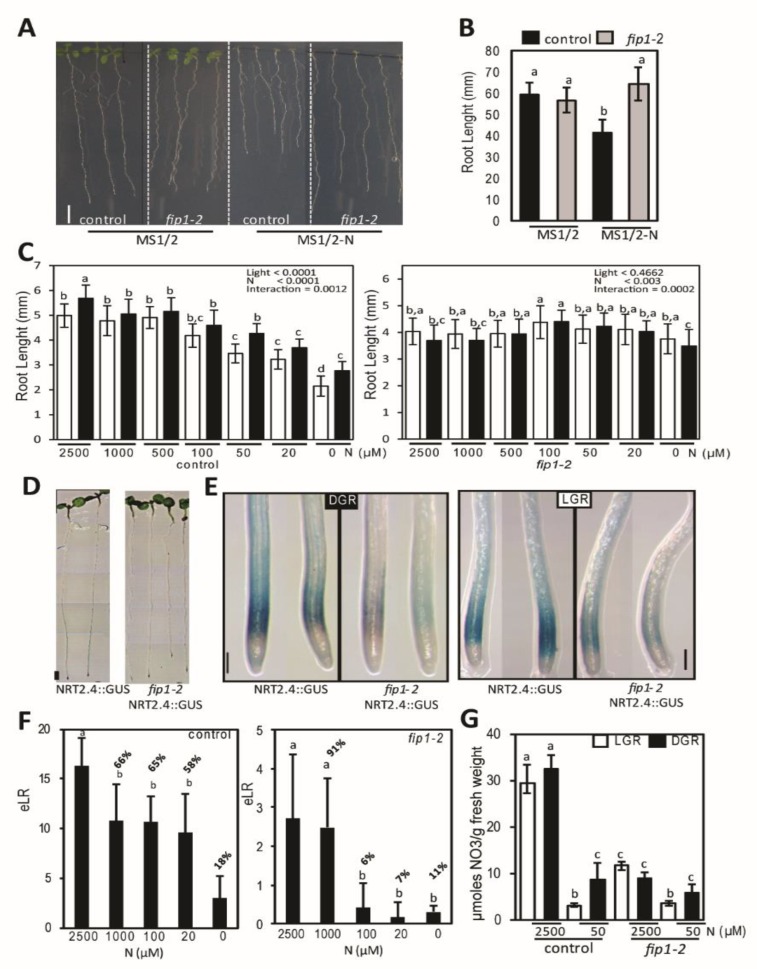
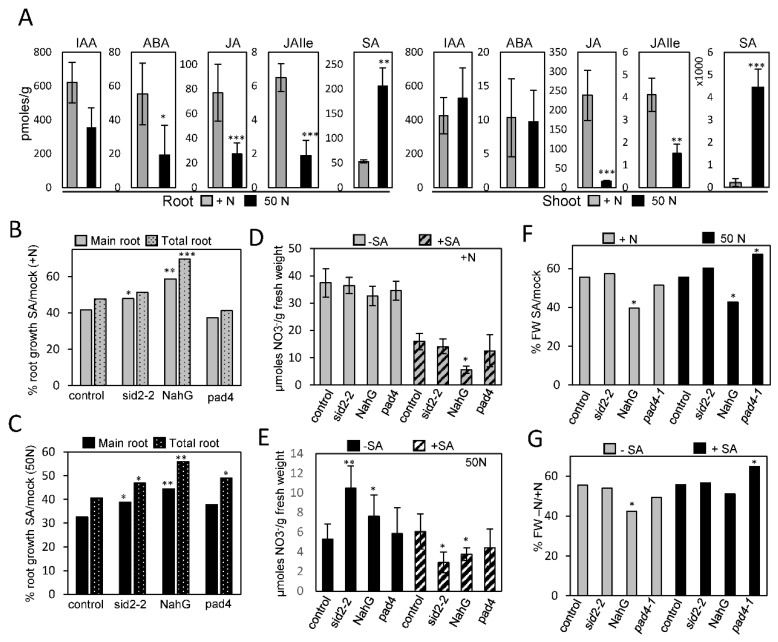
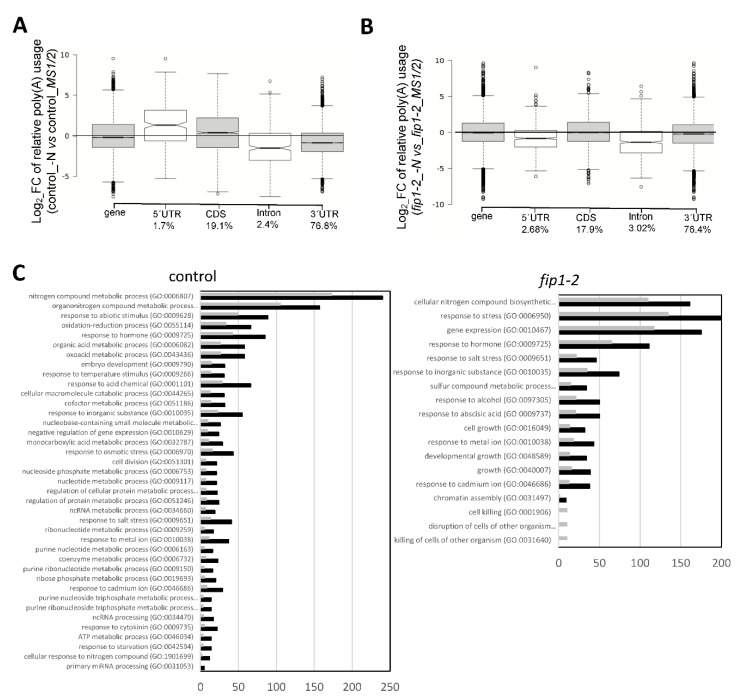
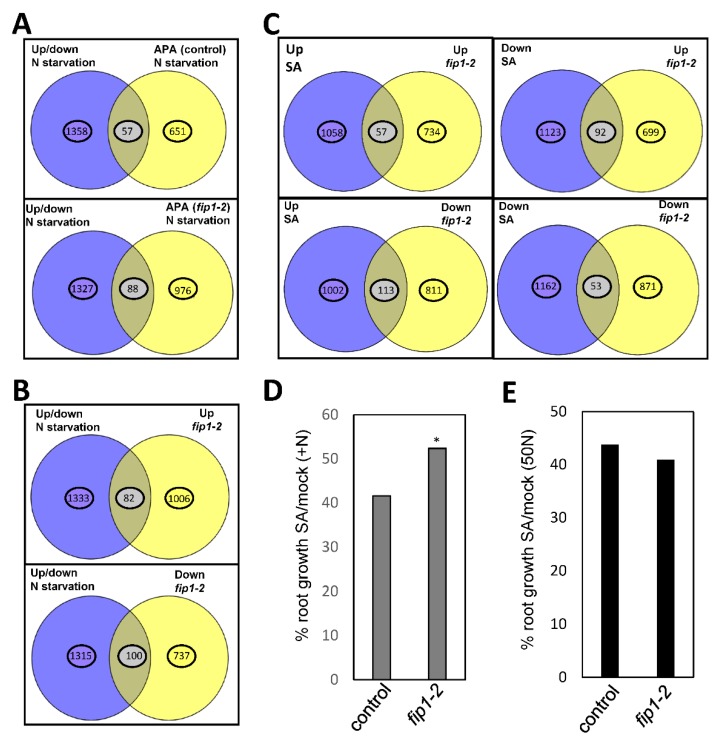
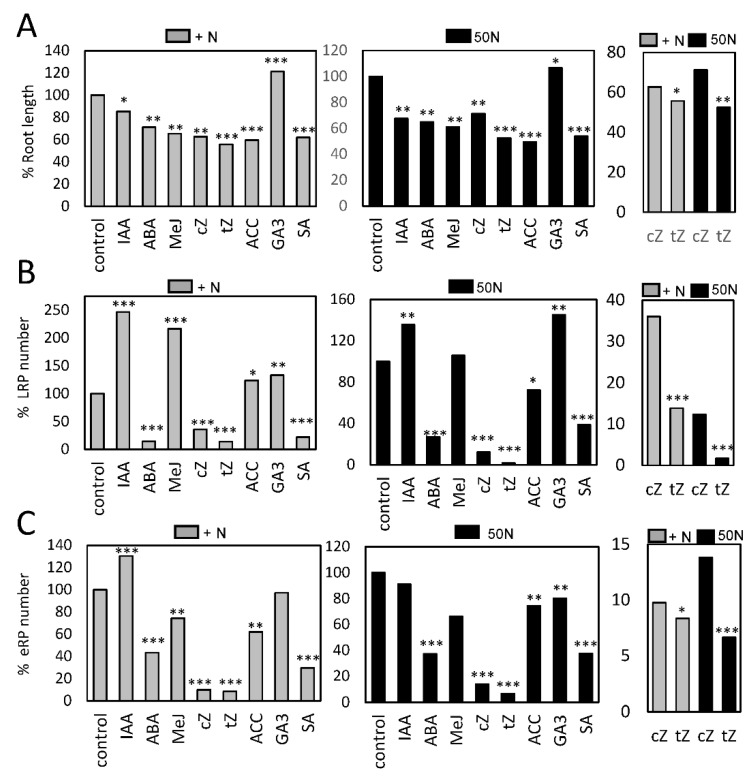
Nitrogen (N) is probably the most important macronutrient and its scarcity limits plant growth, development and fitness. N starvation response has been largely studied by transcriptomic analyses, but little is known about the role of alternative polyadenylation (APA) in such response. In this work, we show that N starvation modifies poly(A) usage in a large number of transcripts, some of them mediated by FIP1, a component of the polyadenylation machinery. Interestingly, the number of mRNAs isoforms with poly(A) tags located in protein-coding regions or 5'-UTRs significantly increases in response to N starvation. The set of genes affected by APA in response to N deficiency is enriched in N-metabolism, oxidation-reduction processes, response to stresses, and hormone responses, among others. A hormone profile analysis shows that the levels of salicylic acid (SA), a phytohormone that reduces nitrate accumulation and root growth, increase significantly upon N starvation. Meta-analyses of APA-affected and -deregulated genes indicate a connection between the nitrogen starvation response and salicylic acid (SA) signaling. Genetic analyses show that SA may be important for preventing the overgrowth of the root system in low N environments. This work provides new insights on how plants interconnect different pathways, such as defense-related hormonal signaling and the regulation of genomic information by APA, to fine-tune the response to low N availability.
氮(N)可能是最重要的大量营养素,其缺乏会限制植物的生长、发育和适应性。氮饥饿反应在很大程度上已通过转录组分析进行研究,但关于可变聚腺苷酸化(APA)在这种反应中的作用却知之甚少。在这项研究中,我们表明氮饥饿会改变大量转录本中的聚(A)使用情况,其中一些是由聚腺苷酸化机制的组成部分FIP1介导的。有趣的是,响应氮饥饿时,聚(A)标签位于蛋白质编码区或5'-非翻译区的mRNA异构体数量显著增加。响应氮缺乏时受APA影响的基因集在氮代谢、氧化还原过程、应激反应和激素反应等方面富集。激素谱分析表明,水杨酸(SA)是一种可减少硝酸盐积累和根系生长的植物激素,其水平在氮饥饿时会显著增加。对受APA影响和失调基因的荟萃分析表明,氮饥饿反应与水杨酸(SA)信号传导之间存在联系。遗传分析表明,SA对于防止低氮环境中根系过度生长可能很重要。这项工作为植物如何将不同途径(如防御相关激素信号传导和通过APA对基因组信息的调控)相互连接以微调对低氮可用性的反应提供了新的见解。