Faculty of Nursing, University of Alberta, Level 3-Edmonton Clinic Health Academy, Edmonton, AB T6G 1C9, Canada.
Faculty of Nursing and Global Nursing Office, University of Alberta, Edmonton AB T6G 1C9, Canada.
Int J Environ Res Public Health. 2020 Feb 17;17(4):1280. doi: 10.3390/ijerph17041280.
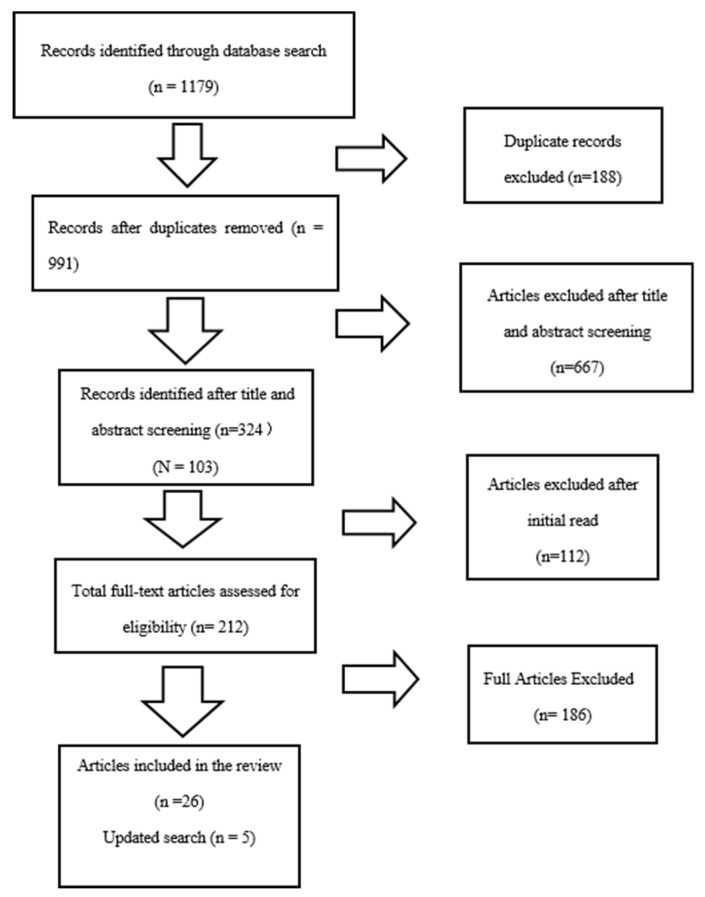
Armed conflict and internal displacement of persons create new health challenges for women in Africa. To outline the research literature on this population, we conducted a review of studies exploring the health of internally displaced persons (IDP) women in Africa. In collaboration with a health research librarian and a review team, a search strategy was designed that identified 31 primary research studies with relevant evidence. Studies on the health of displaced women have been conducted in South- Central Africa, including Democratic Republic of Congo (DRC); and in Eastern, East central Africa, and Western Africa, including Eritrea, Uganda, and Sudan, Côte d'Ivoire, and Nigeria. We identified violence, mental health, sexual and reproductive health, and malaria and as key health areas to explore, and observed that socioeconomic power shifts play a crucial role in predisposing women to challenges in all four categories. Access to reproductive health services was influenced by knowledge, geographical proximity to health services, spousal consent, and affordability of care. As well, numerous factors affect the mental health of internally displaced women in Africa: excessive care-giving responsibilities, lack of financial and family support to help them cope, sustained experiences of violence, psychological distress, family dysfunction, and men's chronic alcoholism. National and regional governments must recommit to institutional restructuring and improved funding allocation to culturally appropriate health interventions for displaced women.
武装冲突和人员内部流离失所给非洲妇女带来了新的健康挑战。为了概述这一人群的研究文献,我们对探讨非洲境内流离失所妇女健康状况的研究进行了审查。我们与一名卫生研究图书馆员和一个审查小组合作,设计了一项搜索策略,确定了 31 项具有相关证据的初步研究。在中非和东非、东中非洲以及西非开展了关于流离失所妇女健康问题的研究,包括刚果民主共和国(刚果(金))、厄立特里亚、乌干达和苏丹、科特迪瓦和尼日利亚。我们确定了暴力、心理健康、性健康和生殖健康以及疟疾等关键健康领域进行探讨,并观察到社会经济权力转移在使妇女面临所有四个类别的挑战方面起着至关重要的作用。获得生殖健康服务的机会受到知识、与卫生服务的地理接近程度、配偶同意以及护理费用的影响。此外,许多因素影响着非洲境内流离失所妇女的心理健康:过度的照顾责任、缺乏财政和家庭支持来帮助她们应对、持续遭受暴力、心理困扰、家庭功能障碍和男子慢性酗酒。国家和区域政府必须再次致力于机构结构调整和增加资金分配,以开展适合文化的流离失所妇女健康干预措施。