Olanrewaju Faith Osasumwen, Omotoso Femi, Alabi Joshua Olaniyi
Covenant University, Nigeria.
Ekiti State University, Nigeria.
Data Brief. 2018 Jul 27;20:152-158. doi: 10.1016/j.dib.2018.07.042. eCollection 2018 Oct.
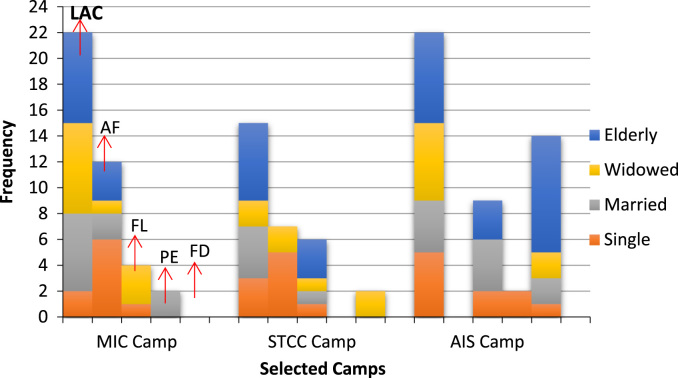
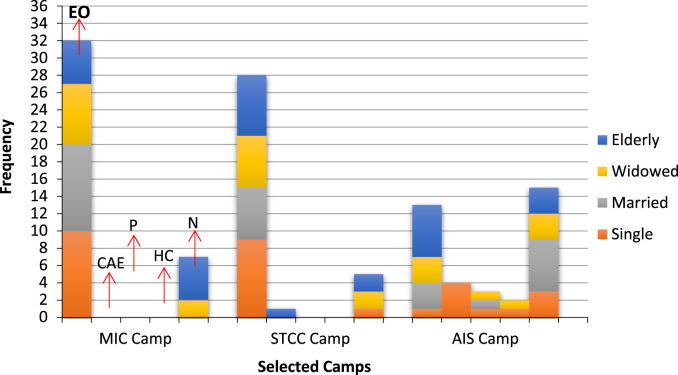
The phenomenon of internal displacement has always existed. It however became the subject of significant concern for the international community since after World War 2, with the violation of the human rights of the displaced arising mostly from the intensification of intra-state wars around the world. The article presented an integrated data on the problems of forced displacement and adopted coping strategies among displaced women in selected IDPs camps in Nigeria. The study used a qualitative approach with a descriptive survey to explain the major problems of forced displacement. The population included women and focus group discussion (FGD) guide was adopted to elicit responses from the study population. Data was described with the use of a 3-D Chart and the data-set is broadly available for further investigation. The findings identified lack of adequate care and financial lack as the major challenges affecting displaced women while economic opportunities was the most significant coping strategy. It was recommended that government and intervening humanitarian agencies will consistently adopt reliable legal and institutional framework for the management of internal displacement and displaced victims in Nigeria.
国内流离失所现象一直存在。然而,自第二次世界大战后,它成为国际社会重大关切的问题,流离失所者人权受到侵犯主要源于世界各地国内战争的加剧。本文呈现了关于尼日利亚境内流离失所者营地中被迫流离失所问题及流离失所妇女所采取应对策略的综合数据。该研究采用定性研究方法及描述性调查来解释被迫流离失所的主要问题。研究对象包括妇女,并采用焦点小组讨论指南来获取研究对象的回应。数据通过三维图表进行描述,数据集广泛可供进一步调查。研究结果表明,缺乏足够的照料和资金短缺是影响流离失所妇女的主要挑战,而经济机会是最重要的应对策略。建议尼日利亚政府和参与干预的人道主义机构持续采用可靠的法律和制度框架来管理国内流离失所问题及流离失所受害者。