Department of Political Science and International Relations, School of Social Sciences, University of Geneva, 1211 Geneva, Switzerland.
Department of Population, Family and Reproductive Health, School of Public Health, University of Medical Sciences (UNIMED), Ondo City PMB 536, Nigeria.
Int J Environ Res Public Health. 2024 Jul 30;21(8):1001. doi: 10.3390/ijerph21081001.
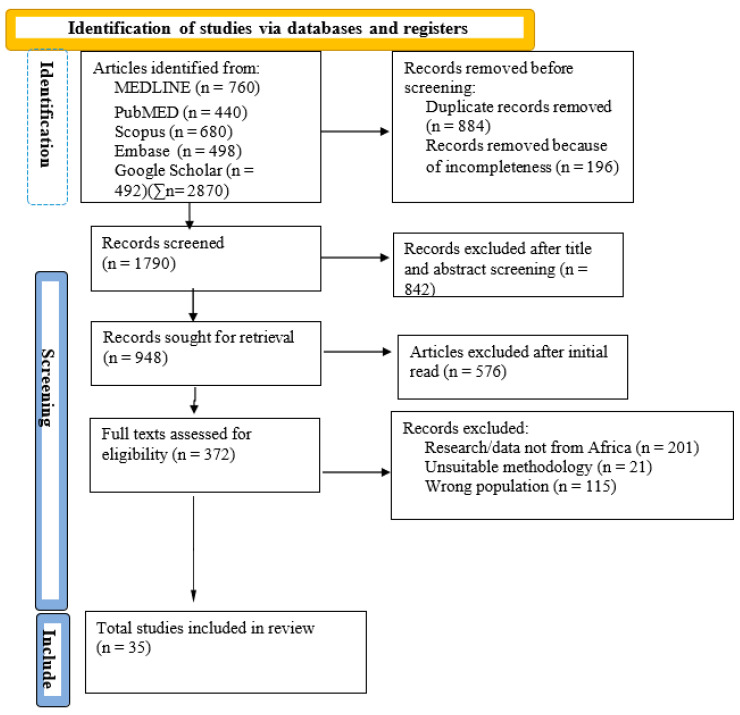
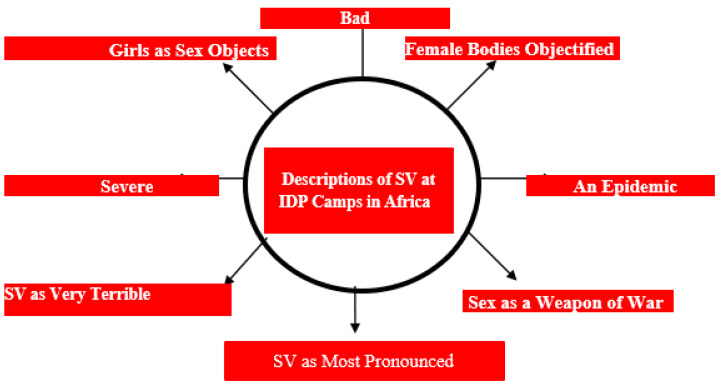
Violent social and political conflicts have caused several challenges to internally displaced persons (IDPs), especially girls and young women, among which is sexual violence (SV). Despite extensive records on SV in humanitarian contexts, studies to assess the level, examine the disclosure pattern (DP) and evaluate the availability of abortion care in these settings have received inadequate attention. This scoping review sought to synthesise the current African-based research on SV, DP, and abortion and post-abortion care (APAC) in humanitarian contexts. We conducted a systematic search of five databases: MEDLINE, PubMed, Scopus, Embase and Google Scholar, where the articles retrieved met the criteria for inclusion. The review adhered to PRISMA guidelines and the Critical Appraisal Skills Programme (CASP), containing ten questions to help confirm the validity of the research design and the originality of the results in comparison with similar studies. A series of inclusion and exclusion criteria were applied after the search, and 35 eligible articles from ten African countries with evidence of sexual violence, disclosure patterns, and APAC in camp settings were included in the study. Results described situations of SV in humanitarian settings in Africa as "terrible", "bad", "an epidemic", and "severe" as girls were used as sex objects, for profile enhancement and as a weapon of war. We also found that the illegality of APAC in Africa is causing a high occurrence of clandestine abortions in conflict contexts. Disclosing SV among IDPs in Africa did not follow a clear-cut pattern but was generally determined by socio-demographic characteristics. Sexual health is a fundamental right of all, as enshrined in SDG 3, which makes this topic a major public health issue. We therefore conclude that although disclosure may aggravate stigmatisation in some instances due to adverse reactions, it is still crucial to the healing processes.
暴力的社会和政治冲突给国内流离失所者(IDPs)带来了诸多挑战,尤其是女孩和年轻妇女,其中包括性暴力(SV)。尽管在人道主义背景下有大量关于 SV 的记录,但评估该环境中 SV 的水平、研究披露模式(DP)和评估堕胎护理的可用性的研究并没有得到足够的关注。本范围综述旨在综合当前基于非洲的人道主义背景下 SV、DP 和堕胎后护理(APAC)的研究。我们对五个数据库进行了系统搜索:MEDLINE、PubMed、Scopus、Embase 和 Google Scholar,检索到的文章符合纳入标准。本综述遵循 PRISMA 指南和批判性评估技能计划(CASP),其中包含十个问题,有助于确认研究设计的有效性和与类似研究相比结果的新颖性。在搜索后应用了一系列纳入和排除标准,从十个非洲国家中纳入了 35 篇符合条件的文章,这些文章有性暴力、披露模式和营地环境中的 APAC 的证据。结果描述了非洲人道主义环境中的 SV 情况为“可怕”、“糟糕”、“流行”和“严重”,因为女孩被用作性对象、提升形象和战争武器。我们还发现,APAC 在非洲的非法性导致冲突环境中秘密堕胎的发生率很高。在非洲,IDPs 中披露 SV 并没有遵循明确的模式,而是通常由社会人口特征决定。性健康是所有人的一项基本权利,正如可持续发展目标 3 所规定的那样,这使得这个话题成为一个主要的公共卫生问题。因此,我们的结论是,尽管披露在某些情况下可能由于负面反应而加剧污名化,但它仍然是愈合过程的关键。