Marotta Nicola, Demeco Andrea, Inzitari Maria Teresa, Caruso Maria Giovanna, Ammendolia Antonio
Department of Surgical and Medical Sciences, University of Catanzaro "Magna Graecia," Catanzaro, Italy.
Medicine (Baltimore). 2020 Feb;99(8):e19152. doi: 10.1097/MD.0000000000019152.
Unrecovered Bell palsy is difficult to treat, because until now in literature there is not a gold standard. This study aimed to evaluate the effectiveness of neuromuscular electrical stimulation (NMES) and shortwave diathermy (SWD) therapy for chronic Bell palsy.
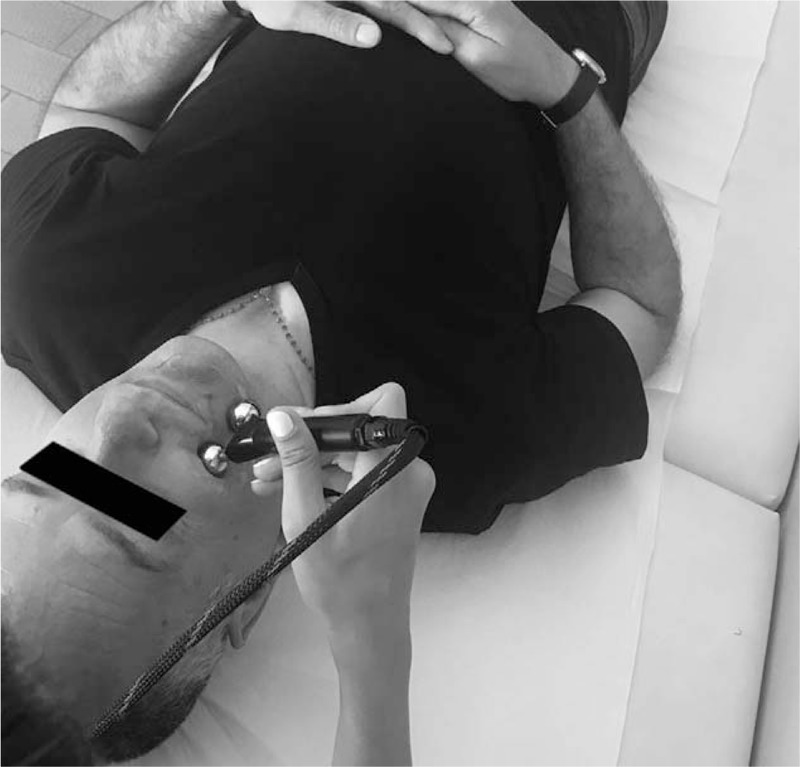
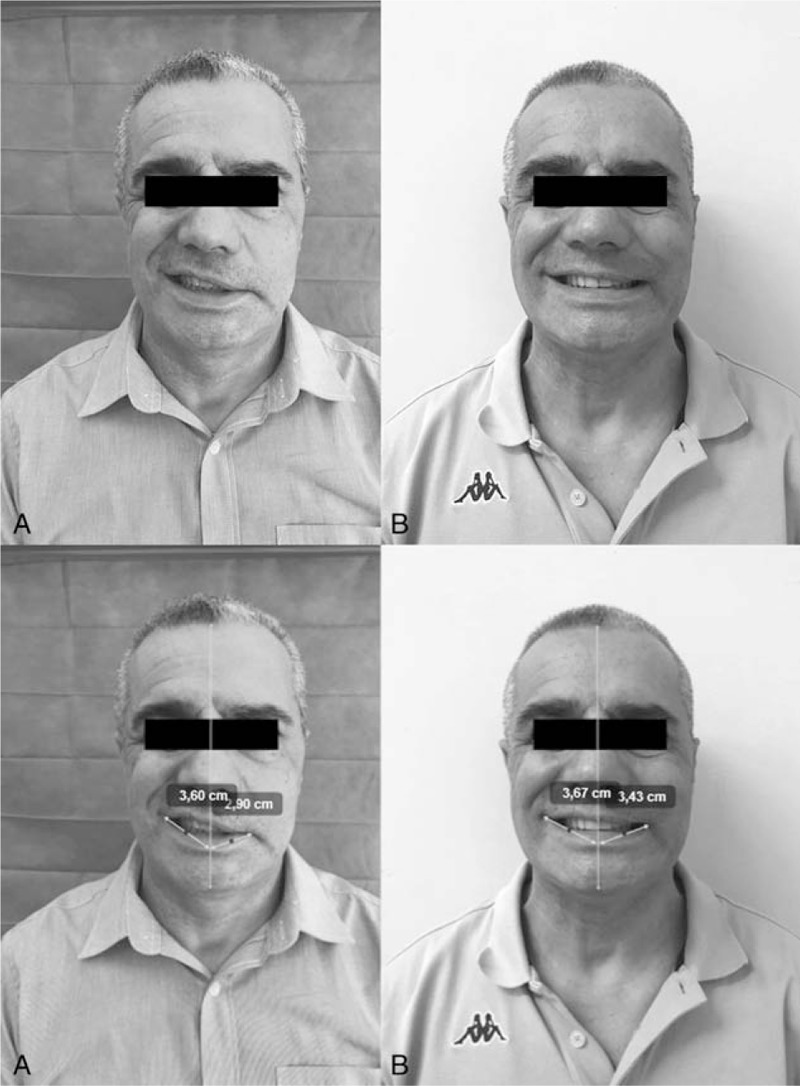
After 5 months of conventional therapy, this 2-arm randomized controlled trial enrolled and randomly allocated 20 patients to a treatment group with NMES+SWD and supervised exercises (n = 10) or a sham group with supervised exercise alone (n = 10). The administration of NMES or sham NMES, as intervention, was performed 30 min/session, 5 sessions/wk, for 4 weeks. The primary outcome was assessed by Sunnybrook scale. The secondary outcomes were evaluated by the Kinovea©, a movement analysis software. All primary and secondary outcomes were measured at baseline (T0), at the end of 4-week treatment (T1).
At the end of 4-week treatment, the patients in the treatment group did not achieve better outcomes in resting symmetry, but we observed an increase of the perceived a significant improvement (P < .05) for symmetry of voluntary movements by the Sunnybrook subscale, with a score of 55.4 ± 9 compared to 46.4 ± 3.7 to control group and an increase in zygomatic muscle movement symmetry ratio (P < .05) by Kinovea©. No adverse events occurred in either group.
The improvements in the symmetry of voluntary movements demonstrated that combining diathermy with neuromuscular electrostimulation is valid and reliable in the treatment of chronic Bell palsy.
未恢复的贝尔面瘫难以治疗,因为迄今为止文献中尚无金标准。本研究旨在评估神经肌肉电刺激(NMES)和短波透热疗法(SWD)治疗慢性贝尔面瘫的有效性。
在进行5个月的常规治疗后,这项双臂随机对照试验招募了20名患者,并将其随机分为治疗组(n = 10)和假治疗组(n = 10)。治疗组接受NMES + SWD和监督下的锻炼,假治疗组仅接受监督下的锻炼。作为干预措施,NMES或假NMES的施用时间为每次30分钟,每周5次,共4周。主要结局通过桑尼布鲁克量表进行评估。次要结局通过运动分析软件Kinovea©进行评估。所有主要和次要结局均在基线(T0)和4周治疗结束时(T1)进行测量。
在4周治疗结束时,治疗组患者在静息对称性方面未取得更好的结局,但我们观察到,通过桑尼布鲁克子量表评估,主动运动对称性有显著改善(P <.05),治疗组得分为55.4±9,而对照组为46.4±3.7;通过Kinovea©评估,颧肌运动对称率增加(P <.05)。两组均未发生不良事件。
主动运动对称性的改善表明,透热疗法与神经肌肉电刺激相结合在慢性贝尔面瘫的治疗中是有效且可靠的。