Department of Molecular Pharmacology and Physiology, University of South Florida, Morsani College of Medicine, Tampa, Florida, USA.
Howard Hughes Medical Institute and Laboratory for RNA Molecular Biology, The Rockefeller University, New York, New York, USA.
Sci Rep. 2020 Feb 20;10(1):3029. doi: 10.1038/s41598-020-59812-8.
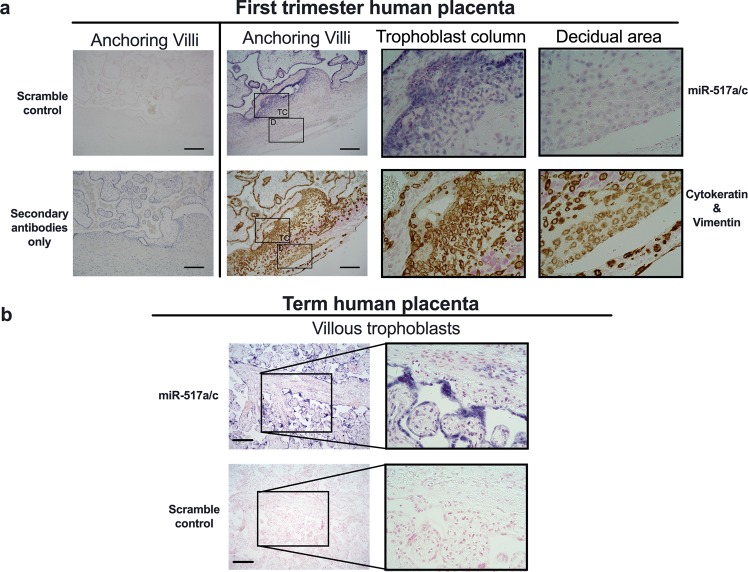
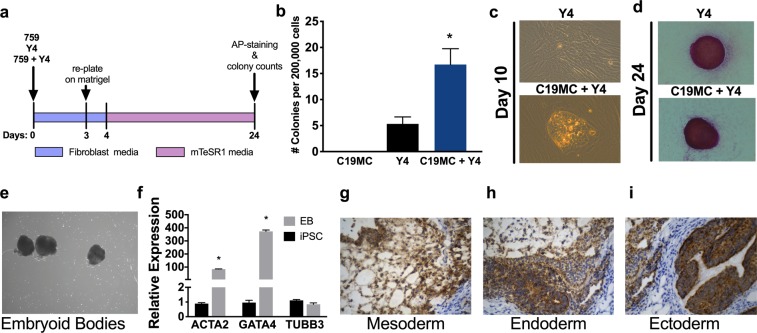
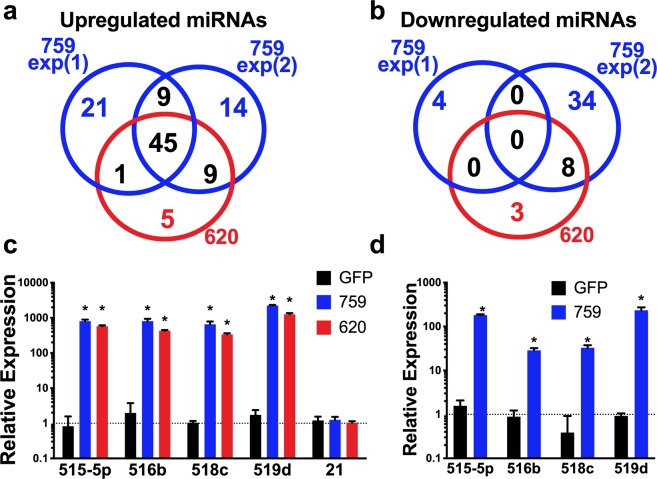
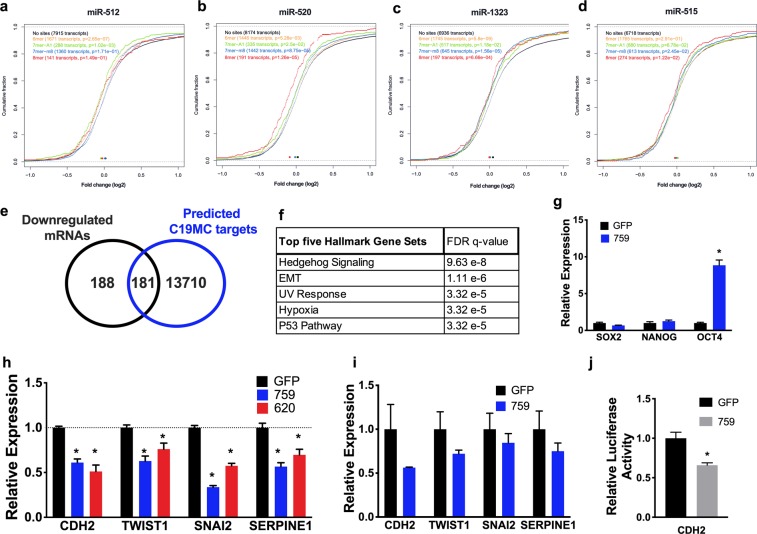
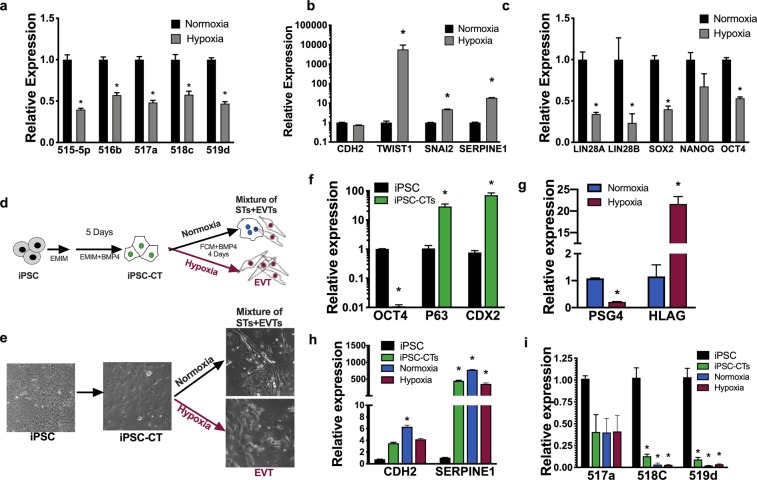
During implantation, cytotrophoblasts undergo epithelial-to-mesenchymal transition (EMT) as they differentiate into invasive extravillous trophoblasts (EVTs). The primate-specific microRNA cluster on chromosome 19 (C19MC) is exclusively expressed in the placenta, embryonic stem cells and certain cancers however, its role in EMT gene regulation is unknown. In situ hybridization for miR-517a/c, a C19MC cistron microRNA, in first trimester human placentas displayed strong expression in villous trophoblasts and a gradual decrease from proximal to distal cell columns as cytotrophoblasts differentiate into invasive EVTs. To investigate the role of C19MC in the regulation of EMT genes, we employed the CRISPR/dCas9 Synergistic Activation Mediator (SAM) system, which induced robust transcriptional activation of the entire C19MC cistron and resulted in suppression of EMT associated genes. Exposure of human iPSCs to hypoxia or differentiation of iPSCs into either cytotrophoblast-stem-like cells or EVT-like cells under hypoxia reduced C19MC expression and increased EMT genes. Furthermore, transcriptional activation of the C19MC cistron induced the expression of OCT4 and FGF4 and accelerated cellular reprogramming. This study establishes the CRISPR/dCas9 SAM as a powerful tool that enables activation of the entire C19MC cistron and uncovers its novel role in suppressing EMT genes critical for maintaining the epithelial cytotrophoblasts stem cell phenotype.
在植入过程中,滋养细胞经历上皮-间充质转化(EMT),分化为侵袭性绒毛外滋养细胞(EVT)。19 号染色体上的哺乳动物特异性 microRNA 簇(C19MC)仅在胎盘、胚胎干细胞和某些癌症中表达,但其在 EMT 基因调控中的作用尚不清楚。在第一个三个月的人胎盘中,miR-517a/c(C19MC 顺式调控元件 microRNA)的原位杂交显示在绒毛滋养细胞中强烈表达,并随着滋养细胞分化为侵袭性 EVT,从近端到远端细胞柱逐渐减少。为了研究 C19MC 在 EMT 基因调控中的作用,我们采用了 CRISPR/dCas9 协同激活介体(SAM)系统,该系统诱导整个 C19MC 顺式调控元件的强大转录激活,导致 EMT 相关基因的抑制。将人 iPSC 暴露于低氧或在低氧条件下将 iPSC 分化为滋养细胞样干细胞或 EVT 样细胞,均会降低 C19MC 的表达并增加 EMT 基因。此外,C19MC 顺式调控元件的转录激活诱导 OCT4 和 FGF4 的表达,并加速细胞重编程。本研究确立了 CRISPR/dCas9 SAM 作为一种强大的工具,能够激活整个 C19MC 顺式调控元件,并揭示其在抑制 EMT 基因方面的新作用,这些基因对于维持上皮滋养细胞干细胞表型至关重要。