Nguyen Phan Nguyen Nhi, Huang Chiu-Jung, Sugii Shigeki, Cheong Soon Keng, Choo Kong Bung
Centre for Stem Cell Research, Universiti Tunku Abdul Rahman, 43000, Kajang, Selangor, Malaysia.
Postgraduate Program, Universiti Tunku Abdul Rahman, 43000, Kajang, Selangor, Malaysia.
J Biomed Sci. 2017 Mar 7;24(1):20. doi: 10.1186/s12929-017-0326-z.
The human chromosome 19 miRNA cluster (C19MC) of 43 genes is a primate-specific miRNA cluster that may have biological significance in the genetic complexity of the primate. Despite previous reports on individual C19MC miRNA expression in cancer and stem cells, systematic studies on C19MC miRNA expression and biological functions are lacking.
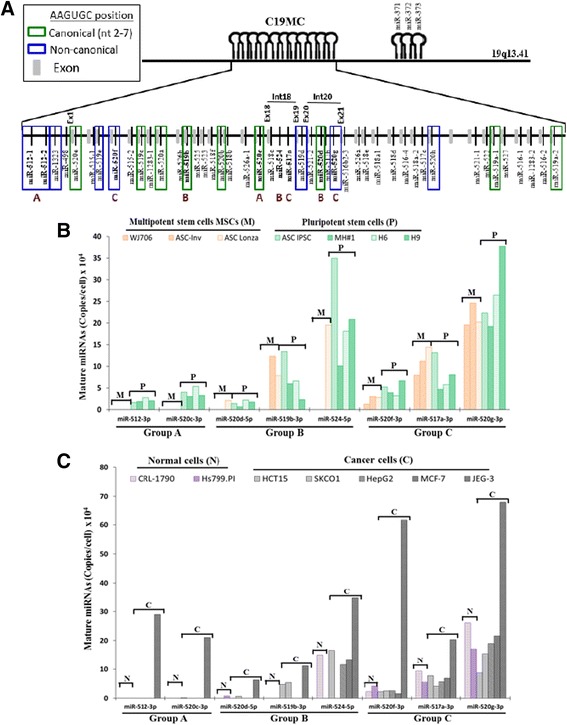
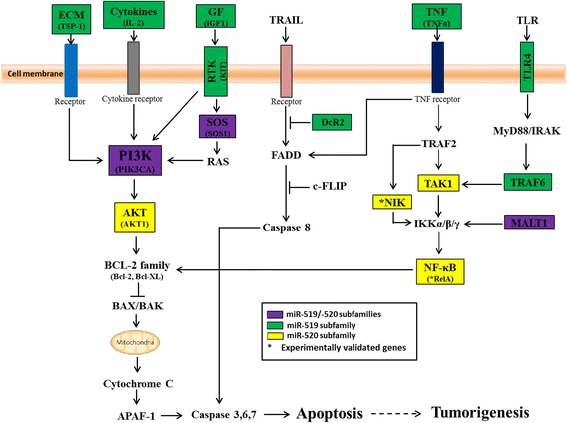
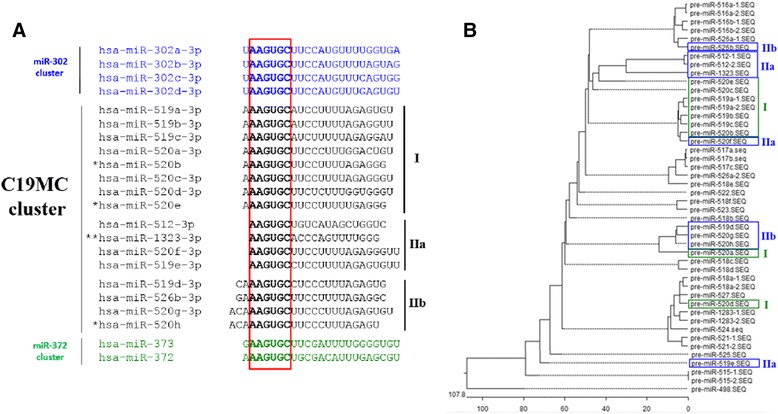
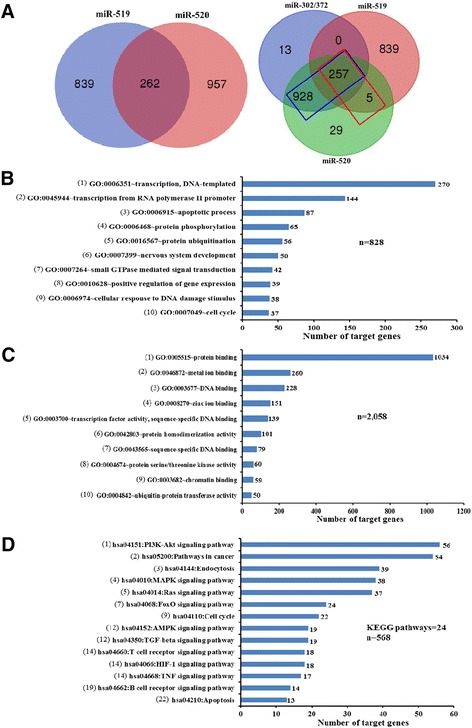
Cluster-wide C19MC miRNA expression profiling by microarray analysis showed wholesome C19MC activation in embryonic stem cells (ESCs) and induced pluripotent stem cells (iPSCs). However, in multipotent adipose-derived mesenchymal stem cells (MSCs) and a unipotent human white pre-adipocyte cell line, only selected C19MC miRNAs were expressed. MiRNA copy number analysis also showed selective C19MC expression in cancer cells with expression patterns highly similar to those in MSCs, suggesting similar miRNA regulatory mechanisms in these cells. Selective miRNA expression also suggests complex transcriptional mechanism(s) regulating C19MC expression under specific cellular and pathological conditions. Bioinformatics analysis showed that sixteen of the C19MC miRNAs share the same "AAGUGC" seed sequence with members of the miR-302/-372 family, which are known cellular reprogramming factors. In particular, C19MC-AAGUGC-miRNAs with the nucleotides 2-7 canonical seed position as in miR-302/-372 miRNAs, may play similar roles as miR-302/-372 in induced pluripotency. A biased 3p-arm selection of the C19MC-AAGUGC-miRNAs was observed indicating that targets of the 3p species of these miRNAs may be biologically significant in regulating stemness. Furthermore, bioinformatics analysis of the putative targets of the C19MC-AAGUGC-miRNAs predicted significant involvement of signaling pathways in reprogramming, many of which contribute to promoting apoptosis by indirect activation of the pro-apoptotic proteins BAK/BAX via suppression of genes of the cell survival pathways, or by enhancing caspase-8 activation through targeting inhibitors of TRAIL-inducing apoptosis.
This work demonstrated selective C19MC expression in MSCs and cancer cells, and, through miRNA profiling and bioinformatics analysis, predicted C19MC modulation of apoptosis in induced pluripotency and tumorigenesis.
由43个基因组成的人类19号染色体微小RNA簇(C19MC)是灵长类动物特有的微小RNA簇,可能在灵长类动物的遗传复杂性中具有生物学意义。尽管之前有关于个别C19MC微小RNA在癌症和干细胞中表达的报道,但缺乏对C19MC微小RNA表达及生物学功能的系统性研究。
通过微阵列分析进行全簇C19MC微小RNA表达谱分析显示,胚胎干细胞(ESC)和诱导多能干细胞(iPSC)中C19MC整体激活。然而,在多能脂肪来源间充质干细胞(MSC)和单能性人白色前脂肪细胞系中,仅表达部分选定的C19MC微小RNA。微小RNA拷贝数分析还显示癌细胞中存在选择性C19MC表达,其表达模式与MSC中的高度相似,表明这些细胞中存在相似的微小RNA调控机制。选择性微小RNA表达还提示在特定细胞和病理条件下存在调节C19MC表达的复杂转录机制。生物信息学分析表明,16个C19MC微小RNA与已知的细胞重编程因子miR-302/-372家族成员具有相同的“AAGUGC”种子序列。特别是,与miR-302/-372微小RNA中核苷酸2-7处于典型种子位置的C19MC-AAGUGC-微小RNA,可能在诱导多能性方面发挥与miR-302/-372相似的作用。观察到C19MC-AAGUGC-微小RNA存在偏向性的3p臂选择,表明这些微小RNA的3p种类的靶标在调节干性方面可能具有生物学意义。此外,对C19MC-AAGUGC-微小RNA推定靶标的生物信息学分析预测,信号通路在重编程中起重要作用,其中许多通路通过抑制细胞存活通路的基因间接激活促凋亡蛋白BAK/BAX,或通过靶向TRAIL诱导凋亡的抑制剂增强caspase-8激活,从而促进细胞凋亡。
本研究证明了MSC和癌细胞中存在选择性C19MC表达,并通过微小RNA谱分析和生物信息学分析,预测了C19MC在诱导多能性和肿瘤发生过程中对细胞凋亡的调节作用。