Department of Orthopaedic Surgery, Hanyang University Hospital, Seoul, Republic of Korea.
Hanyang University Institute for Rheumatology Research, Seoul, Republic of Korea.
Sci Rep. 2020 Feb 20;10(1):3097. doi: 10.1038/s41598-020-60047-w.
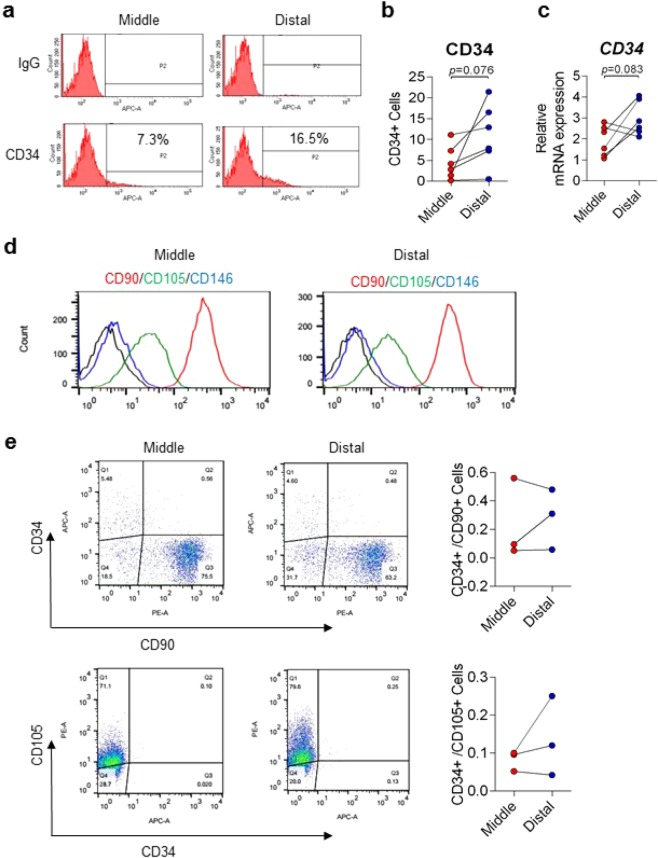
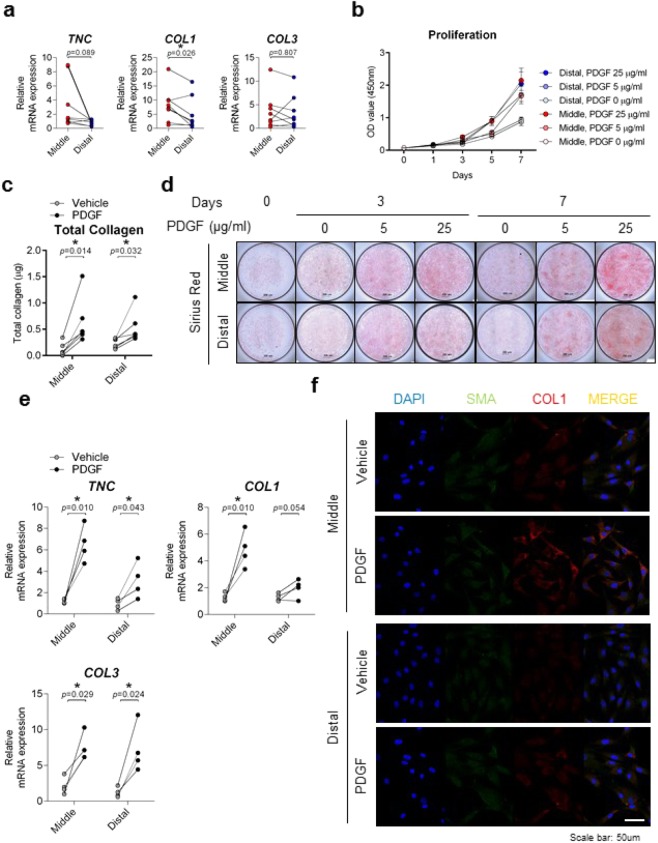
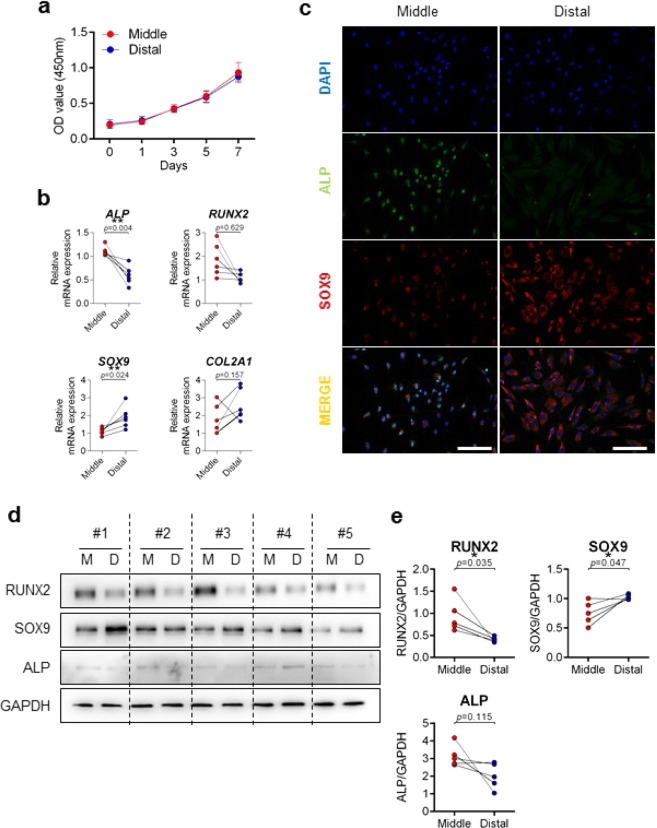
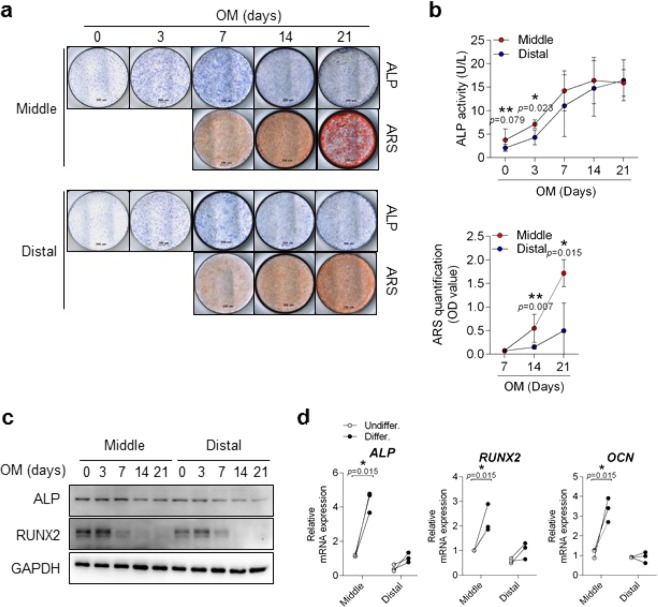
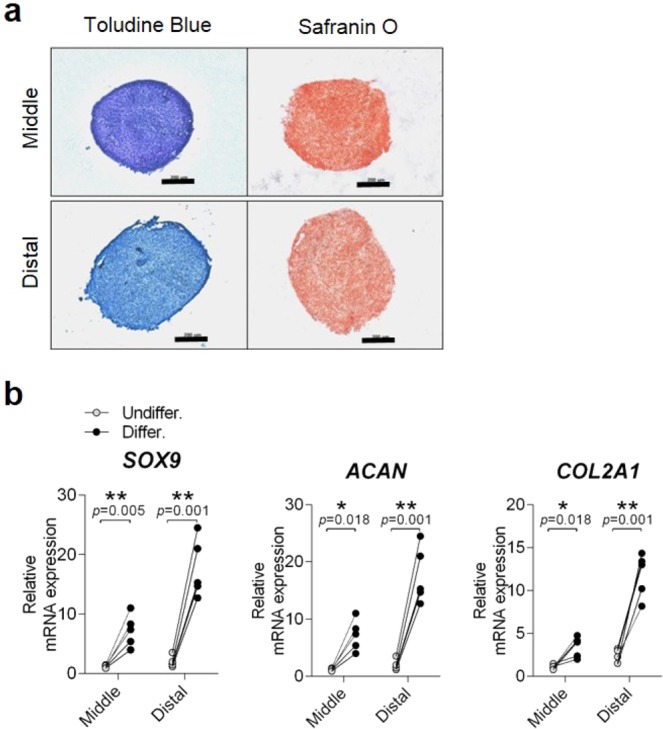
Histological and cytological observations of the human anterior cruciate ligament (ACL) had been described, but the differentiation potency based on their location is still unknown. To determine and compare proliferation and differentiation potential of cells derived from distal and middle thirds of the ACL remnant, ACL remnant was initially marked at the distal third (within 10 mm from the tibial insertion) and middle third (between 10-20 mm from the tibial insertion) and then dissected. Both the middle and distal third regions of ACL remnant were analyzed using CD34 cell counting. Cell proliferation rate did not differ in both middle and distal third regions of ACL remnant, but they showed different characteristics in cell differentiation depending on their location. The distal third region of the ACL remnant had a tendency for chondrogenic differentiation with higher expression of CD34 cells. On the other hand, the middle third region of ACL remnant had a strong tendency for osteogenic and ligamentous differentiation. Characteristics of the ACL remnant tissues should be considered when performing remnant-preserving or harvesting ACL remnants for tissue engineering.
对人前交叉韧带(ACL)的组织学和细胞学观察已经有描述,但基于其位置的分化潜能仍然未知。为了确定和比较来自 ACL 残端远端和中段的细胞的增殖和分化潜力,首先在 ACL 残端的远端(距胫骨附着处 10mm 以内)和中段(距胫骨附着处 10-20mm 之间)标记 ACL 残端,然后进行解剖。使用 CD34 细胞计数分析 ACL 残端的中段和远端。ACL 残端的中段和远端的细胞增殖率没有差异,但它们在细胞分化方面表现出不同的特征,这取决于它们的位置。ACL 残端的远端区域具有较高的 CD34 细胞表达,有向软骨分化的趋势。另一方面,ACL 残端的中段具有很强的向成骨和韧带分化的趋势。在进行保留残端或采集 ACL 残端进行组织工程时,应考虑 ACL 残端组织的特征。