Department of Surgery, Hanyang University College of Medicine, Seoul, 04763, Korea.
HY Indang Center of Regenerative Medicine and Stem Cell Research, Hanyang University, Seoul, 04763, Korea.
Exp Mol Med. 2020 Feb;52(2):213-226. doi: 10.1038/s12276-020-0383-3. Epub 2020 Feb 20.
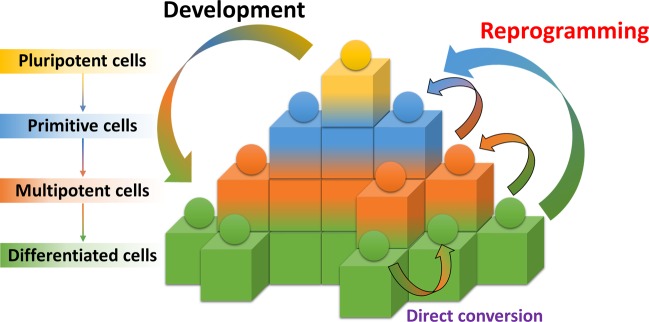
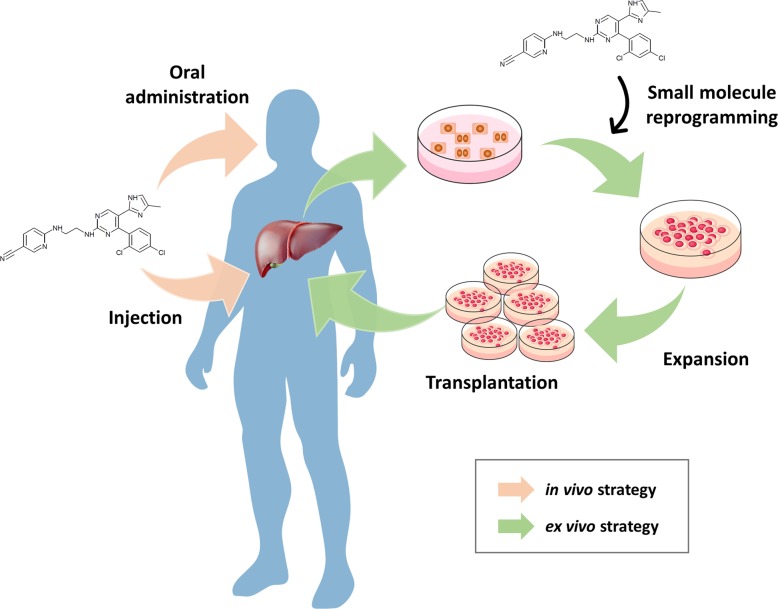
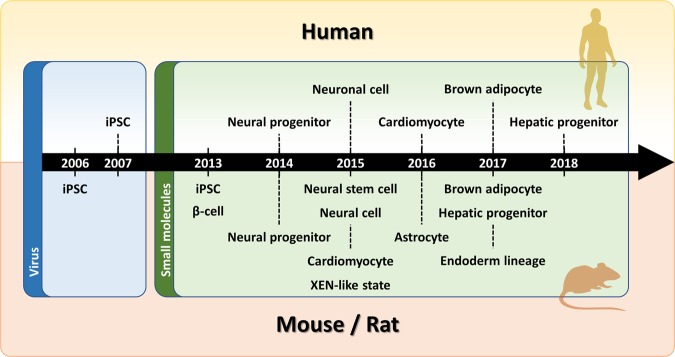
Techniques for reprogramming somatic cells create new opportunities for drug screening, disease modeling, artificial organ development, and cell therapy. The development of reprogramming techniques has grown exponentially since the discovery of induced pluripotent stem cells (iPSCs) by the transduction of four factors (OCT3/4, SOX2, c-MYC, and KLF4) in mouse embryonic fibroblasts. Initial studies on iPSCs led to direct-conversion techniques using transcription factors expressed mainly in target cells. However, reprogramming transcription factors with a virus risks integrating viral DNA and can be complicated by oncogenes. To address these problems, many researchers are developing reprogramming methods that use clinically applicable small molecules and growth factors. This review summarizes research trends in reprogramming cells using small molecules and growth factors, including their modes of action.
重编程体细胞的技术为药物筛选、疾病建模、人工器官开发和细胞治疗创造了新的机会。自诱导多能干细胞(iPSC)通过转导四个因子(OCT3/4、SOX2、c-MYC 和 KLF4)在小鼠胚胎成纤维细胞中被发现以来,重编程技术的发展呈指数级增长。最初的 iPSC 研究导致了使用主要在靶细胞中表达的转录因子的直接转化技术。然而,使用病毒转染重编程转录因子存在病毒 DNA 整合的风险,并且可能会受到致癌基因的影响。为了解决这些问题,许多研究人员正在开发使用临床适用的小分子和生长因子的重编程方法。本综述总结了使用小分子和生长因子重编程细胞的研究趋势,包括其作用模式。