Department of Chemistry, Physical and Theoretical Chemistry Laboratory, University of Oxford, South Parks Road, Oxford, OX1 3QZ, UK; Laboratory of Chemical Physics, National Institute of Diabetes and Digestive and Kidney Diseases, National Institutes of Health, Bethesda, MD, 20892, USA.
Laboratory of Chemical Physics, National Institute of Diabetes and Digestive and Kidney Diseases, National Institutes of Health, Bethesda, MD, 20892, USA.
J Mol Biol. 2020 Apr 17;432(9):3033-3049. doi: 10.1016/j.jmb.2020.02.003. Epub 2020 Feb 17.
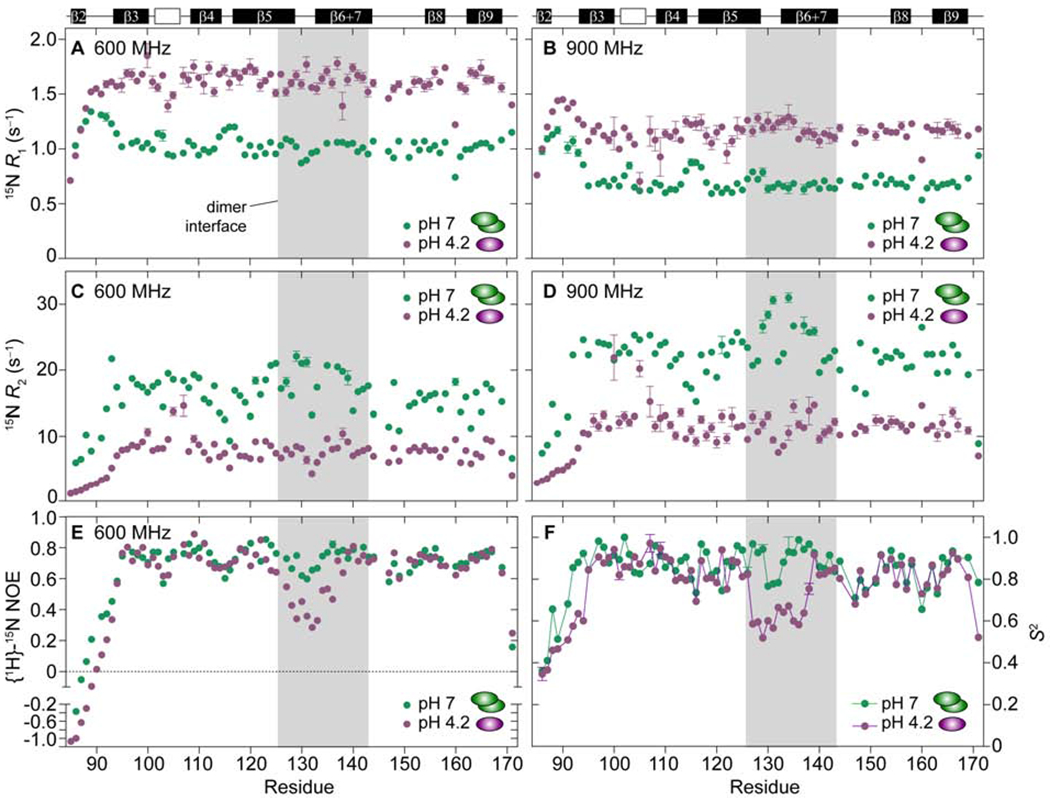
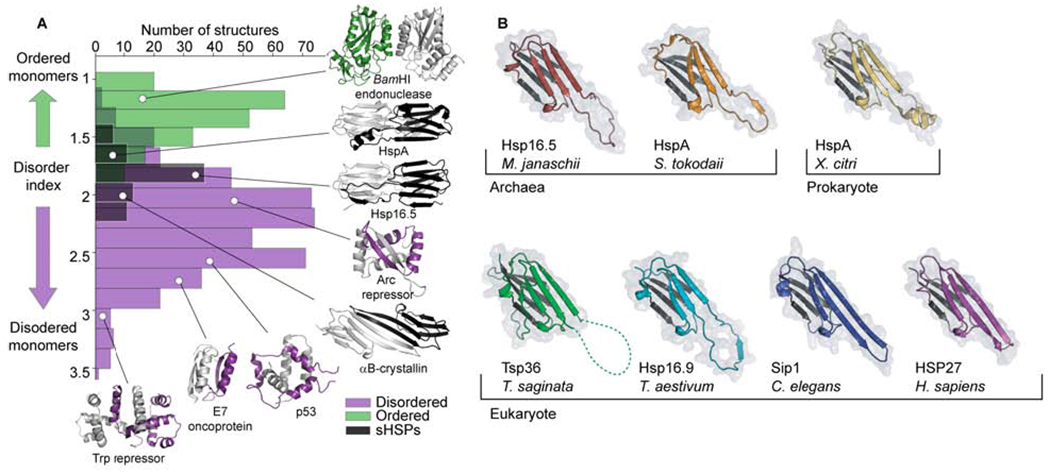
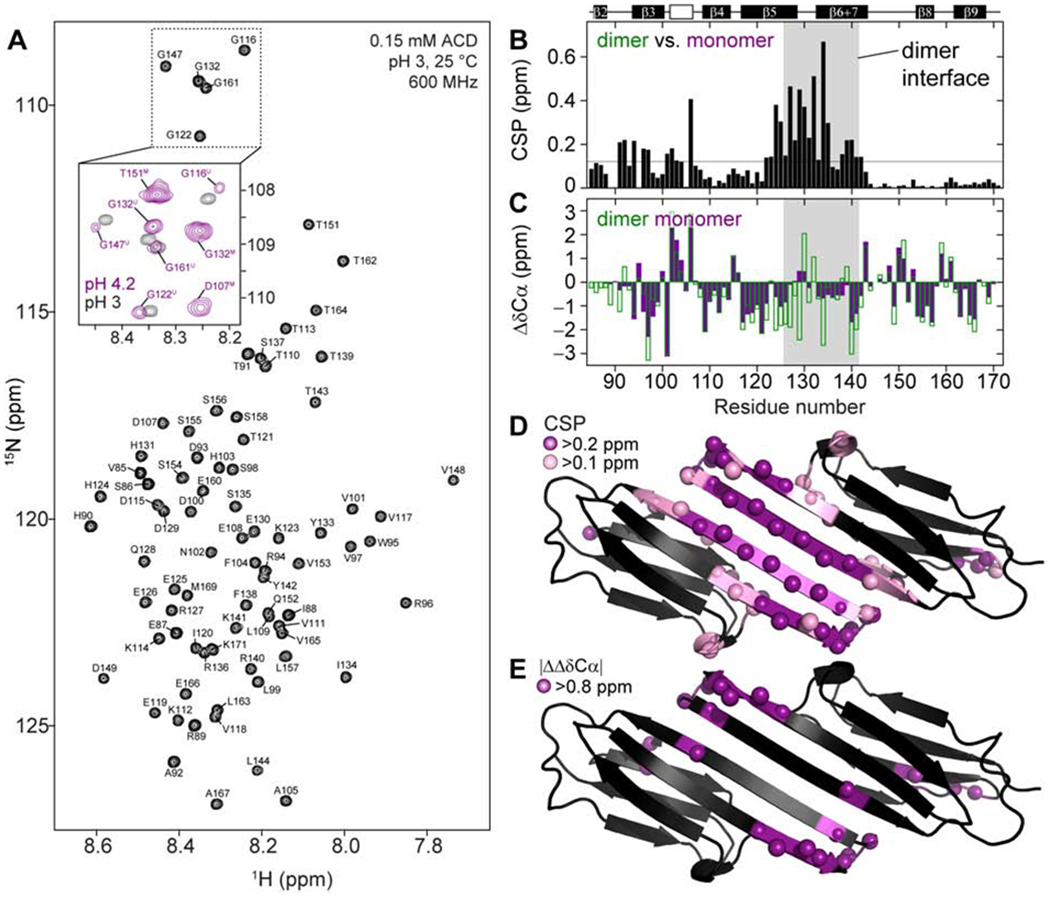
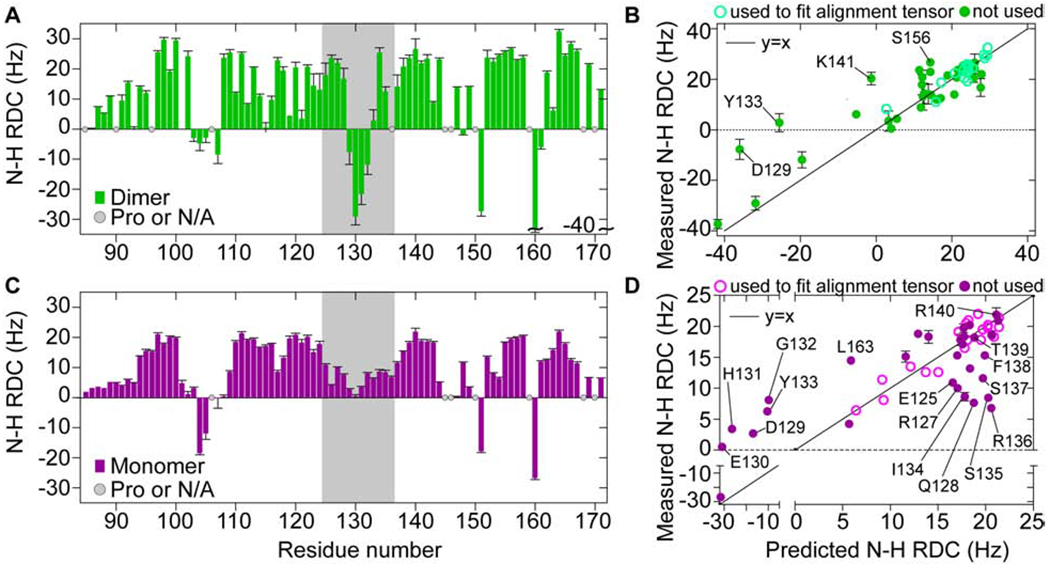
Small heat-shock proteins (sHSPs) are molecular chaperones that respond to cellular stresses to combat protein aggregation. HSP27 is a critical human sHSP that forms large, dynamic oligomers whose quaternary structures and chaperone activities depend on environmental factors. Upon exposure to cellular stresses, such as heat shock or acidosis, HSP27 oligomers can dissociate into dimers and monomers, which leads to significantly enhanced chaperone activity. The structured core of the protein, the α-crystallin domain (ACD), forms dimers and can prevent the aggregation of substrate proteins to a similar degree as the full-length protein. When the ACD dimer dissociates into monomers, it partially unfolds and exhibits enhanced activity. Here, we used solution-state NMR spectroscopy to characterize the structure and dynamics of the HSP27 ACD monomer. Web show that the monomer is stabilized at low pH and that its backbone chemical shifts, N relaxation rates, and H-N residual dipolar couplings suggest structural changes and rapid motions in the region responsible for dimerization. By analyzing the solvent accessible and buried surface areas of sHSP structures in the context of a database of dimers that are known to dissociate into disordered monomers, we predict that ACD dimers from sHSPs across all kingdoms of life may partially unfold upon dissociation. We propose a general model in which conditional disorder-the partial unfolding of ACDs upon monomerization-is a common mechanism for sHSP activity.
小分子热休克蛋白 (sHSPs) 是一种分子伴侣,可响应细胞应激,抵抗蛋白聚集。HSP27 是一种重要的人类 sHSP,可形成大型动态寡聚物,其四级结构和分子伴侣活性取决于环境因素。当细胞受到应激,如热休克或酸中毒时,HSP27 寡聚物可解聚为二聚体和单体,从而显著增强分子伴侣活性。该蛋白质的结构核心,即 α-晶状体蛋白结构域 (ACD),形成二聚体,可在相似程度上防止底物蛋白聚集。当 ACD 二聚体解聚为单体时,它会部分展开并表现出增强的活性。在这里,我们使用溶液态 NMR 光谱技术来表征 HSP27 ACD 单体的结构和动态。结果表明,单体在低 pH 值下稳定,其骨架化学位移、N 弛豫率和 H-N 残差偶极耦合表明负责二聚化的区域发生结构变化和快速运动。通过分析 sHSP 结构在已知可解聚为无规单体的二聚体数据库中的溶剂可及表面积和埋入表面积,我们预测所有生命领域的 sHSP 中的 ACD 二聚体可能在解离时会部分展开。我们提出了一个普遍的模型,其中条件无序 - 单体化时 ACD 的部分展开 - 是 sHSP 活性的常见机制。