Department of Basic Medical Sciences, School of Medicine, Xiamen University, Xiamen, 361102, Fujian Province, People's Republic of China.
Department of Neurosurgery, China-Japan Union Hospital of Jilin University, Changchun, 130033, People's Republic of China.
Nat Commun. 2020 Feb 21;11(1):1009. doi: 10.1038/s41467-020-14614-4.
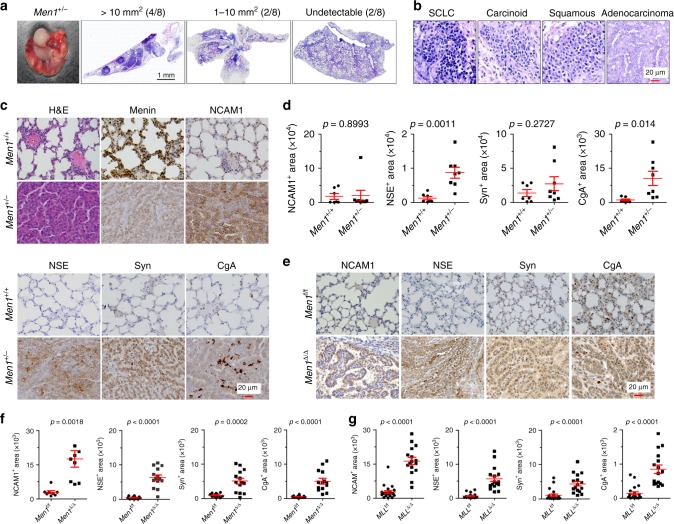
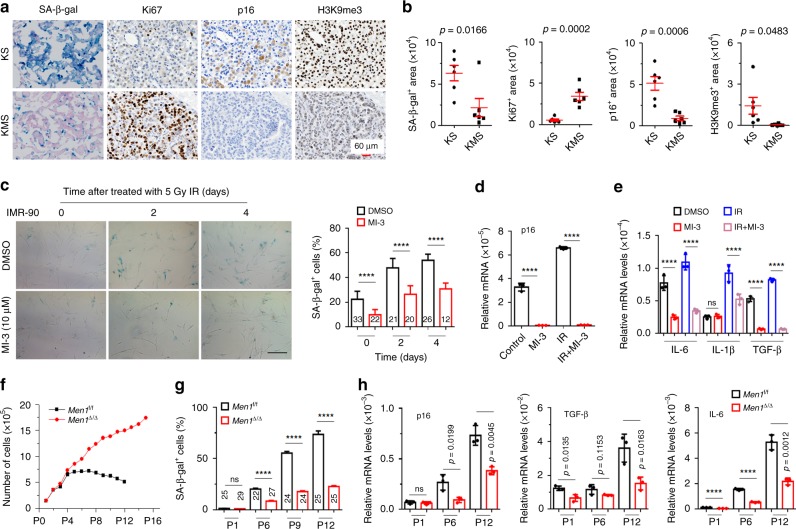
The MEN1 gene, a tumor suppressor gene that encodes the protein menin, is mutated at high frequencies in neuroendocrine (NE) tumors; however, the biological importance of this gene in NE-type lung cancer in vivo remains unclear. Here, we established an ATII-specific Kras/Men1 driven genetically engineered mouse model and show that deficiency of menin results in the accumulation of DNA damage and antagonizes oncogenic Kras-induced senescence and the epithelial-to-mesenchymal transition during lung tumorigenesis. The loss of menin expression in certain human primary lung cancers correlates with elevated NE profiles and reduced overall survival.
MEN1 基因是一种肿瘤抑制基因,编码蛋白 menin。该基因在神经内分泌(NE)肿瘤中高频突变,但在体内 NE 型肺癌中的生物学重要性尚不清楚。本研究建立了一种 ATII 特异性 Kras/Men1 驱动的基因工程小鼠模型,结果表明,menin 缺失导致 DNA 损伤积累,并拮抗致癌 Kras 诱导的衰老和上皮-间充质转化,从而促进肺肿瘤发生。某些人类原发性肺癌中 menin 表达缺失与 NE 谱升高和总生存期降低相关。