Hamon Center for Therapeutic Oncology Research, Simmons Comprehensive Cancer Center, The University of Texas Southwestern Medical Center, Dallas 75390, USA.
Mol Cancer Res. 2013 Jun;11(6):638-50. doi: 10.1158/1541-7786.MCR-12-0634-T. Epub 2013 Feb 28.
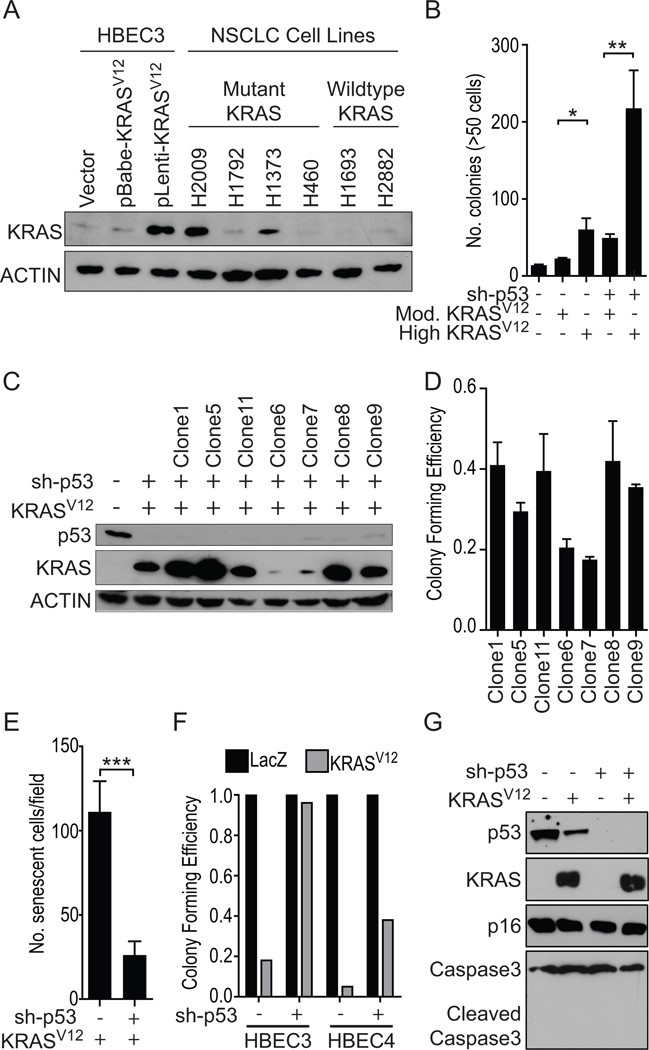
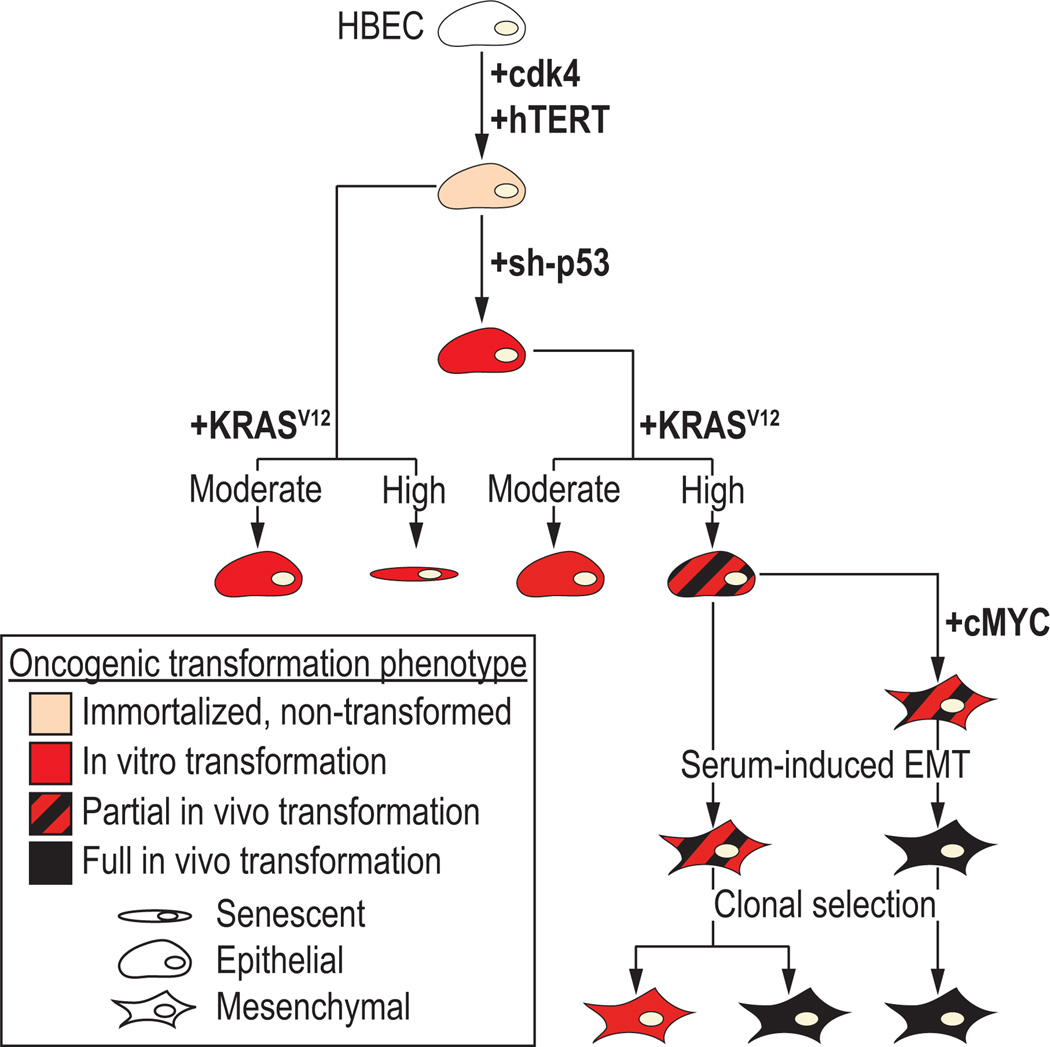
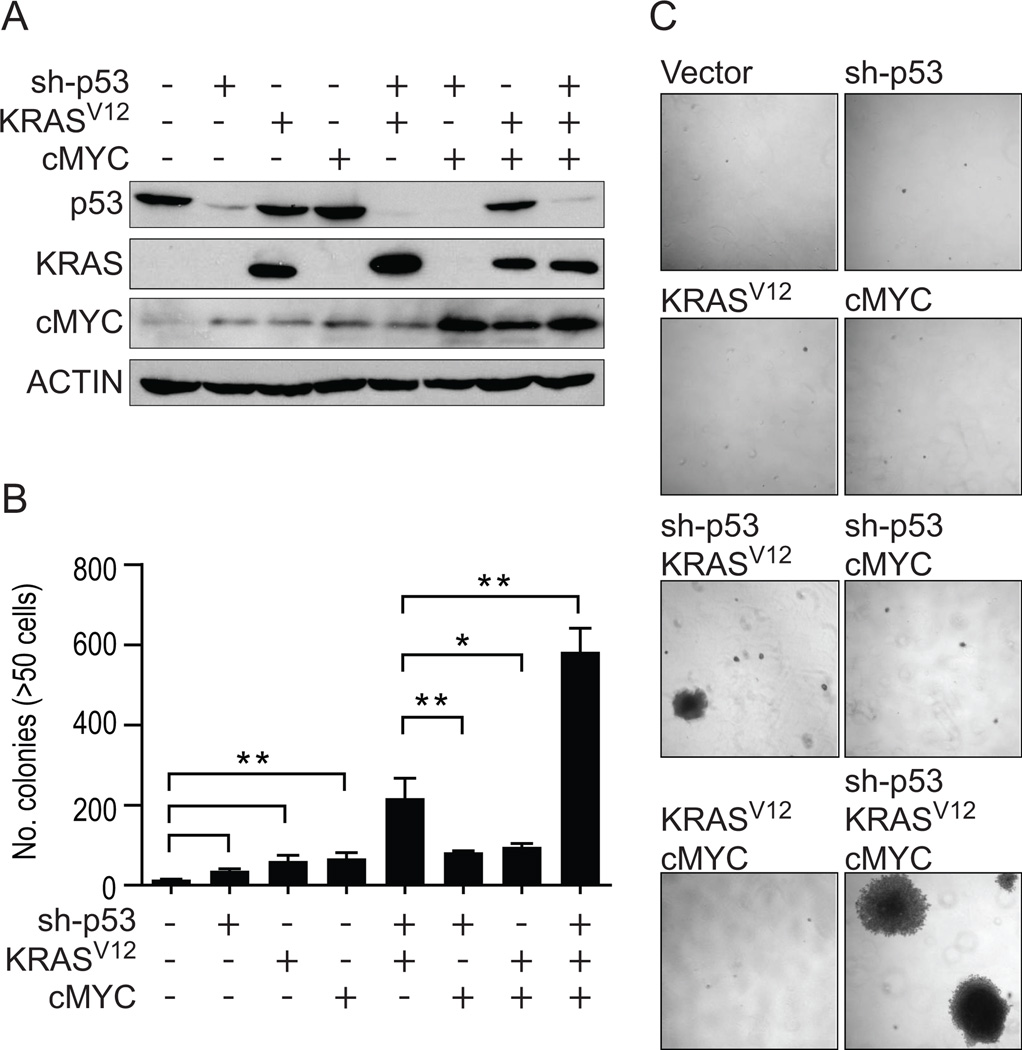
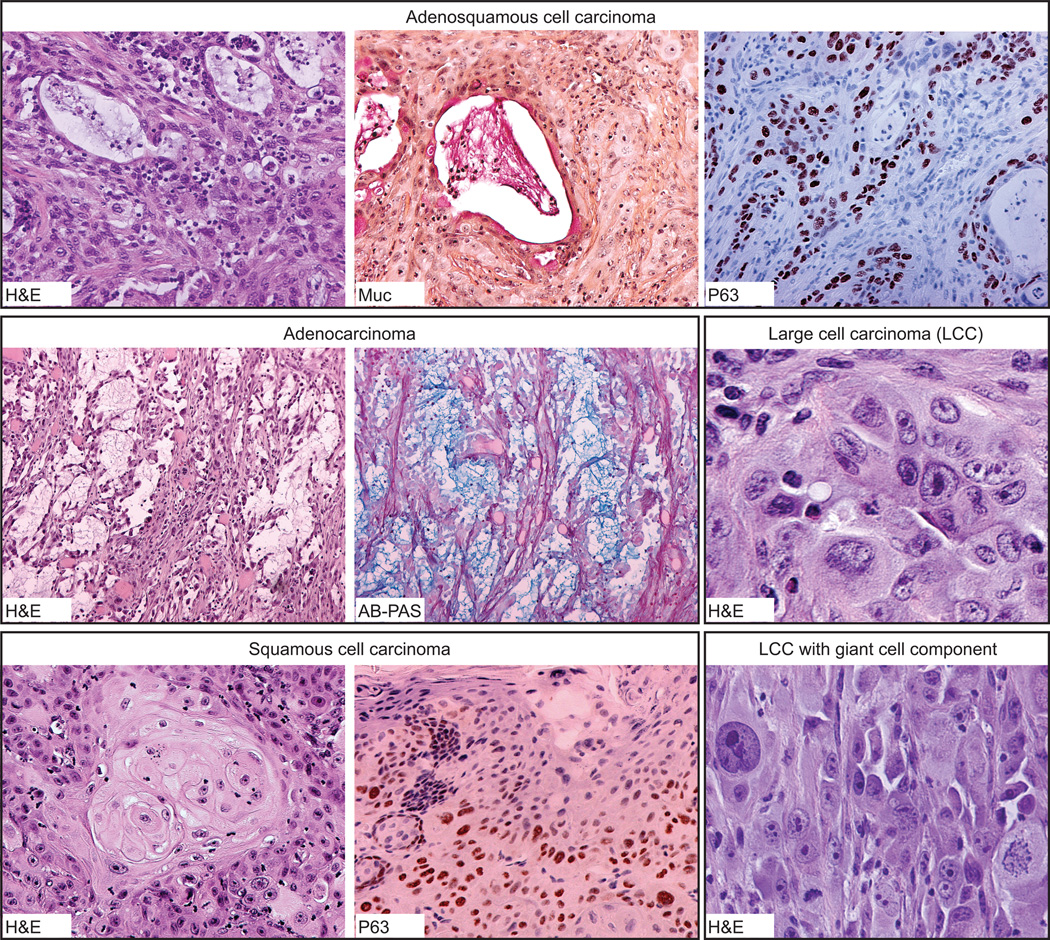
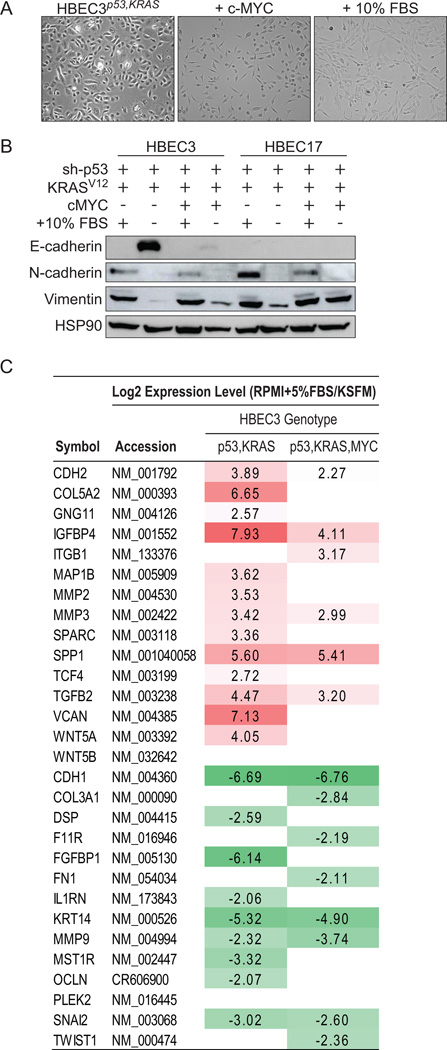
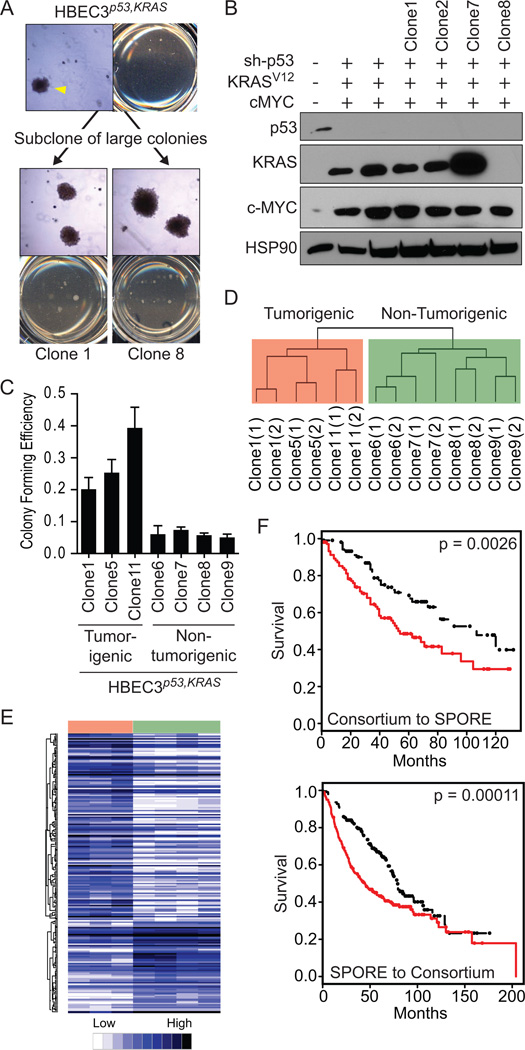
We used CDK4/hTERT-immortalized normal human bronchial epithelial cells (HBEC) from several individuals to study lung cancer pathogenesis by introducing combinations of common lung cancer oncogenic changes (p53, KRAS, and MYC) and followed the stepwise transformation of HBECs to full malignancy. This model showed that: (i) the combination of five genetic alterations (CDK4, hTERT, sh-p53, KRAS(V12), and c-MYC) is sufficient for full tumorigenic conversion of HBECs; (ii) genetically identical clones of transformed HBECs exhibit pronounced differences in tumor growth, histology, and differentiation; (iii) HBECs from different individuals vary in their sensitivity to transformation by these oncogenic manipulations; (iv) high levels of KRAS(V12) are required for full malignant transformation of HBECs, however, prior loss of p53 function is required to prevent oncogene-induced senescence; (v) overexpression of c-MYC greatly enhances malignancy but only in the context of sh-p53+KRAS(V12); (vi) growth of parental HBECs in serum-containing medium induces differentiation, whereas growth of oncogenically manipulated HBECs in serum increases in vivo tumorigenicity, decreases tumor latency, produces more undifferentiated tumors, and induces epithelial-to-mesenchymal transition (EMT); (vii) oncogenic transformation of HBECs leads to increased sensitivity to standard chemotherapy doublets; (viii) an mRNA signature derived by comparing tumorigenic versus nontumorigenic clones was predictive of outcome in patients with lung cancer. Collectively, our findings show that this HBEC model system can be used to study the effect of oncogenic mutations, their expression levels, and serum-derived environmental effects in malignant transformation, while also providing clinically translatable applications such as development of prognostic signatures and drug response phenotypes.
我们使用 CDK4/hTERT 永生化的正常人支气管上皮细胞 (HBEC) 来自几个人研究肺癌发病机制引入组合常见的肺癌致癌变化 (p53、KRAS 和 MYC) 并遵循 HBEC 的逐步转化为完全恶性。该模型表明:(i) 五种遗传改变 (CDK4、hTERT、sh-p53、KRAS(V12) 和 c-MYC) 的组合足以使 HBEC 完全肿瘤转化;(ii) 转化的 HBEC 的遗传相同克隆表现出明显的肿瘤生长、组织学和分化差异;(iii) HBEC 来自不同个体在这些致癌操作的转化敏感性方面存在差异;(iv) 高水平的 KRAS(V12) 是完全恶性转化的 HBEC 所必需的,但是,之前的 p53 功能丧失是防止致癌基因诱导衰老所必需的;(v) c-MYC 的过表达大大增强了恶性程度,但仅在 sh-p53+KRAS(V12) 的情况下;(vi) 含血清培养基中亲本 HBEC 的生长诱导分化,而致癌基因操作的 HBEC 在血清中的生长增加体内肿瘤发生、降低肿瘤潜伏期、产生更多未分化肿瘤并诱导上皮-间充质转化 (EMT);(vii) HBEC 的致癌转化导致对标准化疗双联的敏感性增加;(viii) 通过比较致瘤性与非致瘤性克隆的 mRNA 特征得出的签名预测了肺癌患者的结局。总之,我们的研究结果表明,该 HBEC 模型系统可用于研究致癌突变及其表达水平以及血清衍生的环境对恶性转化的影响,同时还提供了可临床转化的应用,例如预后特征和药物反应表型的开发。