Lin Yufeng, Liu Canying, Zhan Xiaoshu, Wang Bingyun, Li Kui, Li Julang
Department of Life Science and Engineering, Foshan University, Foshan, China.
Department of Animal and Poultry Science, University of Guelph, Guelph, ON, Canada.
Front Pharmacol. 2020 Jan 31;10:1634. doi: 10.3389/fphar.2019.01634. eCollection 2019.
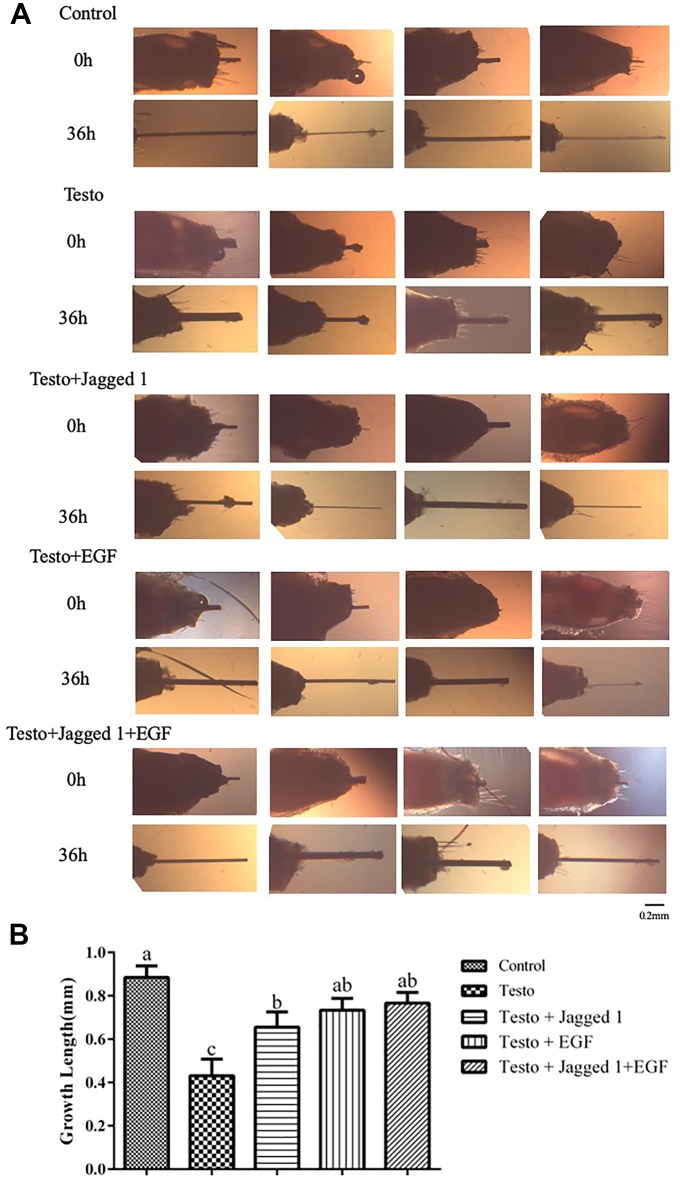
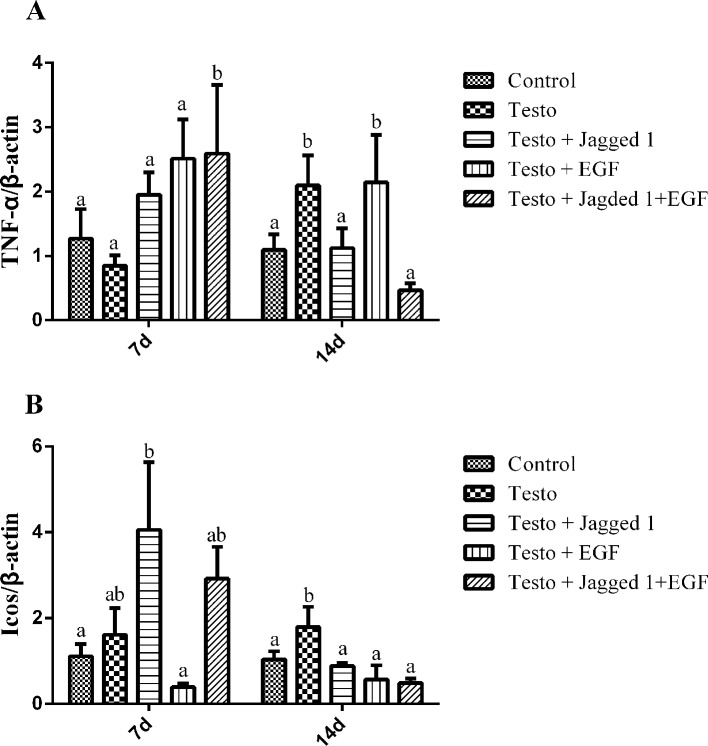
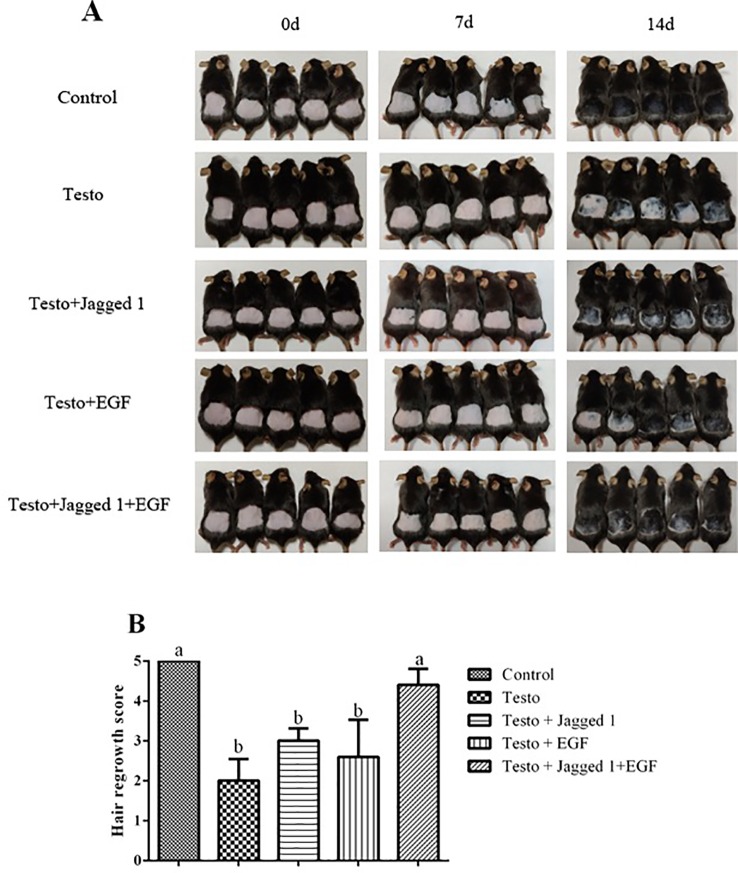
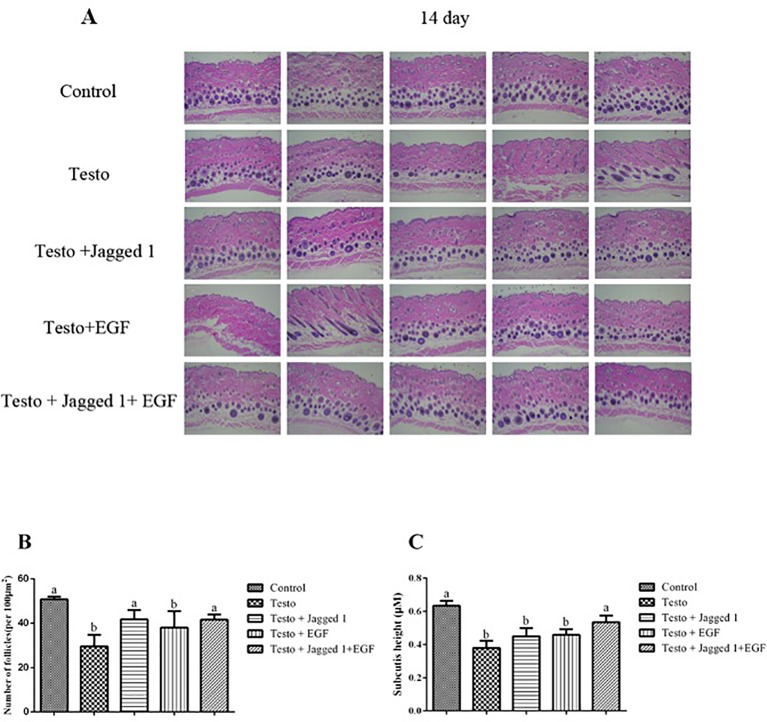
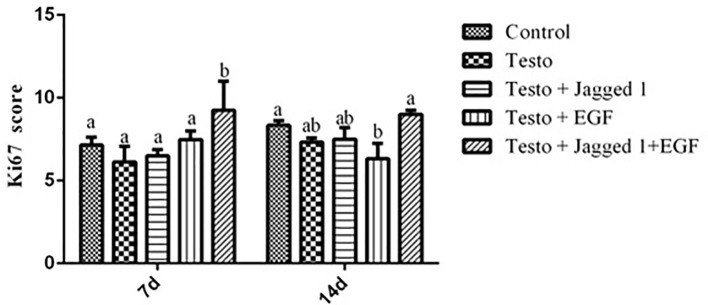
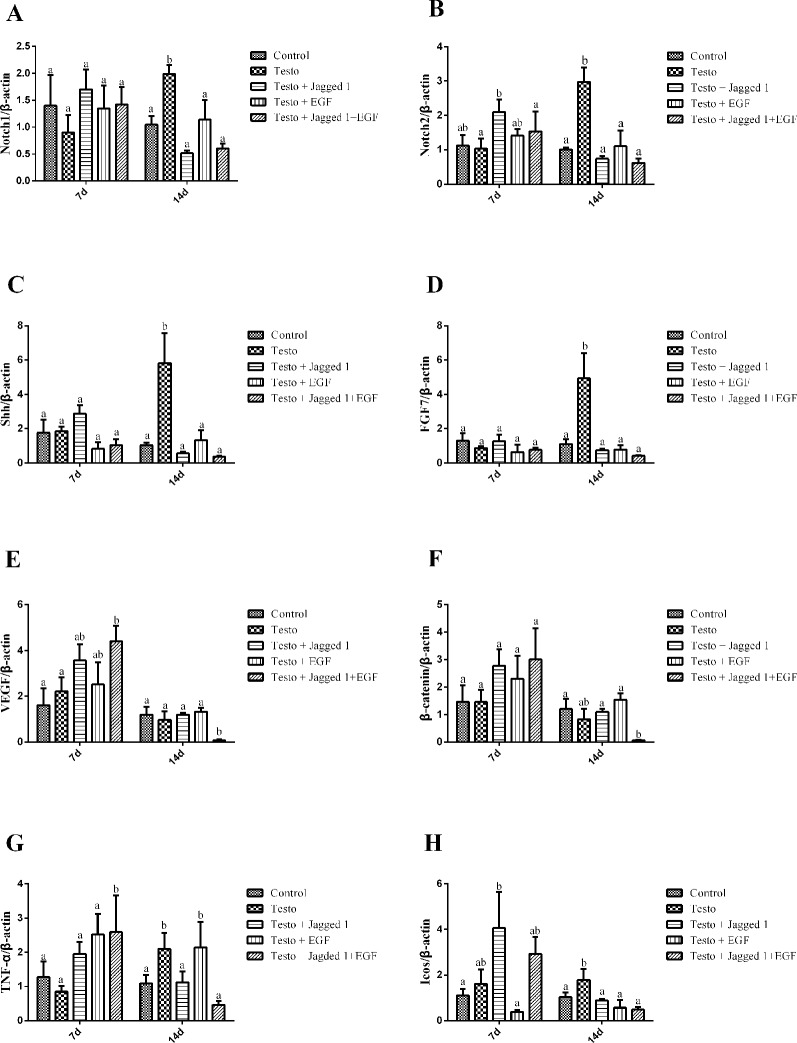
Recent studies have reported that T-reg cells are intimately linked with hair follicles in a stage-dependent manner and play an important role in hair follicle cycling and regeneration in murine skin. Further study revealed that T-reg cell's regulation of hair follicle growth is through its preferential expression of the Notch ligand Jagged-1 (Jag1), which facilitates hair follicle regeneration. However, the role of Jag1 in androgen-suppressed hair growth is yet to be investigated. In addition, although epidermal growth factor (EGF) is a mitogen for cells including skin cells, whether it works synergistically with Jag1 to enhance hair follicle development is unknown. The current study intended to investigate effects of topical application of Jag1 on androgen-suppressed hair growth, and to determine the potential synergistic effect of EGF and Jag1 in this process . Fifty mice were depilated at the dorsal back area to achieve synchronized anagen development, and randomly divided into five groups with the following topical treatments control for 14 days; testosterone to induce androgenetic alopecia; Jagged1 (testosterone + Jagged1); EGF (testosterone + EGF); and Jagged1 + EGF (testosterone + Jagged1 + EGF). It was found that EGF and Jag1 by itself respectively, did not promote androgen-suppressed hair growth significantly. This stimulating effect was enhanced in the presence of both EGF and Jagged1 (p < 0.05). The hair growth promoting effect was accompanied by better follicle growth, which is associated with increased cell proliferation in the hair follicle and altered the expression of genes that are important in hair follicular cell proliferation and differentiation. Our results provide insights into the therapeutic potential of these peptides for androgenetic alopecia.
近期研究报道,调节性T细胞(T-reg细胞)以阶段依赖性方式与毛囊密切相关,并在小鼠皮肤毛囊周期和再生中发挥重要作用。进一步研究表明,T-reg细胞对毛囊生长的调节是通过其优先表达Notch配体Jagged-1(Jag1)来实现的,Jag1促进毛囊再生。然而,Jag1在雄激素抑制毛发生长中的作用尚待研究。此外,尽管表皮生长因子(EGF)是包括皮肤细胞在内的细胞的促有丝分裂原,但它是否与Jag1协同作用以促进毛囊发育尚不清楚。本研究旨在探讨局部应用Jag1对雄激素抑制毛发生长的影响,并确定EGF和Jag1在此过程中的潜在协同作用。五十只小鼠在背部脱毛以实现同步生长期发育,并随机分为五组,进行以下局部治疗:对照组,持续14天;睾酮诱导雄激素性脱发;Jagged1(睾酮+Jagged1);EGF(睾酮+EGF);以及Jagged1+EGF(睾酮+Jagged1+EGF)。结果发现,单独的EGF和Jag1均未显著促进雄激素抑制的毛发生长。在EGF和Jagged1同时存在的情况下,这种刺激作用增强(p<0.05)。促进毛发生长的作用伴随着更好的毛囊生长,这与毛囊中细胞增殖增加以及毛囊细胞增殖和分化中重要基因的表达改变有关。我们的结果为这些肽治疗雄激素性脱发的潜力提供了见解。