Heinrich Pette Institute, Leibniz Institute for Experimental Virology, Martinistraße 52, 20251 Hamburg, Germany.
University of Hamburg, Institut für Biochemie und Molekularbiologie, Martin-Luther-King-Platz 6, 20146 Hamburg, Germany.
Biochem J. 2020 Mar 13;477(5):1009-1019. doi: 10.1042/BCJ20200029.
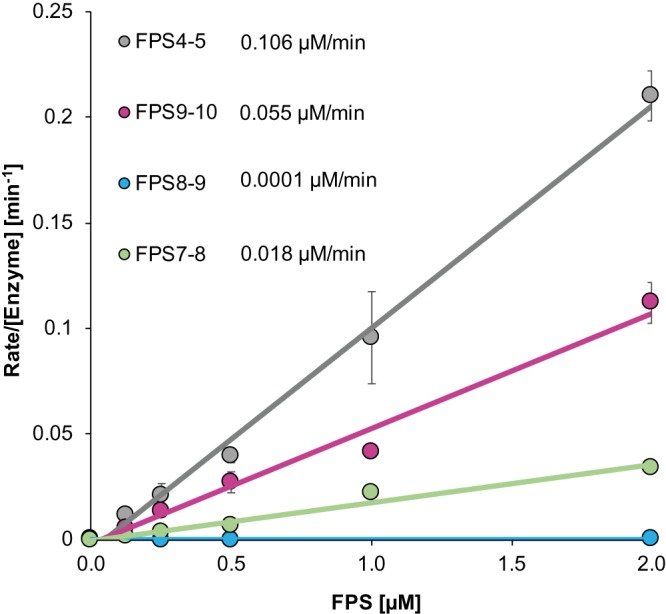
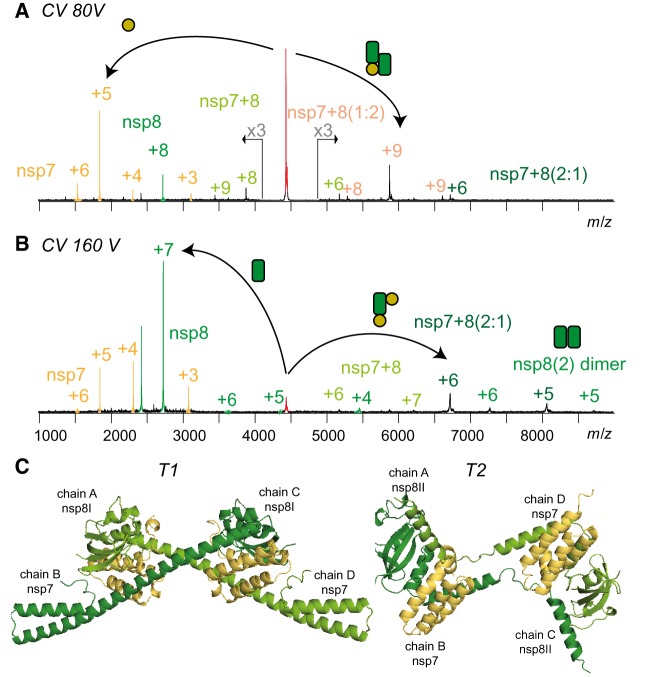
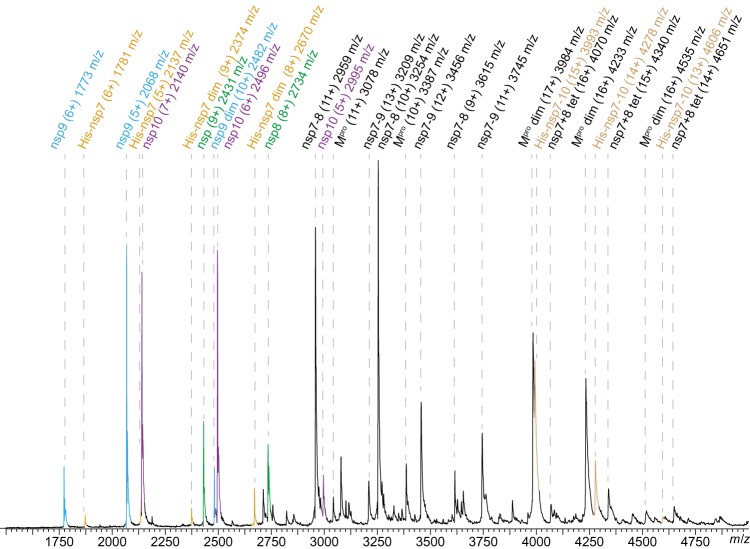
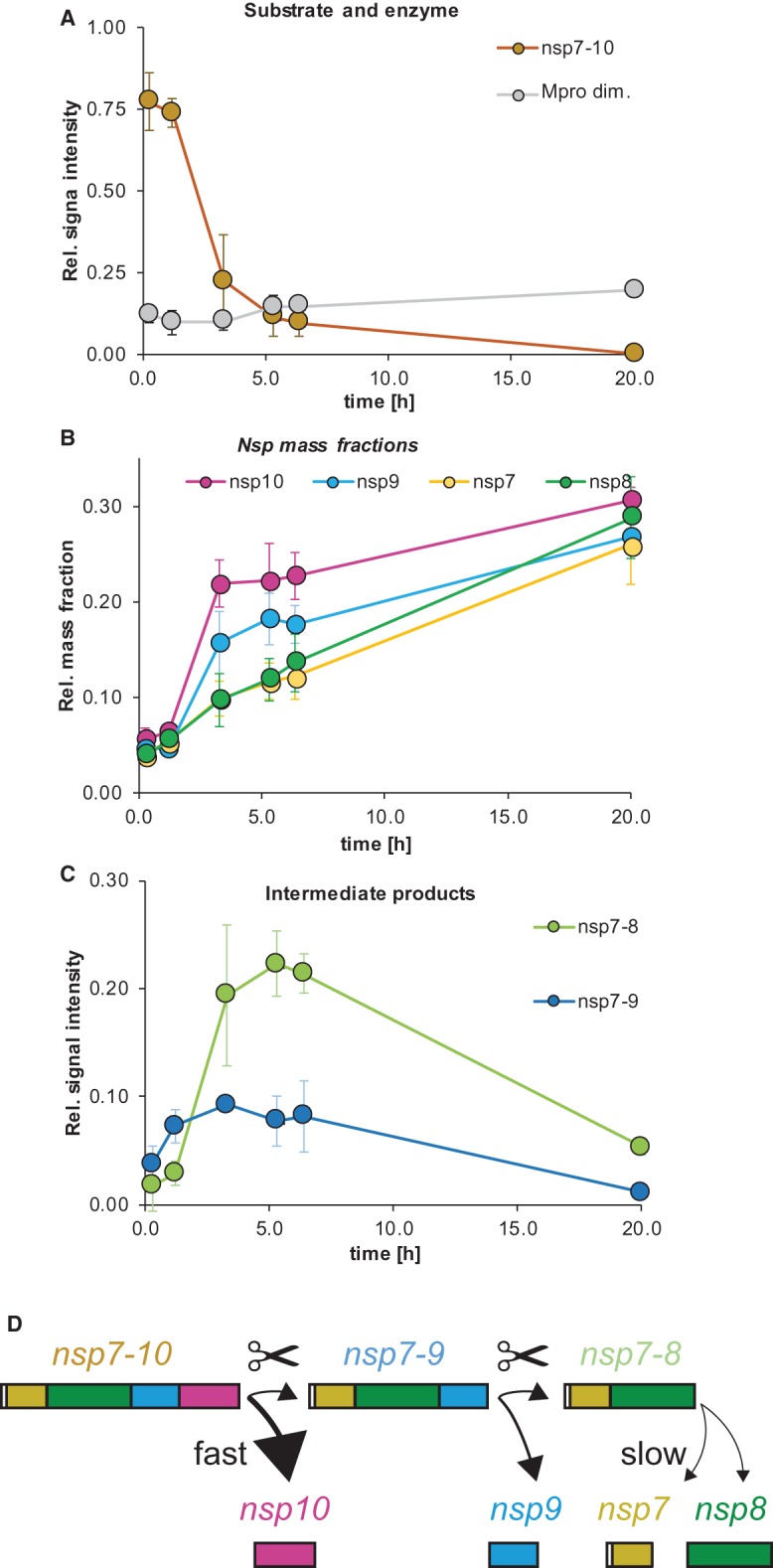
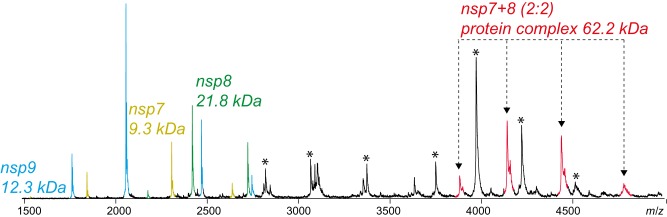
Severe acute respiratory syndrome coronavirus is the causative agent of a respiratory disease with a high case fatality rate. During the formation of the coronaviral replication/transcription complex, essential steps include processing of the conserved polyprotein nsp7-10 region by the main protease Mpro and subsequent complex formation of the released nsp's. Here, we analyzed processing of the coronavirus nsp7-10 region using native mass spectrometry showing consumption of substrate, rise and fall of intermediate products and complexation. Importantly, there is a clear order of cleavage efficiencies, which is influenced by the polyprotein tertiary structure. Furthermore, the predominant product is an nsp7+8(2 : 2) hetero-tetramer with nsp8 scaffold. In conclusion, native MS, opposed to other methods, can expose the processing dynamics of viral polyproteins and the landscape of protein interactions in one set of experiments. Thereby, new insights into protein interactions, essential for generation of viral progeny, were provided, with relevance for development of antivirals.
严重急性呼吸系统综合症冠状病毒是一种高病死率呼吸道疾病的病原体。在冠状病毒复制/转录复合物的形成过程中,主要步骤包括由主蛋白酶 Mpro 对保守的多蛋白 nsp7-10 区域进行加工,以及随后释放的 nsp 之间的复合物形成。在这里,我们使用天然质谱法分析了冠状病毒 nsp7-10 区域的加工过程,显示出底物的消耗、中间产物的上升和下降以及复合物的形成。重要的是,存在明显的切割效率顺序,这受到多蛋白三级结构的影响。此外,主要产物是具有 nsp8 支架的 nsp7+8(2:2)异源四聚体。总之,与其他方法相比,天然 MS 可以在一组实验中揭示病毒多蛋白的加工动力学和蛋白质相互作用的情况。从而为病毒后代的产生提供了对蛋白质相互作用的新见解,这对于抗病毒药物的开发具有重要意义。